
Fuxi: The Ancient Sage Who Deciphered the Language of the Cosmos
The Ancient Sage Who Deciphered the Language of the Cosmos
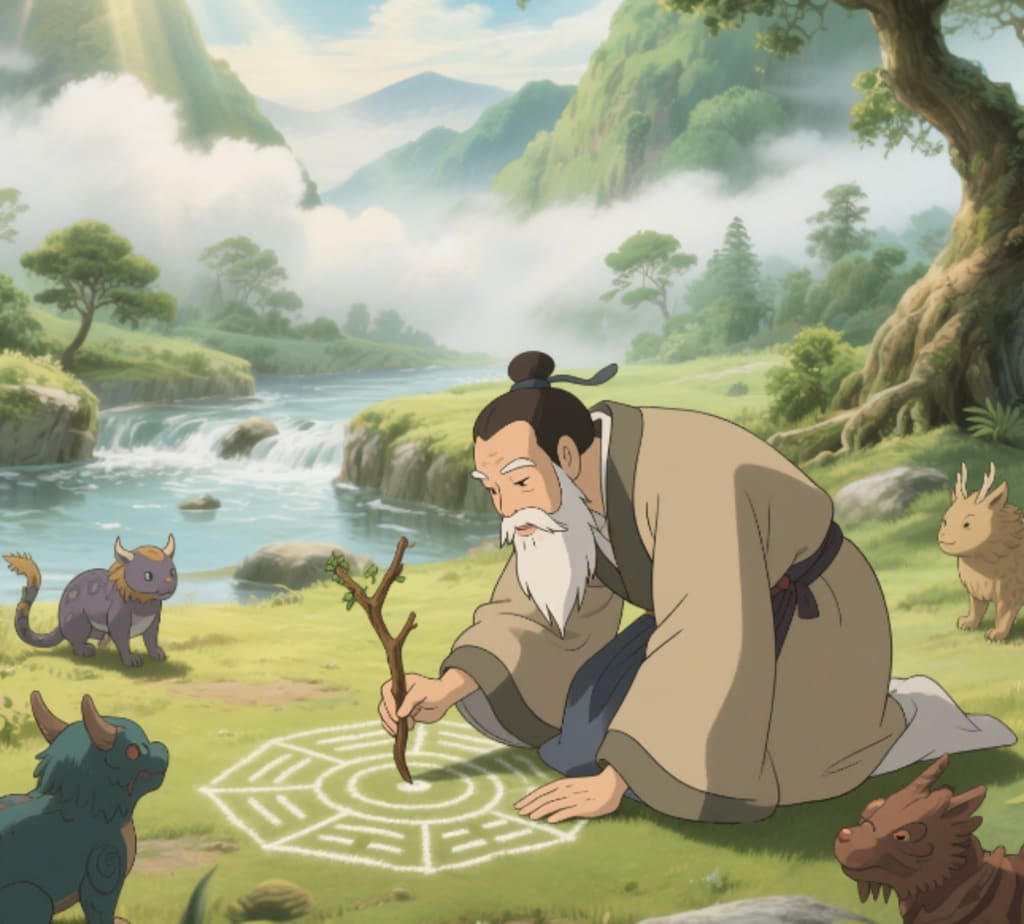
In the vast tapestry of Chinese history, few tales shine as brightly as that of Fuxi, a legendary figure often hailed as the first of China's Three Sovereigns and Five Emperors. Fuxi's creation of the Eight Trigrams, known as "Bagua" in Chinese, is not just a story of ancient wisdom but a profound exploration of the universe's fundamental principles. This article will delve into the captivating narrative of Fuxi drawing the trigrams, offering a glimpse into the rich cultural heritage of China.
The Man Behind the Myth
Long before written history, Fuxi emerged as a pivotal figure in ancient China. According to legend, he lived in a time when humanity was still in its infancy, struggling to make sense of the world around them. Fuxi was not only a wise leader but also a visionary thinker. He observed the natural world with keen eyes, noticing patterns in the movements of celestial bodies, the changing seasons, and the behaviors of animals and plants. These observations would eventually lead to his most significant contribution: the creation of the Bagua.
The Birth of the Eight Trigrams
The story of Fuxi drawing the trigrams begins with his deep contemplation of the mysteries of the universe. One day, while sitting by the Yellow River, he witnessed a remarkable sight: a mythical creature known as the Lo River Turtle emerged from the water. On the turtle's shell, Fuxi saw a series of markings that seemed to hold the key to the secrets of the cosmos. Inspired by this vision, Fuxi began to develop a system of symbols to represent the fundamental forces and principles of the universe.
The Bagua consists of eight distinct trigrams, each composed of three stacked horizontal lines. These lines can be either solid (yang) or broken (yin), representing the two complementary forces in the universe. Each trigram corresponds to a specific natural element, such as heaven, earth, fire, water, thunder, wind, mountain, and lake. Together, the trigrams form a comprehensive system that can be used to understand the relationships between different phenomena, predict changes, and guide decision-making.
Decoding the Symbols
To the untrained eye, the trigrams of the Bagua may appear as simple geometric shapes. However, within these seemingly straightforward symbols lies a profound depth of meaning. For example, the trigram for heaven, Qian, is represented by three solid lines, symbolizing strength, creativity, and the masculine principle. In contrast, the trigram for earth, Kun, is made up of three broken lines, signifying receptivity, nurturing, and the feminine principle.
The other trigrams also carry rich symbolic significance. Zhen represents thunder, symbolizing sudden movement and awakening; Xun represents wind, signifying penetration and adaptability; Kan represents water, embodying danger and depth; Li represents fire, symbolizing clarity and illumination; Gen represents mountain, signifying stillness and boundary; and Dui represents lake, symbolizing joy and communication. By combining and interpreting these trigrams, ancient Chinese scholars were able to gain insights into the complex workings of the universe and human affairs.
Influence and Legacy
The impact of Fuxi's Bagua on Chinese culture cannot be overstated. It has served as the foundation for numerous philosophical, religious, and scientific traditions, including Taoism, Confucianism, and traditional Chinese medicine. The principles embodied in the Bagua have influenced everything from architecture and urban planning to martial arts and feng shui.
In the realm of philosophy, the Bagua has been used to explore the nature of reality, the relationship between humans and the universe, and the principles of change and transformation. Taoists, for example, draw inspiration from the Bagua to understand the flow of the Tao, the underlying force that governs the universe. Confucians, on the other hand, use the Bagua to illustrate the importance of harmony, balance, and moral order in society.
In traditional Chinese medicine, the Bagua is associated with the body's energy meridians and the five elements theory. Practitioners believe that by understanding the principles of the Bagua, they can diagnose and treat illnesses by restoring the balance of yin and yang in the body.
Sharing the Wisdom
The story of Fuxi drawing the trigrams is not just a relic of the past but a timeless source of wisdom that continues to resonate with people around the world today. As we strive to make sense of an increasingly complex and interconnected world, the ancient insights of Fuxi offer valuable perspectives on the nature of reality, the importance of balance, and the power of observation.
If you found this article fascinating and think others would too, please share it on your social media platforms! By spreading the word about the rich cultural heritage of China, we can help bridge the gap between different cultures and foster a deeper appreciation for the diversity of human knowledge. Whether you're a history buff, a culture enthusiast, or simply curious about the world, the story of Fuxi and the Bagua is sure to captivate and inspire. So go ahead, share this article with your friends, family, and followers, and let's embark on a journey of discovery together!
About the Creator
The Astrologer Prime Minister
The king was seated among his courtiers. A competition was ongoing among them to bring good news to His Majesty. The king was delighted, for every piece of good news was like honey to his ears. He felt that he was the most successful ruler in the world. In his kingdom, even lions and goats drank from the same waterhole.
By Sudais Zakwan5 days ago in History
Fifteen Dead After Philippines Ferry With 300 Passengers Sinks
: At least 15 people have died and hundreds have been rescued after a passenger ferry carrying more than 300 people sank early on Monday, January 26, 2026, off the coast of the southern Philippines, authorities said. The tragedy has sparked a massive search and rescue operation, highlighted persistent safety concerns in inter‑island maritime travel, and left families anxiously awaiting news of loved ones.
By Salaar Jamali4 days ago in History


Comments
There are no comments for this story
Be the first to respond and start the conversation.