
From Pinhole to Pixels: The Fascinating Journey of the Camera
How Ibn al-Haytham’s 10th-century discovery sparked a revolution that led to digital photography and camera phones.

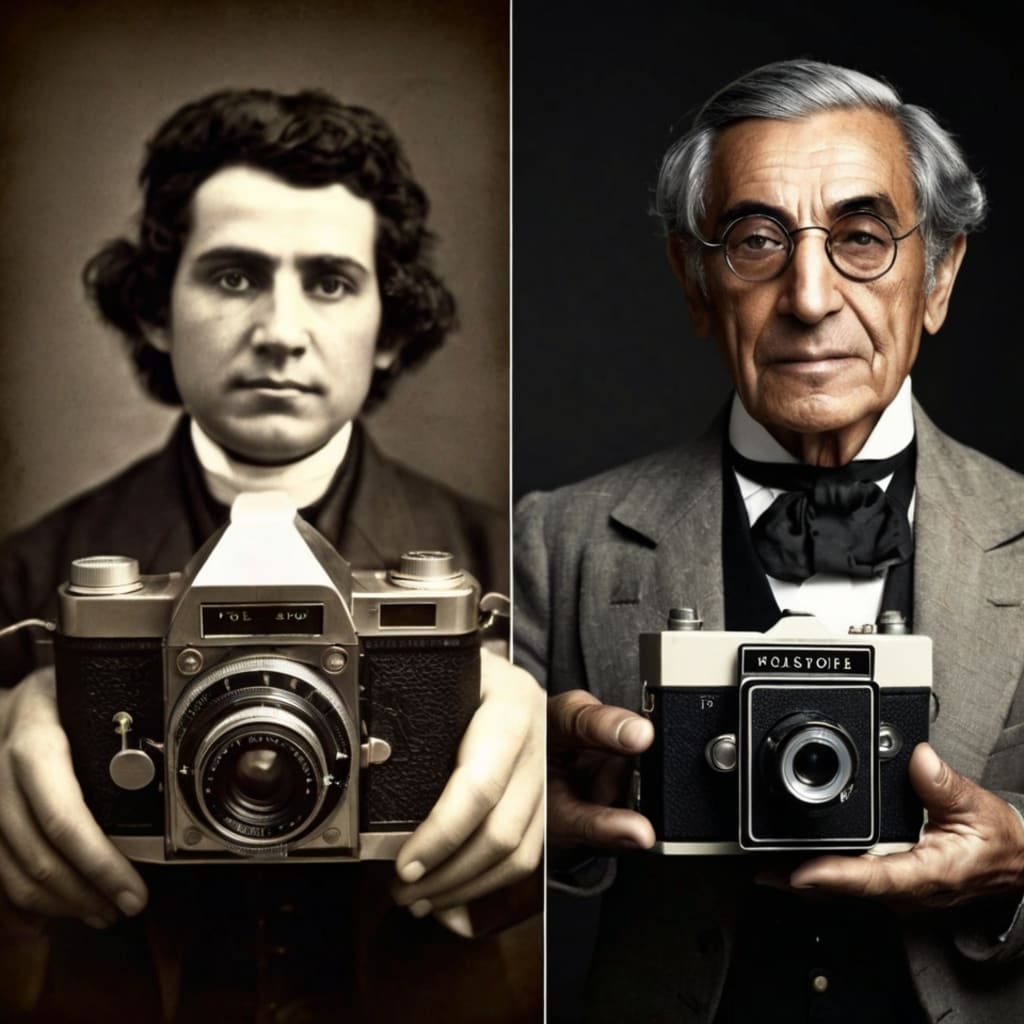
The Fascinating History of the Camera: From Ibn al-Haytham to the Digital Age
BY:Ubaid
Science has gifted humanity with countless inventions that have changed the course of history. Among these, one of the most remarkable creations is the camera—a device that not only captures images but also preserves memories and moments forever. The journey of the camera is long and fascinating, beginning with the genius of a Muslim scientist and evolving into the advanced digital devices we use today.
Ibn al-Haytham and the Birth of the Pinhole Camera
The origins of photography trace back to the 10th century, when the brilliant Muslim scientist Ibn al-Haytham, also known in the West as Alhazen, first discovered the principles of optics that made photography possible. He experimented with light and vision and constructed the world’s very first pinhole camera. His work, especially in his famous “Book of Optics,” laid the foundation for how light travels and how images can be projected. This invention was not merely a tool; it was the beginning of a new way to study nature and reality.
Although Ibn al-Haytham pioneered the science, history often credits others. For example, many mistakenly regard Joseph Nicéphore Niépce, a French inventor, as the father of photography. In 1826, Niépce created the first successful photograph by coating a pewter plate with a bitumen layer and placing it inside a device called the camera obscura. The result was a faint but permanent image.
The Daguerreotype Revolution
After Niépce, another Frenchman, Louis Daguerre, improved the process in 1839. He introduced the daguerreotype, which used silver-coated copper plates and chemicals to produce sharper, more detailed images. This method was so revolutionary that it spread rapidly across Europe and America. People could now capture portraits, landscapes, and historical moments in a way never seen before. The invention of the daguerreotype marked the official birth of photography as an art and a science.
A Window Into the Past
With photography, humanity gained the ability to preserve history visually. Images of people, places, and events provided new ways of remembering and studying the past. The very word “photography” comes from Greek and literally means “painting with light.” This poetic definition captures the essence of what cameras do: they allow light itself to create art.
Progress Through the 19th Century
The 19th century saw rapid progress in camera technology. In 1851, glass plates were introduced for the first time, allowing for more durable and detailed photographs. Later, the Kodak camera changed everything. In 1881, American inventor George Eastman Walker developed the first portable camera. With his famous slogan, “You press the button, we do the rest,” Eastman made photography accessible to ordinary people, not just scientists or professionals. For the first time, families could capture their personal memories and adventures with ease.
Toward Color and Instant Photography
While early photography was black and white, inventors soon turned their attention to capturing color. The French physicist Gabriel Lippmann developed the first method of color photography in 1891. A few years later, in 1904, the Lumière brothers introduced the first practical process for producing three-color photographs, further bringing images closer to life.
In the 20th century, innovation continued. In 1947, American scientist Edwin Land introduced the Polaroid camera, which instantly developed photographs in a matter of minutes. This invention was nothing short of magical at the time and became immensely popular worldwide.
The Rise of the Automatic and Digital Cameras
By the mid-20th century, cameras became more advanced and easier to use. In 1939, scientists Einstein and Kestovicki contributed to the invention of the automatic camera, which adjusted itself for exposure. This was another leap toward making photography accessible to all.
Then, in 1975, engineer Steven Sasson created the world’s first digital camera. Unlike traditional film cameras, this device recorded images electronically. Though primitive compared to today’s technology, it was the start of a digital revolution that would forever change photography.
In the 1980s and 1990s, digital cameras improved rapidly. The American company Apple was among the pioneers to launch the first color digital camera, giving people the ability to capture vibrant, true-to-life images.
Photography in the Modern Age
Photography continued to evolve, not just through stand-alone cameras but also by merging with other technologies. In November 2000, the Japanese company Samsung launched the world’s first mobile phone with a built-in camera. This innovation transformed the way we interact with photography. Today, billions of people carry powerful cameras in their pockets, capturing and sharing moments instantly through social media.
Other groundbreaking contributions also shaped photography. William Henry Fox Talbot, an English scientist, developed the negative process, which allowed for multiple copies of a photograph. Harold Edgerton introduced high-speed photography, capturing split-second moments invisible to the naked eye. Meanwhile, Baekeland invented photographic paper, making printing and preserving images possible.
The Camera’s Legacy
From Ibn al-Haytham’s simple pinhole camera to the digital marvels of today, the camera’s evolution reflects the progress of human creativity and curiosity. It is more than just a machine; it is a storyteller, a memory-keeper, and a bridge between the present and the past.
Thanks to centuries of innovation, we can now look back at the faces of our ancestors, the streets of ancient cities, and the great events of history—all captured forever through the lens of a camera. Photography is not just about technology; it is about humanity’s desire to remember, to create, and to connect.
The camera remains one of science’s greatest gifts, a tool that continues to evolve while reminding us of where we came from and who we are.
About the Creator
Seven Dials
Introduction Seven Dials is a famous and historic area located in London, England. It is found near Covent Garden, one of the busiest and most popular parts of the city. Seven Dials is known for its unique road design, rich history, old buildings, shops, cafés, and lively atmosphere. Today, it is a popular place for tourists and local people who enjoy culture, shopping, and history.
By Farhan Sayed3 days ago in History
A secret staircase found beneath a 1,500-year-old French church
A subterranean staircase and burial strata dating back approximately 1,500 years were discovered during a project inside the Church of Saint Philibert in Dijon, France. The stairs were discovered by restoration workers inside the church when repairs were being made, and the excavation soon ensued.
By Francis Dami4 days ago in History


Comments
There are no comments for this story
Be the first to respond and start the conversation.