
From Beans to Bars: Tracing the Delicious History of Chocolate
Chocolate's Delicious Evolution

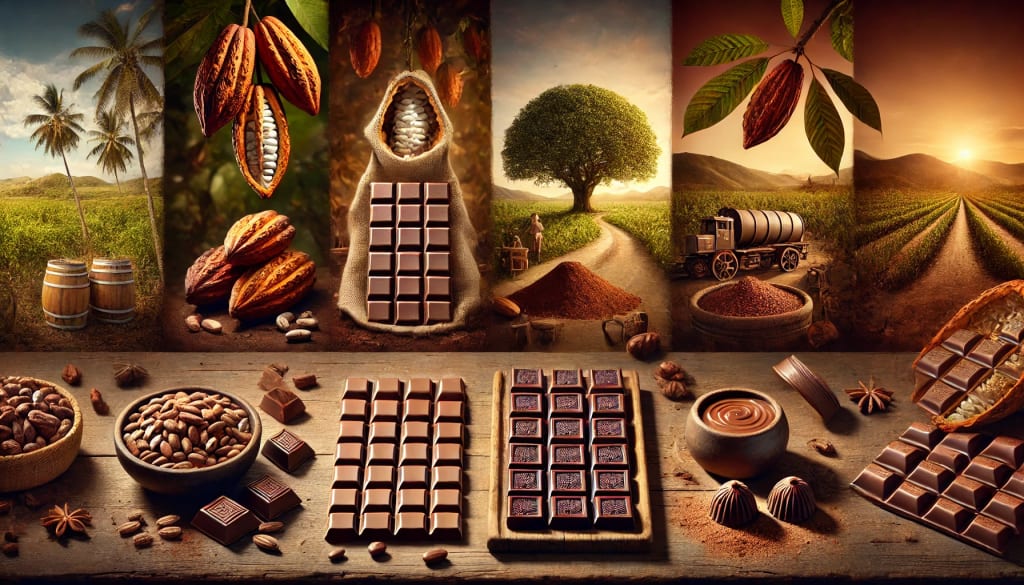
Chocolate is one of the world’s most beloved treats. Whether it’s a bar of smooth milk chocolate or a rich cup of hot cocoa, chocolate has won the hearts of millions worldwide. But where did chocolate come from? How did this humble cacao bean transform into the sweet treat we know today?
In this blog, we’ll trace the journey of chocolate from its early origins to its current role in our daily lives. We’ll also explore how chocolate has evolved over time, from ancient beverages to modern chocolate bars. Finally, we’ll discuss the process of turning cacao beans into the chocolate products we enjoy today.
1. The Ancient Beginnings of Chocolate
The history of chocolate started over 3,000 years ago with the ancient people of Mesoamerica. This includes the Maya and Aztecs. These people were the first to discover the wonders of the cacao bean. But back then, chocolate was very different from the sweet bars we know today.
- Mayan Chocolate: The Maya created a bitter drink made from ground cacao beans mixed with water, chili peppers, and other spices. People considered this drink, known as “xocolatl,” a sacred beverage and often used it in religious ceremonies. Unlike modern chocolate, people did not find it sweet, and the elite typically consumed it.
- Aztec Influence: The Aztecs also valued cacao, which they believed to be a gift from their god Quetzalcoatl. They used cacao beans as currency and made a similar bitter drink. For the Aztecs, people associated chocolate with power and wealth.
Mayan and Aztec Traditions
Even today, you can find traditional chocolate drinks in Central America. In parts of Mexico and Guatemala, people still enjoy different versions of the ancient Mayan chocolate drink. They often add spices like cinnamon or chili to honor old traditions.
2. Chocolate’s Journey to Europe
The true transformation of chocolate began when European explorers encountered the cacao bean. In the early 16th century, Spanish explorer Hernán Cortés brought cacao back to Spain. This marked the beginning of chocolate’s journey to Europe.
- Spanish Hot Chocolate: In Spain, they sweetened the bitter cacao drink with sugar. They also added vanilla to make it taste better for Europeans. This new, sweeter version of chocolate became a sensation among the Spanish elite.
By the 17th century, hot chocolate had spread throughout Europe, becoming a popular drink among the wealthy. However, chocolate was still only available in liquid form. It wasn’t until later that it would evolve into the solid bars we enjoy today.
3. The Birth of the First Chocolate Bar
The first real breakthrough in the development of modern chocolate came in the early 19th century. In 1828, a Dutch chemist named Coenraad Van Houten invented the cocoa press. This machine could remove fat from cacao beans. It left behind cocoa powder. This process made chocolate much easier to produce and more affordable.
The First Chocolate Bar: In 1847, Joseph Fry, a British chocolate maker, made the first solid chocolate bar. He mixed cocoa butter, cocoa powder, and sugar to create it. This was a significant shift from the traditional liquid chocolate that had been consumed for centuries.
Following this, the Swiss company Nestlé developed milk chocolate by adding powdered milk to the mixture. This new chocolate bar was creamier, sweeter, and even more popular among consumers.
4. Chocolate in the American Colonies
Chocolate’s journey didn’t stop in Europe—it eventually made its way to the American colonies. In the 18th century, chocolate houses began popping up in cities like Boston and New York. Much like coffee houses, these establishments were popular gathering spots where people enjoyed hot chocolate.
Interestingly, people in the American colonies consumed chocolate differently than people in Europe. Hot chocolate was a favorite, but colonists also tried using chocolate in baking. This led to popular American treats like brownies and chocolate chip cookies.
5. The Modern Chocolate Industry
The invention of the first chocolate bar sparked the growth of the modern chocolate industry. By the late 19th and early 20th centuries, many of the world’s most famous chocolate brands were established, including Cadbury, Hershey’s, and Lindt.
- Mass Production: In the early 20th century, industrialization allowed chocolate to be mass-produced, making it more affordable and accessible to the public. Brands like Hershey’s played a key role in making chocolate a staple in American households.
Today, the chocolate industry is a global powerhouse. According to Statista, Revenue in the Chocolate Confectionery market amounts to US$133.60bn in 2024. The market is expected to grow annually by 4.76% (CAGR 2024-2029). This growth comes from a mix of traditional products, such as milk chocolate bars, and new items like fair-trade and organic chocolate.
6. The Chocolate-Making Process: From Beans to Bars
The process of turning cacao beans into chocolate bars is a fascinating journey that involves several key steps:
- Harvesting: Cacao trees grow in tropical regions around the world, including West Africa, Central America, and South America. Workers harvest cacao pods by hand, remove the beans, and ferment them.
- Roasting and Grinding: Once the beans are fermented, they are roasted to develop their flavor. After roasting, the beans are ground into a thick paste known as cocoa mass or cocoa liquor.
- Pressing: To make chocolate, the cocoa mass is pressed to separate the cocoa butter from the cocoa solids. The cocoa solids are ground into cocoa powder, while the cocoa butter is used to create the creamy texture of chocolate.
- Mixing and Conching: Cocoa butter, cocoa powder, sugar, and milk (for milk chocolate) are mixed together. The mixture is then refined through a process called conching, which smooths out the chocolate and enhances its flavor.
- Molding and Packaging: The final step is to mold the chocolate into bars or other shapes. Once solidified, the chocolate is packaged and ready for sale.
For businesses that specialize in premium chocolates, using customized gift boxes like those offered by Think Ink Packaging can elevate the product’s presentation, making it perfect for gifts and special occasions.
7. The Rise of Fair-Trade and Ethical Chocolate
In recent years, consumers have become more conscious of where their food comes from, and chocolate is no exception. The fair-trade chocolate movement has gained momentum, advocating for better wages and working conditions for cacao farmers. Fair-trade certification ensures that companies source cacao responsibly, without exploiting workers or damaging the environment.
Many companies are also focusing on sustainable practices. They consider how they source their cacao and the materials for packaging. This trend aligns with consumers’ growing interest in eco-friendly products and ethical consumption.
Conclusion: From Ancient Times to Modern Delights
Chocolate's journey starts with cacao beans in ancient Mesoamerica. It ends with the tasty bars we enjoy today. This shows how popular chocolate has always been. What started as a bitter beverage has become a beloved treat, enjoyed by people all over the world in various forms. Whether it’s a simple chocolate bar, a warm cup of hot chocolate, or a luxurious box of fair-trade chocolates, this sweet delight continues to evolve and captivate taste buds everywhere.
As you savor your next bite of chocolate, remember the rich history that brought it from the ancient cacao farms to your table.
About the Creator
Patrick Moss
If you need the best custom printed boxes for your business, you are at the right place. We provide amazing custom packaging boxes.
Keep reading
More stories from Patrick Moss and writers in History and other communities.
Top Trending Birthday Cakes for Girls in 2024
Planning the perfect birthday celebration for a girl often revolves around the star of the event: the birthday cake! In 2024, the trends for birthday cakes for girls are more creative and vibrant than ever. From beloved Disney characters to stylish handbag cakes, there are plenty of exciting cake designs that can make any party unforgettable.
By Patrick Mossabout a year ago in Education
Humanity’s Greatest Promise: The Birth of Universal Human Rights
Introduction On December 10, 1948, in the aftermath of two catastrophic world wars, the United Nations General Assembly adopted one of the most significant documents in human history: the Universal Declaration of Human Rights (UDHR). Crafted as a global roadmap for freedom, dignity, and justice, the UDHR stands as a powerful commitment by the world community to uphold the inherent rights of every individual. In an age still healing from genocide, oppression, and war, this declaration became a beacon of hope, guiding the path toward a more humane world.
By DRE Explainsabout 22 hours ago in History
Rachel Reviews: The Spiral Archive by Pieter Hendrik
It's difficult for me to know where to start with a review of this book as it was, for me, an entirely unique experience and one that I'll probably never have again. I don't want that to be interpreted as unenjoyable but it has left me scratching my head a little and ruminating on its content, its themes and its characters.
By Rachel Deeming6 days ago in BookClub


Comments
There are no comments for this story
Be the first to respond and start the conversation.