

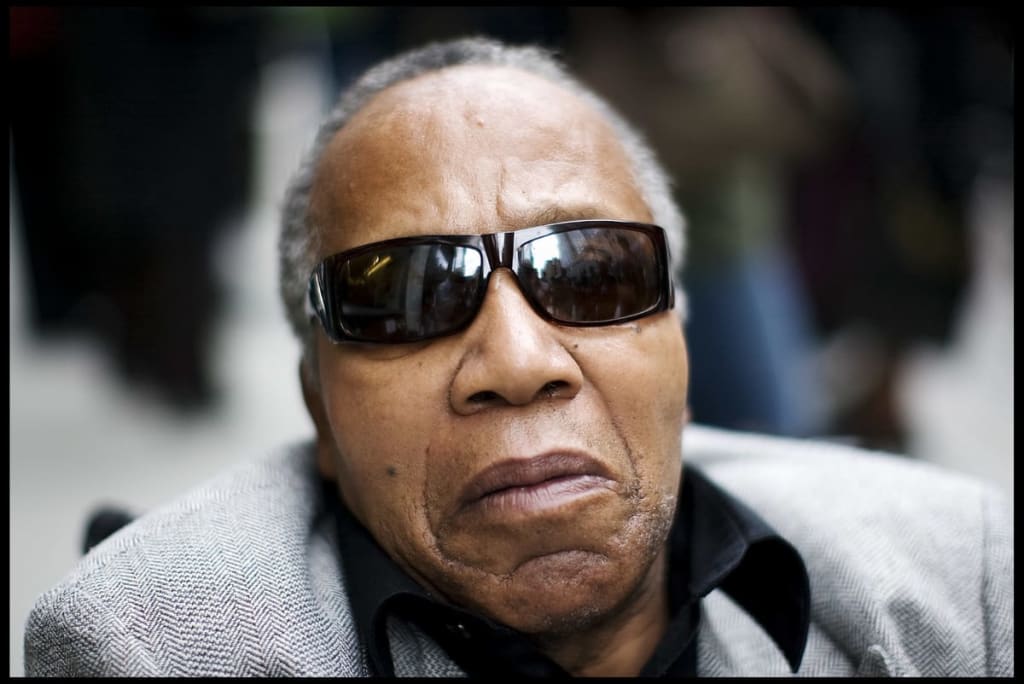
Frank Lucas was a notorious drug lord who rose to power in the 1970s, carving out an empire in Harlem, New York City. Born in 1930 in La Grange, North Carolina, Lucas grew up in poverty and faced the harsh realities of racism and inequality in the segregated South. His early life was marked by hardship and crime, but it was in the heart of New York’s gritty streets that he would become one of the most feared men in the drug trade.
Early Life and Entry into Crime
Lucas’s early years were marked by tragedy and struggle. His father, a farmer, died when he was young, leaving his family to fend for themselves. As a teenager, Frank moved to New York City in the early 1940s, settling in Harlem. During this time, he fell into a life of crime, as many young men in his position did, and quickly became involved in the street hustle. He started out working for the infamous drug lord Bumpy Johnson, a well-known figure in Harlem’s underworld, who served as both a mentor and protector to Lucas.
Bumpy Johnson was a legendary gangster who controlled much of Harlem’s illegal activities, including drug trafficking. Under Johnson’s tutelage, Lucas began to rise through the ranks. However, the death of Bumpy Johnson in 1968 would create a power vacuum in Harlem’s drug trade, one that Lucas would seize with ruthless ambition.
The Rise of the “American Gangster”
In the late 1960s and early 1970s, the heroin trade in the U.S. was at its peak. The demand for the drug was soaring, and many street-level dealers and organized crime families were vying for control of the lucrative market. Frank Lucas, who had learned the ins and outs of the trade under Bumpy Johnson, saw an opportunity to expand his reach by cutting out the middlemen. He sought to create a direct supply chain that would bring heroin straight from Southeast Asia, bypassing the traditional Italian Mafia-run distribution networks.
Lucas turned to a unique and audacious method to gain access to the raw heroin. He established direct contacts with military officials and local drug lords in Vietnam during the Vietnam War. By making connections with people who had access to the opium poppy fields in the Golden Triangle — the region where the borders of Thailand, Laos, and Myanmar converge — Lucas was able to smuggle high-quality heroin into the U.S. He famously referred to his operation as the “Blue Magic” heroin business, known for its purity and potency, which made it highly sought after.
Instead of relying on traditional smuggling routes used by the Mafia, Lucas personally oversaw the importation process. He used the coffins of deceased American soldiers being shipped back to the U.S. from Vietnam to conceal the heroin. By hiding the drugs in the coffins, Lucas was able to evade detection by law enforcement, who were not likely to inspect the remains of fallen soldiers.
Lucas’s heroin was so pure that it became a sensation in New York City, particularly in Harlem. He flooded the streets with the drug, and soon, his empire stretched across the East Coast, from New York to Washington, D.C., and as far as Miami. He avoided the usual pitfalls of the drug trade by being discreet, maintaining a low profile, and operating with a sense of military-like discipline. He became the dominant figure in the heroin market in Harlem, earning a reputation as a calculating and fearless businessman.
Life as a Kingpin
By the mid-1970s, Frank Lucas was living a life of extreme wealth and power. He owned a luxurious mansion in the affluent suburb of Teaneck, New Jersey, and often flaunted his wealth with lavish parties and ostentatious displays of his success. His inner circle of trusted associates helped him manage his sprawling empire, ensuring that operations ran smoothly and without interference from law enforcement.
Lucas was known for his strict code of loyalty. He kept a tight-knit crew and used intimidation and violence to maintain order. One of his most notorious tactics was his method of dealing with betrayal or disloyalty. He was quick to silence anyone who crossed him, often in brutal fashion, ensuring that the fear of retribution kept his associates in line.
Lucas also took care to invest in legitimate businesses, further cementing his status as a powerful figure. He opened up several establishments in Harlem, including a nightclub, and even made connections with high-profile figures in the entertainment industry. However, despite his wealth and success, Lucas remained a deeply suspicious and secretive individual, rarely revealing the full extent of his operation to even those closest to him.
His operation continued to expand throughout the 1970s, but his rise to power would not go unchallenged. As Lucas grew in influence, so did the attention of law enforcement agencies, both local and federal. The Drug Enforcement Administration (DEA) and the FBI were beginning to close in on him, but Lucas remained elusive for years.
The Fall of Frank Lucas
Despite his efforts to remain under the radar, the authorities were beginning to piece together the extent of Lucas’s operation. In 1975, the DEA made a breakthrough in their investigation, and Lucas’s network began to unravel. One of the key pieces of evidence came from the testimony of one of his former associates, who turned informant in exchange for leniency. The authorities also uncovered significant evidence linking Lucas to the heroin trade, including his involvement with corrupt law enforcement officers who had been paid off to turn a blind eye.
In 1976, after an extensive investigation, the authorities launched a massive operation to bring Lucas down. He was arrested on drug trafficking charges and was convicted in 1977. However, his conviction was not the end of his troubles. During his time in prison, Lucas’s empire collapsed as rival drug dealers fought for control of his territory.
In exchange for a reduced sentence, Lucas cooperated with law enforcement, providing valuable information about his associates, corrupt police officers, and the inner workings of the heroin trade. His cooperation helped lead to the convictions of numerous individuals in the drug trade, but it also earned him the resentment of many in the criminal world.
Frank Lucas was sentenced to 70 years in prison but was eventually released on parole in 1991 after serving only about five years. After his release, he lived a quiet life, largely staying out of the public eye. His story, however, became the subject of widespread attention, especially after the release of the 2007 film American Gangster, in which Lucas was portrayed by actor Denzel Washington.
Legacy
Frank Lucas’s story is one of ambition, cunning, and ruthlessness. He was a man who defied the odds to rise from humble beginnings to become one of the most powerful figures in the American drug trade. Though his empire was ultimately destroyed, his life remains a testament to the allure of wealth and power, as well as the dangers of living outside the law.
Lucas’s legacy is complicated. While he was a hero to some in Harlem, who admired his ability to break the mold and carve out his own path, he was also responsible for the destruction of countless lives through the heroin epidemic. His story, like many in the world of organized crime, is a cautionary tale about the cost of ambition and the inevitable consequences of living a life of crime.
About the Creator
Keep reading
More stories from jhony aour and writers in History and other communities.
Pablo Escobar's life
Pablo Escobar, one of the most notorious figures in modern history, was born on December 1, 1949, in Rionegro, Colombia, and raised in the nearby city of Medellín. His rise from humble beginnings to becoming one of the richest men in the world is a story marked by ambition, crime, and a complex legacy.
By jhony aourabout a year ago in History
Dust
It was dust. Dust had weight there. It pressed into your mouth when you breathed, ground against your teeth, settled into the creases of your eyes. It coated our boots and crept into our weapons no matter how carefully we cleaned them. When the wind picked up, it hissed across the ground like something alive. Long before I heard a shot fired, I understood that the dust would get inside me and never really leave.
By Gaofeng Wang4 days ago in History
A Crisis of Power, Politics, and the People
The relationship between Venezuela and the United States remains one of the most complicated political dynamics in the Western Hemisphere. Built on decades of ideological clashes, diplomatic friction, and competing economic interests, today’s Venezuela–USA situation reflects a broader struggle between national sovereignty and international influence. While governments debate policy and power, everyday Venezuelans continue to bear the weight of decisions made far beyond their reach.
By Muhammad Islam khan swati3 days ago in History
"Hear Me Out"
"Hear me out, what if we ran away together?" "Where do you want to go?" "Anywhere but here. We could move to a new city or to Canada, or we could disappear from society to live in the middle of the woods. Maybe a combination of two of those things would be good. What do you say?"
By Kay Husnick7 days ago in Fiction


Comments
There are no comments for this story
Be the first to respond and start the conversation.