
Fort Jesus Stands Guard Over Kenya's Coastline
A Portuguese stronghold echoing centuries of coastal conflict and culture
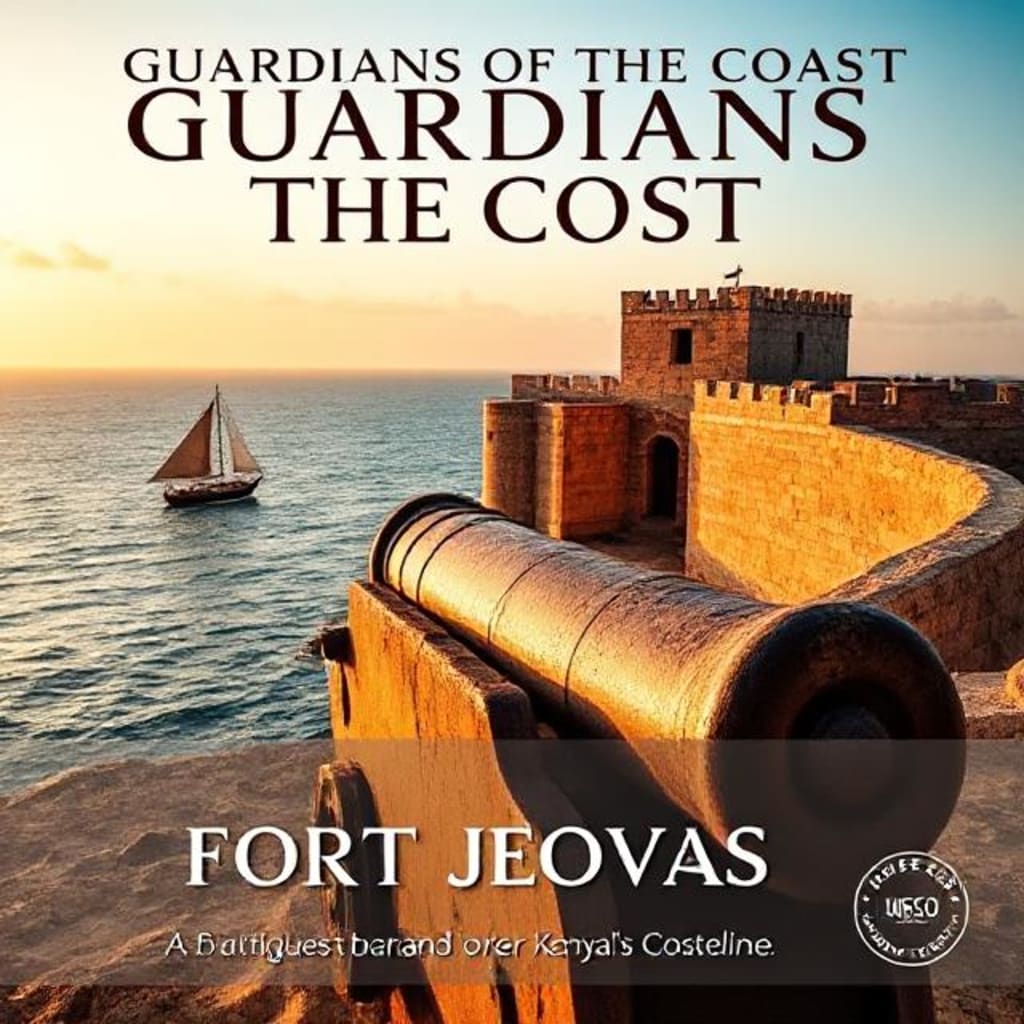
Fort Jesus – Kenya: A Monument to Power, Conflict, and Cultural Exchange
Perched strategically on the edge of the Indian Ocean, overlooking the old harbor of Mombasa, Fort Jesus stands as a silent sentinel to over four centuries of history. Built by the Portuguese between 1593 and 1596, this bastion of European military architecture was designed to protect their interests along the East African coast, a region that had become increasingly vital due to its lucrative trade routes and access to spices, ivory, and slaves.
The fort was commissioned by King Philip I of Portugal (also King Philip II of Spain), during a time when Portugal was expanding its colonial empire in Africa and Asia. Italian architect Giovanni Battista Cairati was tasked with designing the fort, opting for a robust Renaissance military style that was both functional and symbolic. The structure was crafted from coral stone, native to the region, and shaped like a man when viewed from above – a symbolic representation of protection and power.
Fort Jesus was not merely a military installation. It was a microcosm of the broader geopolitical tensions of the 16th and 17th centuries. The fort changed hands multiple times over the next several centuries. In 1631, the Sultan of Mombasa, Yusuf ibn al-Hasan, captured the fort from the Portuguese in a bloody rebellion. However, the Portuguese later regained control, only to lose it again to the Omanis in 1698 after a prolonged siege that lasted nearly three years.
The Omani Arabs, realizing the strategic value of Fort Jesus, maintained control for nearly a century and a half. During this period, they reinforced the fort, altered some of its structures, and used it as a base for spreading Islamic influence along the coast. The Arabs left behind distinct architectural features, such as domed structures and prayer niches, which can still be seen today.
In the 19th century, Fort Jesus fell under British control as part of their broader colonial rule over Kenya. The British used the fort as a prison, and it remained a detention center well into the mid-20th century. The brutal and inhumane conditions during this era stand in stark contrast to its earlier roles, highlighting how the fort’s purpose evolved with each ruling power.
Through the centuries, Fort Jesus has seen sieges, occupations, and revolts, bearing witness to the clash of empires, cultures, and religions. The fort's layered history is evident in its architecture – Portuguese carvings on thick stone walls, Omani guard posts, and British colonial modifications all intertwine to create a unique structure that narrates a multifaceted past.
Today, Fort Jesus is one of Kenya’s most treasured heritage sites. In 2011, it was designated a UNESCO World Heritage Site due to its cultural and historical significance. It now operates as a museum under the care of the National Museums of Kenya. The museum showcases artifacts from the various eras of the fort’s history, including Portuguese cannons, Omani jewelry, and Swahili ceramics. Visitors can walk through old cells, climb battlements, and gaze out over the Indian Ocean, experiencing a powerful sense of the past.
The fort also serves as a cultural venue, hosting events, exhibitions, and reenactments that aim to educate the public and preserve Kenya’s rich coastal history. Its location in Old Town Mombasa places it at the heart of a city that has long been a melting pot of African, Arab, Persian, Indian, and European influences.
Fort Jesus is more than just an architectural relic. It is a living monument to resilience, adaptation, and the enduring human desire to control and protect. Its presence reminds us of the global interconnectedness of history – how decisions made in European courts affected lives on the African coast, how trade drove conquest, and how culture finds ways to survive even through the hardest of times.
In a modern Kenya that continues to wrestle with its colonial past and forge a new national identity, Fort Jesus offers a powerful symbol of both the pain and the pride of history. It invites us to reflect not only on the empires that once battled for control of the sea but also on the enduring spirit of the Swahili coast – a place where cultures converge, and history is carved into stone.
About the Creator
Keep reading
More stories from Mukhtiar Ahmad and writers in History and other communities.
Leptis Magna Reveals Roman Grandeur
Leptis Magna – Libya Nestled along the Mediterranean coast of modern-day Libya lies one of the ancient world’s most impressive archaeological treasures: Leptis Magna. Once a thriving Roman city, Leptis Magna stands today as a breathtaking reminder of Rome’s grandeur and its expansive reach across North Africa. Its monumental architecture, well-preserved ruins, and rich history make it one of the best-preserved Roman cities outside Italy.
By Mukhtiar Ahmad8 months ago in History
India’s Biggest Bank Fraud: Vijay Mallya
An Indian man who was once called the “King of Good Times” in his era lived a life like a king. He would throw parties worth millions of rupees in a single night. While billionaires around the world owned private jets, he even had his own Boeing 727.
By Imran Ali Shah5 days ago in History
Becca
"Everything is so... flat." Denille said stupidly as she looked around her new neighborhood. She looked around at the muted desert where even the smallest sign of life seemed to have given up. The plant life was shrubs that were half cooked by the heat and where there should have been a lawn, a mess of white rocks laid glistening in the sun. Even the sky looked stretched thin, like the sun had ironed it smooth. She’d moved from Riverside, where at least there were hills, but here in Barstow, everything felt baked and brittle.
By Sara Wilson7 days ago in Fiction


Comments
There are no comments for this story
Be the first to respond and start the conversation.