

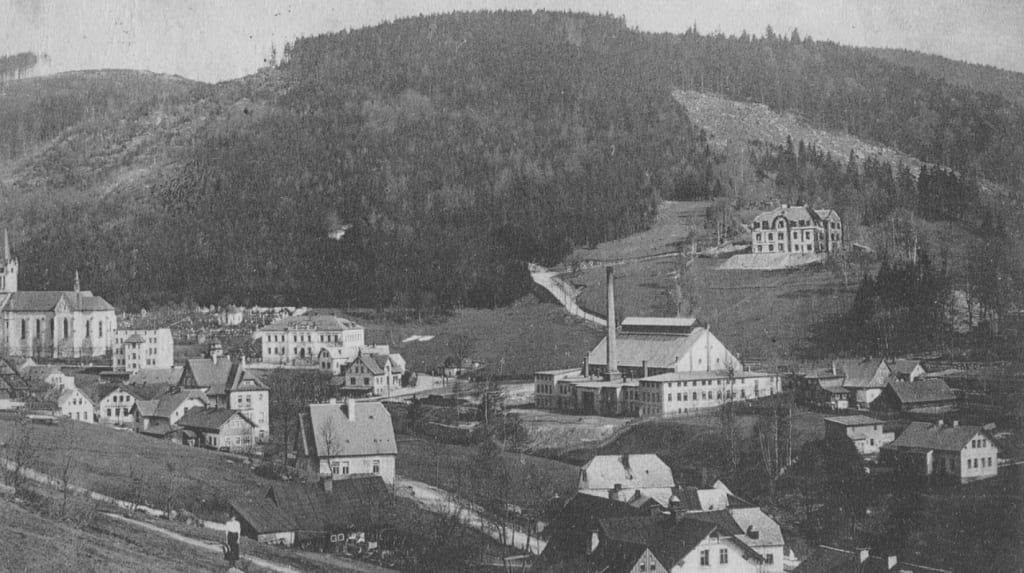
Since the middle ages, glass factories in Europe have been located in forest areas such as the Black Forest of Bavaria and the Jizera Mountains of Northern Bohemia. Sometime around the late 1500's German glass makers were invited to Bohemia by King Charles and other prominent noblemen in the empire to re-locate their glass factories in this mountainous region. They were offered land, workers, resources for a growing industry in Europe's leading empire of the day. Many German industrialists came, and laid the seeds for the future Sudetenland.
Technology at that time required wood to fuel the kilns to produce glass, along with sand and water. The mountainous forests of largely unpopulated Northern Bohemia and southern Poland provided everything needed.
The glassmaker would locate his factory in the middle of the forest, on the banks of a fast flowing stream, and begin glass production. Mule teams would fan out from the factory with loggers and wagons, cutting down trees to provide fuel for the kilns.
Small support villages would spring up next to the factory to house the local peasantry who worked in the factory, along with a school, church and other small businesses.
Depending on how much glass was produced at the factory determined how much wood was needed to be cut out of the forest, and each month or year the journey out from the factory to the edge of the forest grew longer and longer until it became unprofitable to continue operations at that location. Then the decision would be made to sell or shut down the glass hut/ factory and relocate to a new area of the mountain and start up operations all over again.
In some instances the nobleman who owned the forest withdrew his lease of the land to the factory owner because of the clear cutting and destruction of his forest which ruined his ability to hunt on his property.
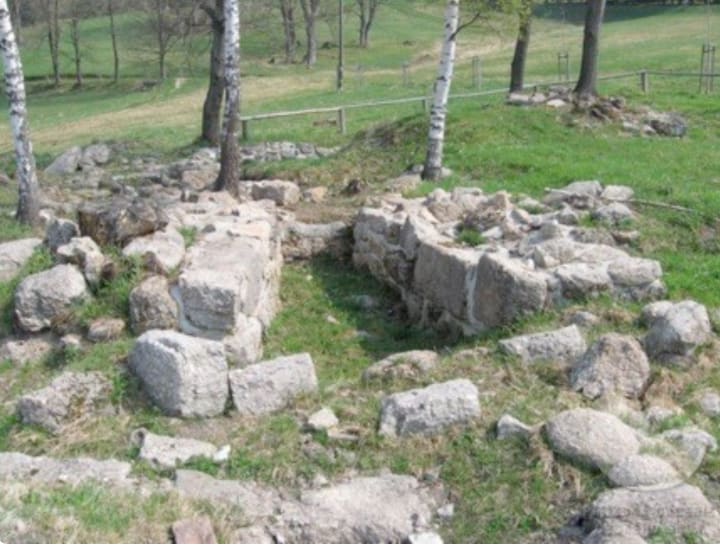
I Maybe if the glass hut was viable to the extent that a new owner could keep operations going with an extended logging operation and settled trade routes established, then the glass hut would keep producing and the village would remain, but evidence of hundreds of small glasshuttes/ factories scattered over the mountains of the Jizera Hory and the Giant Mountains indicate that most glass hut factories just shut down and re-located to a new area. In this way glass names such as Kittel, Riedel, Zenkner, Wanderer and Friedrich have surfaced all over this area with over a hundred glasshuttes under their belts. It doesn't mean that the glass industry was so popular that a hundred or more factories were needed to keep up the stock of glass and its by-products, but that they constantly needed to re-locate to new areas of forest to supply their kilns with wood. Most glasshuttes in this period were small affairs and could afford to re-locate cheaply and easily. So most vanished without leaving a trace, and the ruins are stumbled upon with no supporting historical information.
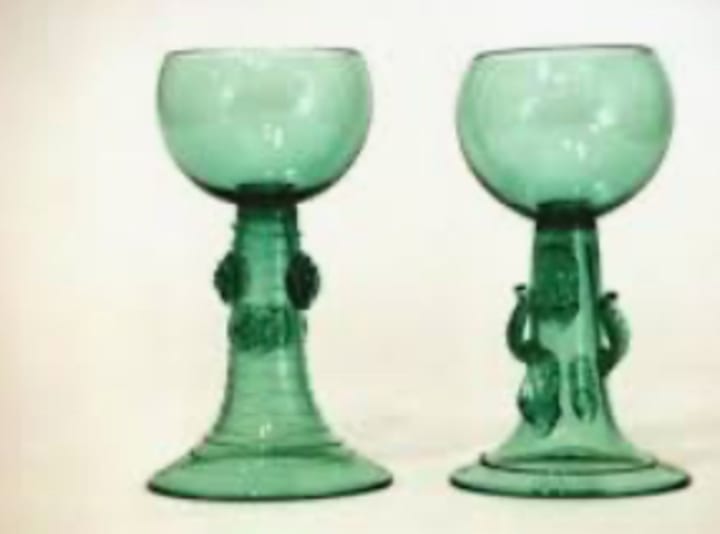
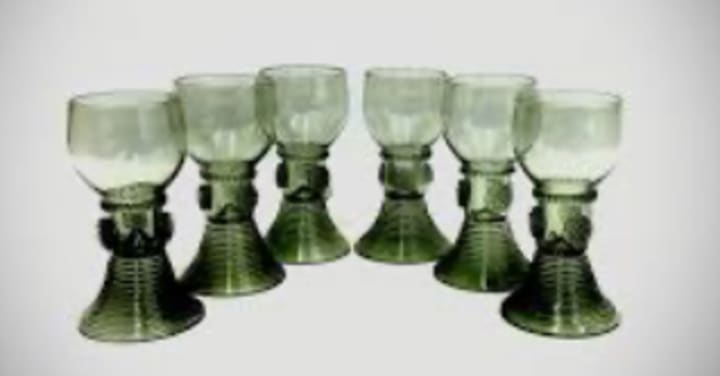
one such glassworks, the Renaissance Glassworks, was able to be identified by archeological research and glass object identification found at the site and comparisons of glass objects housed in the museums in the area.
By the 1800's liquefaction of coal had been invented and used to fuel the kilns of the glasshuttes, along with trains pulling freight cars, so expensive logging operations could be discontinued and factories did not have to re-locate to new forested areas to continue their insatiable lust for wood to fuel their kilns. The Riedel family was the dominant glass producing family at this time who took advantage of the new technology being offered, and saw the end of the forest glassworks era and the beginning of the industrial era. The rest is history.
About the Creator
Guy lynn
born and raised in Southern Rhodesia, a British colony in Southern CentralAfrica.I lived in South Africa during the 1970’s, on the south coast,Natal .Emigrated to the U.S.A. In 1980, specifically The San Francisco Bay Area, California.


Comments
There are no comments for this story
Be the first to respond and start the conversation.