
Fall of the Ottoman Caliphate
A turning point in Muslim history: a tragedy

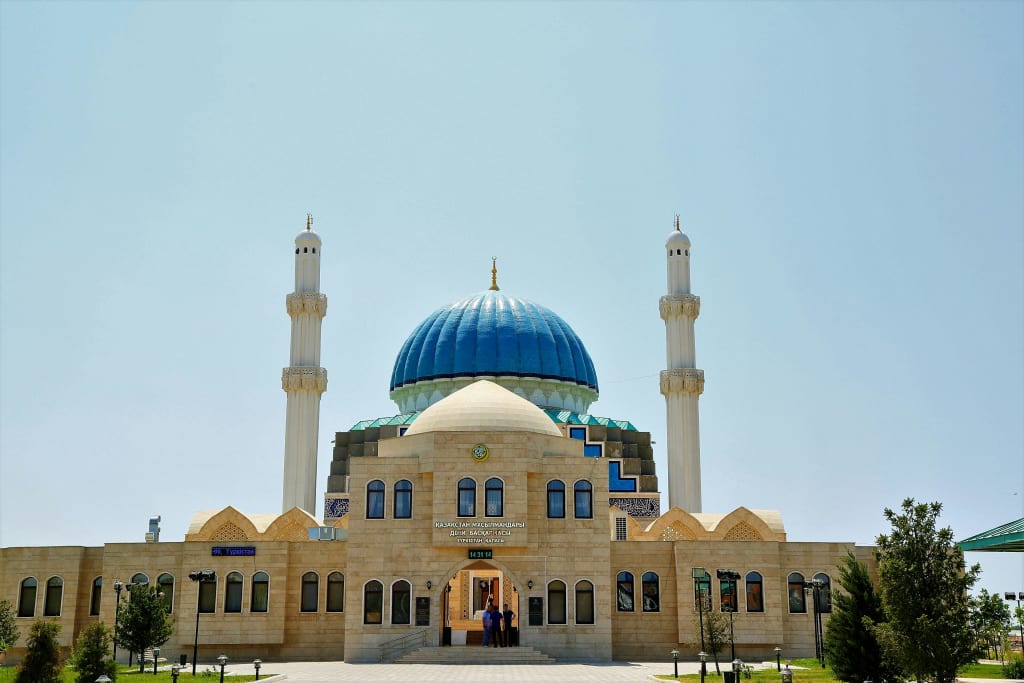
The fall of the Ottoman Caliphate is a tragic chapter in the history of the Muslim world, the impact of which is still felt in every corner of the Muslim world. This nearly six-hundred-year-old regime was not just a political structure—it was a symbol of the unity, solidarity, and Islamic civilization of the Ummah. The formal abolition of the Caliphate in 1924 marked the end of a chapter, but began a long era of confusion and division that has not ended to this day.
The Ottoman Caliphate was founded around 1300, under the leadership of Osman Gazi in Anatolia. Gradually, this small Turkish emirate grew into a vast empire, spanning three continents—Europe, Asia, and Africa. They were exemplary in Islamic law, judiciary, education, diplomacy, architecture, and culture. The Caliphate benefited not only Muslims, but also non-Muslims living under its umbrella in many ways.
The Ottoman Caliphate was a force that had held back European colonial ambitions for centuries. The Siege of Vienna, the Balkan Wars, and the Muslim presence inside Europe were all signs of its strength. However, history tells us that every rise and fall was followed by a period of decline. When luxury, leadership decay, and political intrigue increased within the Ottoman Caliphate, external enemies had an opportunity to strike.
In the 18th and 19th centuries, when Western countries were advancing with modern weapons, technology, and diplomacy in the wake of the Industrial Revolution and imperialism in Europe, the Ottomans were lagging behind. The administrative structure of the Caliphate was complex, its financial weakness was evident, and its military power was technologically weak. Added to this was the ‘Eastern Question’—the deep diplomatic plans of the European states to dismember the Ottoman Empire.
The world wars (especially the First World War) were a final blow to the Ottoman Caliphate. When the Caliphate fought for the Central Powers, Britain, France, and Russia joined forces to attack it. At the end of the war, the Caliphate's geographical parts were divided into pieces through the "Treaty of Sèvres". Britain and France divided the Arab territories—one of the proofs of which is the Sykes-Picot Agreement, on the basis of which the fate of Lebanon, Syria, Iraq, and Palestine was determined according to the will of the West.
However, the Caliphate's downfall was not only due to external conspiracies. Internal rebellions, pro-Western reforms disguised as modernity, nationalism, and Turkish Kemalism were the main factors in this downfall. Turkish nationalists, led by Mustafa Kemal Ataturk, formally abolished the Caliphate in 1924, calling it "unnecessary" and "archaic." As a result, the last unified political structure of the Muslim world collapsed forever.
The consequences of this abolition were far-reaching. First, the Muslim Ummah lost its leadership. Since the Caliphate was the single voice representing the world's Muslims, its demise led to the division of Muslims into separate states, each with its own interests, a separate system of government, and a separate foreign policy. Second, Islamic law and education were also weakened. Ataturk imposed Western-style secular laws, replaced Arabic with Turkish in the Latin script, and closed Islamic madrasas and institutions.
Third, a crisis of confidence arose in the Muslim world. Since the fall of the Ottoman Caliphate, there has been a lack of leadership, political division, and a mentality of accepting Western domination among Muslims. The Muslim world is no longer united under a single leadership. And the bloody history of all these Muslim lands—Palestine, Kashmir, Chechnya, Bosnia, Syria, Iraq, and Yemen—is also a result of this fall.
However, the fall of the Ottoman Caliphate is not just a history of suffering, it is a lesson. It teaches that if a nation forgets its morality, unity, and the pursuit of knowledge, if it drowns in worldly luxury and self-satisfaction, then its fall is inevitable. And if it remains unaware of the conspiracies of the external enemy, then that fall is not only of geography, but of self-identity.
If today's Muslim world wants to regain unity and self-respect, then there is no other way but to learn from the history of the Ottoman Caliphate. We need an awakening where leadership will be oriented towards the Hereafter, the state will be founded on justice, and the bond of the Ummah will be based not only on race, language, or territory, but on faith.
About the Creator
Keep reading
More stories from Abdul Barik and writers in History and other communities.
The mask of US human rightsism.
The Mask of US Human Rights: A History of the Empire of Oppression When the slogans of human rights, democracy or justice are spread on the world stage, the United States is the first. ‘Freedom’, ‘Liberty’, ‘Human Rights’—these words are like a miraculous mantra in their mouths. They have captured the world media, the UN arena, the highest levels of education and culture, and even the definition of human rights, binding them to their dominance. But the question is, is the United States really the protector of human rights? Or have they made human rights a political weapon, using which they have destroyed the foundations of nations, civilizations and humanity?
By Abdul Barik8 months ago in History
The Bronze Crown of Lydia
In the seventh century BCE, when kingdoms rose and fell like waves upon the shores of time, there stood a prosperous land called Lydia, nestled between mountains and rivers in what is now known as Anatolia. Lydia was famous for its fertile soil, its skilled artisans, and above all, its wealth. Gold flowed from the Pactolus River, and merchants traveled from distant lands to trade silk, spices, and stories. But the greatest story of Lydia was not written in gold—it was written in choice, pride, and consequence.
By The best writer 6 days ago in History
Girolamo Segato: The Scientist Who Turned Humans into Stone
The Mysterious Italian Genius Behind the Art of Human Petrification Girolamo Segato remains one of the most mysterious scientists of the 19th century, remembered not only for his scientific brilliance but also for a secret he took to his grave. Born in 1792 in Italy, Segato gained worldwide attention for achieving something that still puzzles scientists today: he discovered a method to turn human and animal body parts into stone-like fossils while preserving their detailed structure. Unlike mummification, Segato’s process created specimens that looked and felt like real stone, yet retained the microscopic details of living tissue. Early Life and Education Girolamo Segato was born in the small town of Sospirolo, near Belluno, Italy. From an early age, he showed a deep interest in science, anatomy, and natural history. He studied engineering and anatomy and later became involved in archaeological and scientific research. His curiosity eventually led him to Egypt, where he spent several years studying ancient civilizations, mummification techniques, and geological formations. Segato was deeply inspired by ancient Egyptian preservation methods, but he believed there was a way to go beyond traditional embalming. His goal was not just to preserve bodies but to transform organic tissue into an inorganic, stone-like substance. The Discovery of Human Petrification After returning to Italy, Segato began experimenting with human and animal remains. Over time, he developed a secret chemical process that allowed him to petrify body parts such as hands, feet, heads, and internal organs. These specimens were not dried or decayed. Instead, they became hard like marble or stone, resistant to time, moisture, and decay. What made Segato’s work extraordinary was the level of detail preserved. Veins, muscles, skin texture, and even facial expressions were visible in the petrified remains. Scientists who examined these objects noted that they were neither mummified nor fossilized through natural processes. They appeared to be something entirely new. Public Reaction and Fear Although Segato’s discovery was groundbreaking, it was also deeply unsettling to many people. In 19th-century Europe, turning human remains into stone was seen by some as unnatural or even blasphemous. Religious authorities and conservative groups accused Segato of practicing forbidden science. Because of this backlash, Segato struggled financially and socially. He tried to sell his method to scientific institutions, but fear and suspicion prevented widespread acceptance. Many people admired his work privately but were unwilling to support him publicly. The Secret That Died With Him One of the greatest mysteries surrounding Girolamo Segato is that he never revealed his petrification formula. Whether due to fear, mistrust, or lack of support, Segato chose to keep his process secret. When he died in 1836, the knowledge died with him. Today, no scientist has been able to fully replicate his results. Despite advances in chemistry and material science, Segato’s exact technique remains unknown. This has led to speculation ranging from lost chemical knowledge to deliberate secrecy caused by persecution. Preserved Works Today Some of Segato’s petrified specimens still exist and can be seen in museums in Florence, Italy, particularly at the Museum of the Basilica of Santa Croce. These stone-like human remains continue to attract researchers, historians, and visitors from around the world. Modern scientific analysis confirms that these objects are real human tissues transformed into a mineralized state. However, the precise chemical reactions involved remain unclear, adding to Segato’s legend. Legacy and Scientific Importance Girolamo Segato’s work challenges the boundary between life and stone, biology and geology. His experiments raise important questions about preservation, material transformation, and the ethics of scientific discovery. Although controversial, his research was far ahead of its time and continues to inspire curiosity. Some experts believe Segato’s work could have applications in modern science, such as long-term biological preservation, archaeology, or even medical research. Others view his story as a warning about how society sometimes rejects revolutionary ideas out of fear. Conclusion Girolamo Segato was not a madman, nor a magician. He was a scientist whose discovery frightened the world around him. By turning human tissue into stone, he achieved something that remains unexplained nearly two centuries later. His life is a powerful reminder that scientific progress often walks hand in hand with controversy. Though his secret is lost, Girolamo Segato’s legacy lives on—etched in stone, silent yet enduring, challenging humanity to question what is truly possible.
By Hasbanullah7 days ago in History



Comments
There are no comments for this story
Be the first to respond and start the conversation.