
Exploring the Enchanting Tapestry of European Tourism
History of Europe
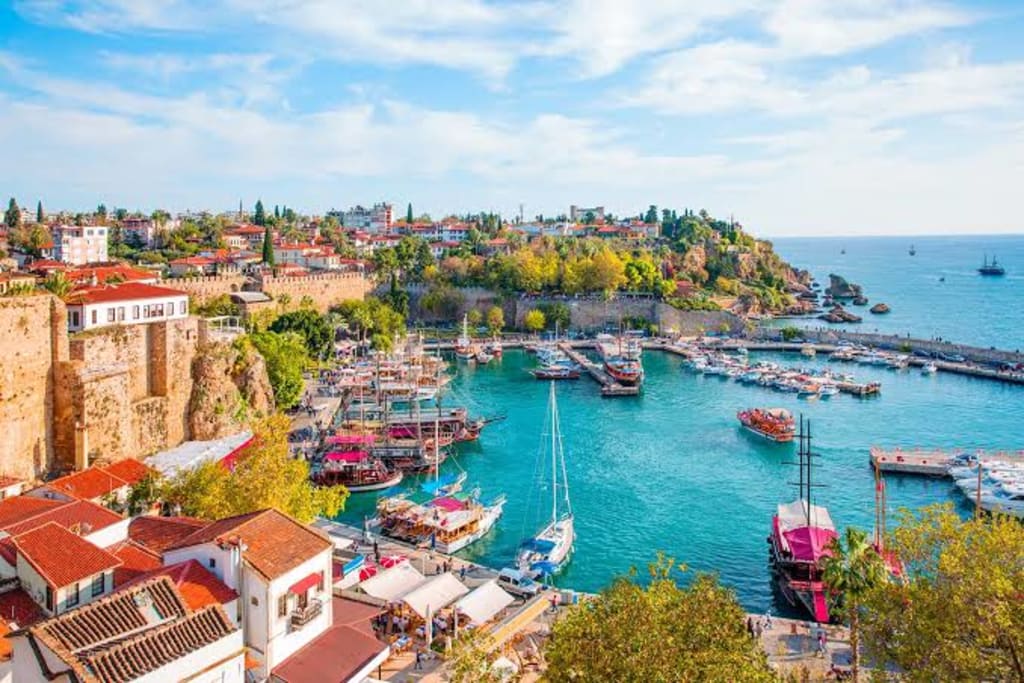
The history of Europe spans thousands of years and is a complex tapestry of cultures, civilizations, wars, and transformations. Here is a brief overview of key events and periods within the continent's history
1. Ancient Civilizations (3000 BCE - 500 CE):
Europe witnessed the rise and fall of mighty civilizations, including the Minoans and Mycenaeans, ancient Greece, and the Roman Empire. These civilizations laid the foundation for European culture, philosophy, and governance.
2. Fall of the Roman Empire (476 CE):
The disintegration of the Western Roman Empire marked the beginning of the Middle Ages. Europe experienced significant political and social changes as Germanic tribes, such as the Visigoths and Ostrogoths, carved out their own kingdoms.
3. Byzantine Empire (476 CE - 1453 CE):
While the Western Roman Empire crumbled, the Byzantine Empire in the East thrived. Byzantium acted as a bastion of Greek culture and preserved classical knowledge. It also served as a buffer against Islamic expansion.
4. Viking Age (793 CE - 1066 CE):
The seafaring Vikings, originating from Scandinavia, embarked on extensive voyages, raiding and trading across Europe, the Mediterranean, and even reaching North America. Their influence extended from the British Isles to the Byzantine Empire.
5. Feudalism and Medieval Europe (800 CE - 1300 CE):
Feudalism emerged as a dominant social and economic system, where land was exchanged for loyalty and military service. The Catholic Church held considerable power, and Europe was shaped by the Crusades, which aimed to reclaim the Holy Land from Muslims.
6. Renaissance (14th - 17th centuries):
The Renaissance brought a cultural and intellectual awakening, focusing on art, literature, and scientific discovery. Prominent figures like Leonardo da Vinci and Michelangelo emerged, challenging the dominant religious worldview and fostering new ideas.
7. Age of Exploration (15th - 17th centuries):
European powers, including Portugal, Spain, England, France, and the Netherlands, embarked on ambitious voyages of discovery. Explorers like Christopher Columbus, Vasco da Gama, and Ferdinand Magellan expanded European influence worldwide, leading to the colonization of the Americas, Africa, and Asia.
8. Reformation and Counter-Reformation (16th century):
Religious conflicts erupted with the Protestant Reformation, initiated by Martin Luther, challenging the Catholic Church's authority. This led to wars and divisions across Europe. The Counter-Reformation aimed to revitalize Catholicism and counter Protestant gains.
9. Enlightenment (17th - 18th centuries):
The Enlightenment emphasized reason, science, and individual rights, sparking social and political revolutions. Thinkers like John Locke, Voltaire, and Montesquieu advocated for liberty, equality, and the separation of powers, influencing democratic movements.
10. French Revolution and Napoleonic Era (1789 - 1815):
The French Revolution overthrew the monarchy, ushering in an era of radical political change. Napoleon Bonaparte rose to power and embarked on a series of military campaigns, spreading revolutionary ideals and reshaping European borders.
11. Industrial Revolution (18th - 19th centuries):
The Industrial Revolution transformed Europe, shifting societies from agrarian to industrial economies. Inventions like the steam engine revolutionized production methods, leading to urbanization, social upheaval, and economic growth.
12. World Wars and Post-War Europe (20th century):
The 20th century witnessed two devastating world wars. World War I shattered empires and redrew boundaries, while World War II brought immense destruction and genocide. These conflicts prompted the formation of the European Union, aiming to prevent future wars.
13. Cold War and Post cold war Europe (1945 - 2021):
The aftermath of World War II saw Europe divided into two spheres of influence: the democratic Western Bloc led by the United States and the communist Eastern Bloc led by the Soviet Union. The Cold War dominated global politics for decades, with Europe serving as a battleground for ideological and geopolitical conflicts.
The fall of the Berlin Wall in 1989 marked the beginning of the end of the Cold War and led to the reunification of Germany. The dissolution of the Soviet Union in 1991 further reshaped Europe's political landscape, allowing for the emergence of new independent states.
The European Union expanded its membership, fostering economic integration and cooperation among European nations. The Eurozone was established, adopting a single currency, the euro. The EU aimed to promote peace, stability, and prosperity, and it became a significant global player.
However, challenges persisted. The Balkans experienced violent conflicts, notably in the 1990s, resulting in the breakup of Yugoslavia and the intervention of international forces. The EU played a role in stabilizing the region and encouraging reconciliation.
In recent years, Europe has grappled with various issues, including economic crises, the influx of refugees and migrants, and the rise of nationalist and populist movements. Brexit, the withdrawal of the United Kingdom from the EU, has also had a profound impact on the continent's dynamics.
Europe continues to navigate these challenges while adapting to an evolving global landscape. It faces the task of fostering unity among its diverse member states while addressing social, economic, and environmental concerns in a rapidly changing world.
In conclusion, Europe's history is a rich tapestry of civilizations, conflicts, and transformations. From the ancient civilizations of Greece and Rome to the Renaissance, the Age of Exploration, and the challenges of the modern era, Europe's story is one of constant change, adaptation, and resilience.
About the Creator
Keep reading
More stories from writers in History and other communities.
The Quiet Rise of Global Militarization
The Quiet Rise of Global Militarization Across the world, governments are increasing military spending, expanding defense industries, and modernizing weapons systems—often without openly acknowledging why. There are no formal declarations of war, no mass troop mobilizations, and no clear enemy named in many cases. Yet behind the scenes, a quiet shift is taking place. Global militarization is rising, not loudly, but steadily, reshaping international relations in ways that may define the coming decades.
By Wings of Time about 10 hours ago in History
3 Completely Innocent Decisions That Ended Very Badly
Most disasters don’t begin with villainous laughter or ominous music. They begin with someone making a perfectly reasonable decision. Sensible, even. The kind of choice you’d defend confidently if questioned later.
By Enoch Saginiabout 9 hours ago in History




Comments
There are no comments for this story
Be the first to respond and start the conversation.