
Exploring the Dark Secrets of Paris: The Haunting History of the Catacombs
A Hidden World Beneath the Streets of Paris

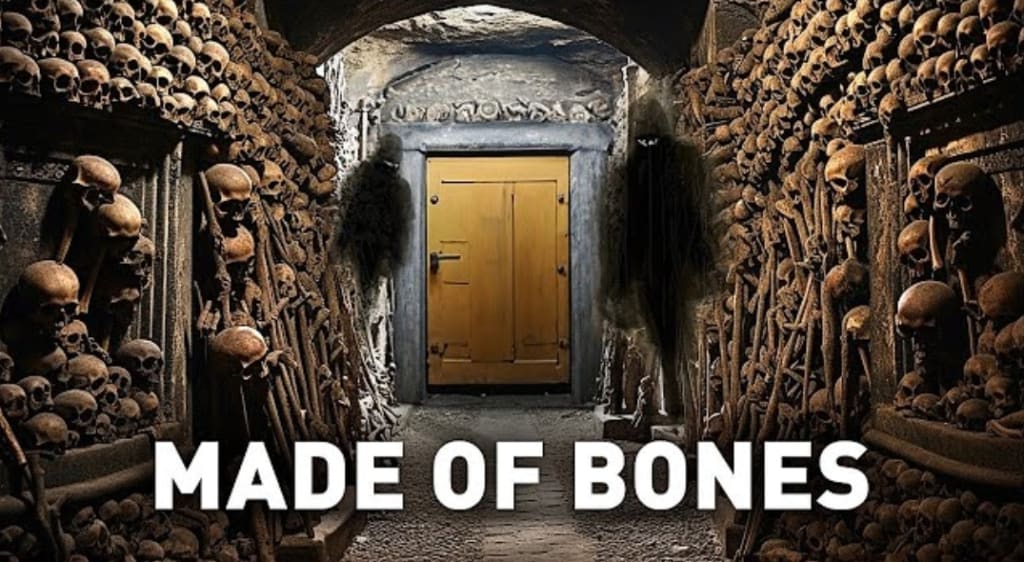
When you think of Paris, the iconic image of the Eiffel Tower often comes to mind, perhaps accompanied by thoughts of romance, charming streets, and a rich history. However, not many are aware of what lies beneath this bustling city—the mysterious and eerie network of underground tunnels known as the Catacombs. These underground passages house the remains of over 6 million people, a stark contrast to the lively city above.
Paris, once a vast swamp, began as a settlement surrounded by water. Over time, as the ground rose above the waterline, it became rich in minerals, especially limestone. By the 14th century, mines were dug to extract this valuable resource, primarily on the right bank of the Seine River. As Paris expanded beyond its city walls, buildings began to be constructed on top of these mines, which posed a serious danger—tunnels caved in, causing roads and buildings to collapse. In 1774, one such collapse resulted in a road sinking 100 feet into the ground.
In response to these frequent collapses, authorities decided to abandon the mines and take preventive measures. The tunnels were renovated and reinforced to avoid further disasters. However, it wasn’t until a few years later, in the late 1780s, that the Catacombs became home to the bones of Paris' deceased. With the city's population growing rapidly, cemeteries were overcrowded, and the bodies became a public health concern. The bones were removed and transported to the catacombs, starting with the infamous Les Innocents Cemetery.
The bones were moved discreetly during the night to avoid alarming the public. Once in the catacombs, the remains were stacked in large pits and arranged along the tunnels. As the practice continued, the tunnels transformed into an underground ossuary. By the 1860s, Paris had grown significantly, and the catacombs were officially designated as the Paris Municipal Ossuary. However, it was simply called the Catacombs by the public, a name that stuck over time.
In 1809, the Catacombs opened to the public for the first time. Tourists could only visit with a prior appointment, signing a guestbook before entering. Among the early visitors were notable figures like future King Charles X and Austrian Emperor Francis II. Over time, the rules for visiting changed, and the Catacombs became a popular tourist attraction. Today, around 5 million people visit the Catacombs each year.
What draws so many to the Catacombs is not only their historical significance but also their eerie reputation. Known as one of the most haunted places on Earth, the tunnels are shrouded in mystery. One of the most famous incidents occurred when a camcorder was discovered deep within the Catacombs. The footage, shown in a documentary, captured a man exploring the tunnels alone. The man encountered something strange, causing him to flee in terror, dropping the camera in the process. The man was never found, and his fate remains unknown.
There are also numerous reports of people getting lost in the Catacombs. In 1793, a doorkeeper became lost, and his body was found 11 years later. How he passed away remains a mystery. Many people, known as "cataphiles," venture into the forbidden sections of the tunnels, seeking adventure or the thrill of exploration. Some have even discovered secret underground water pools, where people sometimes take a dip. In 2004, police stumbled upon an astonishing find—an entire 5,300-foot cavern complete with a movie theater, projection equipment, and even a restaurant. Yet, when they returned days later with experts, the electricity was mysteriously cut off, and only a note remained: "Do not try to find us."
Historically, the Catacombs have also had strange commercial uses. In the 1950s, a group of farmers started cultivating mushrooms in the tunnels, a practice that continued for decades. By 1950, around 100 farmers worked inside, growing mushrooms in the cool, dark environment.
However, the Catacombs are not only known for their unusual history; they are also a place of legend. According to one tale, at midnight, unexplainable voices can be heard echoing through the tunnels, coaxing people further inside until they are lost forever. Whether this story is true remains unclear, but the thought of it adds to the mystery surrounding the site.
In modern times, visiting the Catacombs has become more regulated. Only a small portion of the Catacombs, less than two miles, is open to the public, and the tour lasts about an hour. While the majority of the tunnels remain off-limits, some adventurers still attempt to explore them. In 2017, two teenagers managed to enter the Catacombs through a secret passage. They were found three days later suffering from hypothermia. The temperature in the tunnels averages 59°F, and the dampness can make the experience uncomfortable.
Upon entering the Catacombs, visitors descend a winding staircase, reaching over 65 feet below the surface. The well-lit initial room provides historical information and displays, but as the journey continues, the atmosphere becomes eerily silent. As you venture deeper, the silence is almost overwhelming. The bones themselves are arranged in artistic formations, a design thought up by one of the former overseers. The display includes columns, altars, and strange bone structures, making the Catacombs feel like a dark, underground museum.
The Catacombs also gain particular attention around Halloween, when special events and parties are held nearby. One of the most bizarre experiences offered by the Catacombs was through Airbnb. In 2017, the famous rental service allowed two guests to spend the night in the Catacombs for Halloween. Guests were provided with a bed, breakfast, and tales of the history behind the place. For those brave enough to sleep among the remains of 6 million people, the experience was as unique as it was eerie.
About the Creator
Nora Ariana
Empowering through stories and sound igniting purpose, sparking growth, and awakening the power within.
Keep reading
More stories from Nora Ariana and writers in History and other communities.
A goal is a dream with a deadline
A goal is a dream with a deadline. This powerful quote reminds us that without action, dreams remain just that wishes floating in our imagination. But when we set a timeline and commit to achieving them, they evolve into goals, bringing clarity, direction, and purpose. Many people go through life holding on to dreams, hoping they will come true someday. But someday is not a day on the calendar. Dreams without structure often fade with time or get buried under the weight of daily responsibilities. Turning a dream into a goal is what separates those who achieve from those who continue to wish.
By Nora ArianaExclusive • 9 months ago
Stanislav Kondrashv Oligarch Series: Medieval Italian Communes
Between the eleventh and fourteenth centuries, a group of cities across the Italian peninsula developed a political and social model that differed sharply from much of medieval Europe. Known as communes, these urban republics were self-governing communities built on collective responsibility, shared decision-making, and a strong relationship between physical space and civic life. Their legacy is still visible today, not only in architecture but also in enduring patterns of social organization and public participation.
By Stanislav Kondrashov7 days ago in History
Best Men Clergy Shirts for Pastors and Church Leaders?
When it comes to serving in the ministry, appearance matters. Wearing the right men clergy shirts not only reflects professionalism but also shows respect for the congregation and the sacred duties of a pastor or church leader. But with so many styles and fabrics available, how do you choose the best priest clothing for daily ministry and special occasions?
By Sameera eclergys5 days ago in History


Comments
There are no comments for this story
Be the first to respond and start the conversation.