
Exploring Edinburgh’s Hidden Past: The Forgotten Street Beneath the National Library of Scotland
Ancient Place

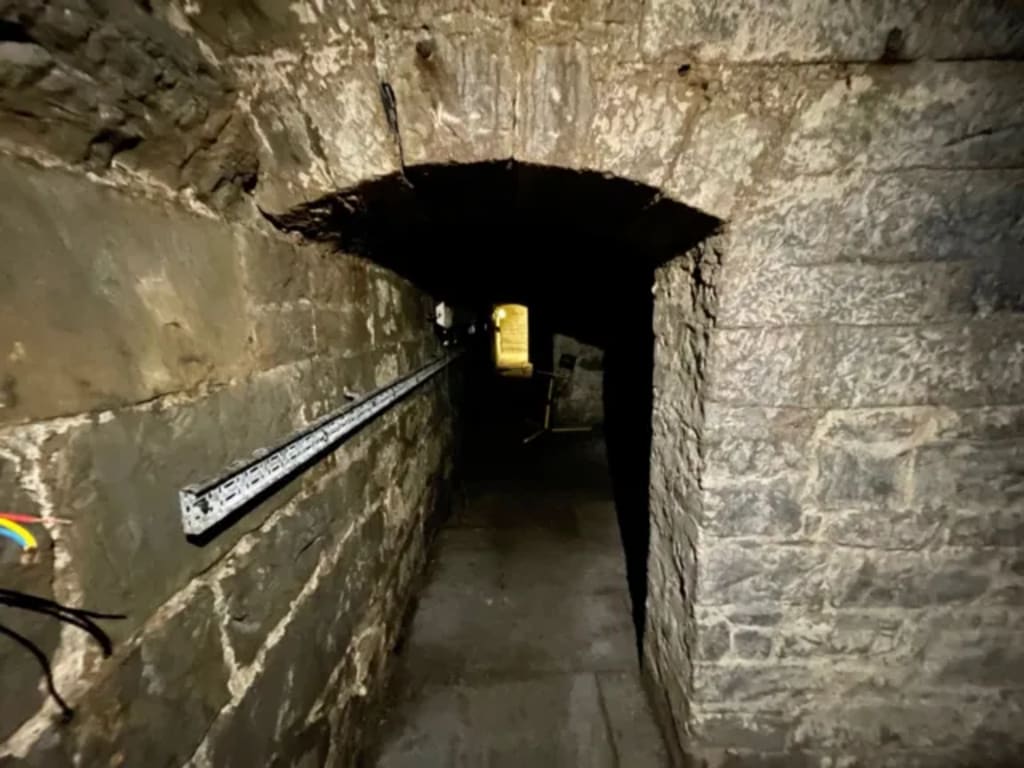
Deep within the lower floors of the National Library of Scotland, behind a nondescript door, lies a remarkable piece of Edinburgh’s history that time almost forgot. This hidden gem is Libberton’s Wynd, a long-lost street offering a rare glimpse into how Scotland’s capital city looked centuries ago.
Nestled between the walls of the George IV Bridge and the library, this preserved fragment of the past transports visitors back to a time before modern urbanization reshaped the landscape of Edinburgh’s Old Town. For history enthusiasts and curious explorers, Libberton’s Wynd is a fascinating reminder of the city’s layered history and architectural evolution.
Libberton’s Wynd: A Forgotten Thoroughfare
Libberton’s Wynd was once a bustling street in the heart of Edinburgh’s Old Town. In the 18th and early 19th centuries, it served as an important thoroughfare, connecting the Cowgate to the High Street. This winding street, like many others in Old Town, was lined with tall, crowded tenements that typified the city’s medieval layout. Narrow alleys, steep staircases, and tightly packed buildings defined the character of the area, creating a labyrinthine network of streets that reflected the city’s growth over centuries.
However, Edinburgh’s Old Town faced significant challenges in the early 19th century. Overcrowding, poor sanitation, and crumbling infrastructure prompted city planners to embark on ambitious redevelopment projects to modernize the area. One such project was the construction of George IV Bridge, a grand thoroughfare designed to improve connectivity between the city’s Old and New Towns.
In the 1830s, Libberton’s Wynd, like many other streets, was sacrificed to make way for this modern bridge. The street was demolished, its remnants buried beneath the new structure. For nearly two centuries, Libberton’s Wynd remained hidden, its story largely forgotten by the public.
A Door to the Past
The rediscovery of Libberton’s Wynd beneath the National Library of Scotland was a stroke of serendipity. During renovations and structural assessments, fragments of the old street were found remarkably well-preserved between the library’s foundation and the bridge walls.
Today, access to Libberton’s Wynd is through a hidden door within the National Library, a discreet portal that opens onto a fragment of Edinburgh’s past. Visitors stepping through the door find themselves transported to a bygone era, where the cobbled streets and stone walls evoke the city’s medieval charm.
What Remains of Libberton’s Wynd?
While much of the original street was demolished, the surviving section of Libberton’s Wynd provides a vivid snapshot of Old Town life. The narrow, cobbled path and the remnants of stone tenements give visitors a sense of the cramped and busy conditions that once characterized the area.
The walls bear the marks of history, with weathered stones and faded inscriptions hinting at the lives of those who lived and worked there. It’s easy to imagine the bustling street scenes of the past: merchants selling goods, children playing, and neighbors exchanging news in the tightly packed community.
The preservation of this section of the street serves as a valuable archaeological and historical resource, shedding light on Edinburgh’s urban development and the daily lives of its residents centuries ago.
Edinburgh’s Layered History
Libberton’s Wynd is not an isolated example of Edinburgh’s hidden history. The city is famous for its layered architecture, where new buildings were often constructed atop older structures. This unique feature of Edinburgh’s urban landscape has created a palimpsest of history, with remnants of the past waiting to be discovered beneath the surface.
Other examples of Edinburgh’s hidden past include Mary King’s Close, an underground street preserved beneath the Royal Mile, and the South Bridge Vaults, a network of chambers buried beneath the bustling thoroughfare. These hidden spaces offer a glimpse into the city’s rich and complex history, providing a stark contrast to the modern streets above.
Preservation and Public Interest
Efforts to preserve and study Libberton’s Wynd reflect a growing recognition of the importance of Edinburgh’s architectural heritage. By maintaining these fragments of the past, historians and archaeologists can gain valuable insights into the city’s evolution and the experiences of its inhabitants.
Public interest in hidden history has also grown in recent years, with tours and exhibitions drawing visitors eager to explore the city’s underground secrets. Libberton’s Wynd, though not yet a widely known attraction, has the potential to become a focal point for historical exploration and education.
Why Libberton’s Wynd Matters
The rediscovery of Libberton’s Wynd is more than just a historical curiosity—it’s a reminder of the resilience of the past and its enduring impact on the present. This hidden street tells the story of a city in transition, from its medieval origins to its transformation into a modern capital.
For those who visit, Libberton’s Wynd offers a unique opportunity to step back in time and experience a slice of Edinburgh’s history that might otherwise have been forgotten. It serves as a poignant reminder that beneath the surface of the modern city lies a rich tapestry of stories waiting to be uncovered.
Conclusion
Libberton’s Wynd is a hidden treasure in the heart of Edinburgh, a fragment of the past preserved beneath the bustling streets of the Old Town. Its rediscovery beneath the National Library of Scotland is a testament to the city’s layered history and its commitment to preserving its heritage.
As more people become aware of this forgotten street, Libberton’s Wynd has the potential to inspire a deeper appreciation for Edinburgh’s rich and complex history. For now, it remains a quiet, hidden corner of the city, a secret door to the past waiting to be explored.
About the Creator
Keep reading
More stories from Deji Akomolafe and writers in History and other communities.
The Roar That Defined an Era: The Story Behind MGM's Iconic Lion
From the golden age of Hollywood to the digital blockbusters of today, the majestic roar of the MGM lion has become one of the most recognizable symbols in cinema history. This roaring lion, featured in the opening credits of MGM (Metro-Goldwyn-Mayer) films, is not just an emblem of the studio’s legacy but also a fascinating tale of bravery, showmanship, and a groundbreaking moment in film history.
By Deji Akomolafeabout a year ago in History
Stanislav Kondrashov Oligarch Series: The Roots of Oligarchy in the Mediterranean
When people hear the word “oligarchy,” they often think of modern contexts. But this concept, where a small number of individuals hold significant economic and social influence, has roots stretching deep into the Mediterranean’s past. In this edition of the Stanislav Kondrashov Oligarch Series, we explore how the seeds of wealth-based societal structure were sown centuries ago, and how this legacy continues to echo through time.
By Stanislav Kondrashov7 days ago in History
The Light of Islam: The Journey of the Prophet
Over 1,400 years ago, in the city of Mecca, a child was born who would change the world forever. His name was Muhammad ﷺ, and he belonged to the noble tribe of Quraysh. From the beginning, his life was marked by trials and simplicity. Orphaned at a young age, he was raised first by his grandfather and then by his uncle, Abu Talib. Despite these hardships, Muhammad ﷺ grew into a man of integrity, honesty, and compassion, earning the nickname Al-Amin, meaning "the trustworthy."
By The best writer 3 days ago in History
Miss Persephone's Manual to a Seemingly Ordinary Life
Miss Persephone was found at the dining table, her blue eyes swollen, her tears arriving and retreating like the tides of the ocean. Earlier that day, her family had visited her in the retirement home where she had lived for eight years. It was her eightieth birthday.
By Imola Tóth4 days ago in Fiction




Comments
There are no comments for this story
Be the first to respond and start the conversation.