
Europe's Changing Military Strategy: A New Era of Readiness
Europe Reconsiders Its Defense Plans for a Safer Future in the Face of Increasing International Tensions


Europe's security has been reliant on NATO and, more especially, the US military umbrella for many years. But recent world events, such as China's growing assertiveness, Russia's war in Ukraine, and the erratic changes in U.S. foreign policy, have forced European countries to reevaluate their military plans. Europe is currently at a crossroads due to the potential for a future with a smaller American military presence and growing threats from adversaries.
One of the most important questions being posed by European politicians is whether it is time for Europe to defend itself. With several countries boosting their defense budgets, stepping up military cooperation, and investing in next-generation technology, the answer appears to be a resounding yes. But is it really possible for Europe to develop a cohesive and autonomous military strategy? Or will it be hampered by internal conflicts and administrative roadblocks?
The Change in European Defense Strategy
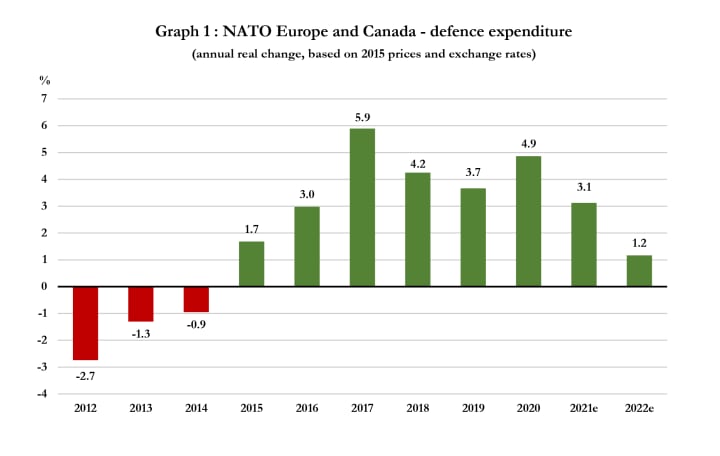
NATO has been the main defensive mechanism for Europe for a large portion of the post-World War II era. Especially throughout the Cold War and the decades that followed, NATO—which is primarily led by the United States—has played a crucial role in maintaining European security. Recent events, however, have compelled Europe to reevaluate this reliance.
- 1. The War Between Russia and Ukraine: A Warning
The February 2022 Russian invasion of Ukraine was a turning point in European defense strategy. Because they believed that big wars on the continent were over, many European countries had become complacent regarding military readiness prior to this.
But that delusion was destroyed by Russian assault. It made clear how vulnerable Europe was, especially in Eastern Europe, and how urgently greater, more autonomous military forces were needed.
For example, Germany deviated significantly from its customarily pacifist post-war posture when it decided to invest €100 billion in military modernization. Spending on defense has also skyrocketed in other nations, including Poland and the Baltic republics.
2. A Transition to Strategic Independence
In recent years, the idea of strategic autonomy—the capacity of Europe to defend itself independently of the United States—has become increasingly popular. This strategy has been strongly supported by French President Emmanuel Macron, who contends that Europe should develop its own defense capabilities instead of relying on NATO.
Notwithstanding NATO's continued importance as a security component, some European politicians are concerned that the United States may eventually reduce its military presence in Europe, particularly if political changes in Washington result in leaders who are less dedicated to European security.
3. The Increase in European Defense Budgets
Many European countries have raised their defense budgets dramatically in response to escalating threats:
Germany: With intentions to reach NATO's 2% GDP defense spending objective, the country is investing a historic €100 billion in military improvements.
Poland: Made the commitment to allocate 4% of its GDP to defense, which is among the highest percentages in Europe.
France: With an annual defense budget of more than €44 billion, the country hopes to increase both its conventional and nuclear forces.
Scandinavia: In preparation for any Russian attack, Finland and Sweden, two recently joined NATO nations, are bolstering their military forces.
Europe is concentrating on a number of important sectors to increase its security:
1. Developing the Defense Sector in Europe
To lessen its dependency on outside sources, Europe is investing heavily in its military industry. Businesses like:
The French company Dassault Aviation is creating combat jets of the future.
Germany's Rheinmetall is a manufacturer of contemporary tanks and armored vehicles.
Advanced naval and missile systems are the area of expertise for BAE Systems (UK).
These businesses are developing advanced military technologies such as AI-powered defense systems, drones, and hypersonic missiles.
2. The Strategic Compass Initiative of the European Union
In an effort to develop a more cohesive military strategy, the European Union unveiled its Strategic Compass plan. Among its primary objectives are:
A Rapid Deployment Force of 5,000 capable of handling emergencies without the assistance of NATO. strong emphasis on cybersecurity, considering China's and Russia's growing risks of cyberwarfare. Combined military drills to strengthen armed forces' collaboration across Europe.
3. Improved Military Cooperation Between EU Countries
European countries are developing more robust defense alliances to enhance coordination, including:
The Franco-German Defense Alliance: enhancing intelligence cooperation and military technologies.
A structure that makes it easier for the EU to collaborate on defense initiatives is the PESCO Agreement.
The goal of the Nordic Defense Cooperation was to combat Russian threats in Northern Europe.
The NATO Factor: Independence or Collaboration?
Despite Europe's growing defense capabilities, NATO continues to be an essential security pillar. The alliance has grown stronger since Finland and Sweden joined, especially in light of possible Russian threats. There are still disagreements, though, on whether Europe should join NATO or forge a more autonomous defense identity. Although it supports European military growth, the United States has cautioned against replicating NATO's efforts and undermining the alliance's cohesion.
Obstacles to a Coordinated European Defense
Despite advancements, Europe still faces a number of challenges in developing a robust, cohesive military strategy:
Divergent National Interests: It might be challenging to coordinate when nations like France and Germany have distinct priorities for security issues.
Budgetary Restrictions: Despite rising defense expenditures, several countries are still unable to reach NATO's 2% GDP goal.
Bureaucratic Red Tape: EU decision-making is frequently delayed, which makes it difficult to launch a quick military response.
Public Skepticism: A large number of Europeans are still opposed to raising military spending, favoring instead social welfare expenditures. Unless leaders figure out how to get beyond these obstacles, Europe's military modernization may be slowed.
Conclusion: What Does Europe's Defense Face?
Europe's defense history is reaching a turning point. European countries have been compelled to reconsider their security plans in light of the conflict in Ukraine, the changing balance of power in the world, and NATO's changing role.
Although there are still obstacles to overcome, the continent is moving in the right direction toward increased military readiness. Europe is moving toward becoming a more independent security force because to growing defense funding, cutting-edge military hardware, and improved collaboration among EU member states.
Will Europe's efforts continue to be dependent on NATO's leadership, or will it eventually attain full strategic autonomy? Whether Europe can overcome these obstacles and become a military power that can secure its own future will be decided in the upcoming years.
Concluding Remarks:
One thing is clear: Europe's days of depending entirely on the United States for defense are coming to an end as it continues to adjust to new security concerns. One thing is certain: a new era of European defense is beginning, regardless of whether Europe fully embraces strategic autonomy or stays firmly rooted in NATO.
About the Creator
Keep reading
More stories from MD HUMAYUN KABIR and writers in History and other communities.
To My Little Girl, Cheryl
The edges of the letter were yellowed from years of resting on the old wooden desk. While going through her late grandmother's attic, which was full of lost mementos and rumors of the past, Cheryl came across it one fall afternoon. She traced the elegant script on the front of the envelope with her fingertips as she took it up. The words tightened her chest: To My Baby Girl, Cheryl. The handwriting was unfamiliar to her, and the postmark had completely disappeared.
By MD HUMAYUN KABIR11 months ago in History
Vlad Țepeș
Vlad Țepeș: Sovereignty Written in Blood History remembers kings by their victories, saints by their sacrifices, and tyrants by their cruelties. Vlad Țepeș is remembered by all three and understood by none. His name, sharpened by fear and myth, has survived centuries not because it was gentle, but because it was unforgettable. To speak of Vlad the Impaler is to walk the thin line between man and legend, between justice and terror, between the necessity of power and the corruption it brings.
By Pure child5 days ago in History
3 Things That Were Invented for Good Reasons and Used for Terrible Ones
Human history is full of optimism. Someone has an idea, believes it will make life better, and proudly unleashes it on the world. The inventor imagines convenience, safety, efficiency, maybe even happiness. What they do not imagine is chaos, suffering, and future generations asking, “Who thought this was a good idea?”
By Enoch Sagini5 days ago in History



Comments
There are no comments for this story
Be the first to respond and start the conversation.