
Europe Needs to Get its Shit Together. NOW
Europe’s identity crisis unfolds as global powers test the limits of its patience—and its relevance.


If you spent any time in left-leaning American spaces just before Thanksgiving, you probably noticed the frustration simmering beneath the surface. On November 10th, a group of Senate Democrats unexpectedly broke ranks, joined Republicans, and voted to end the longest government shutdown in U.S. history. They gained nothing. They protected nothing. They surrendered after weeks of chest-thumping about holding firm. For Americans on the left, it felt like their leaders had folded a winning hand without even looking at the cards.
It was a strange moment to open a discussion about Europe, but not an accidental one. Because in that instant — watching their political representatives collapse under pressure — American Democrats got a fleeting taste of something Europeans have been grappling with throughout 2025: the disorienting helplessness of watching your leaders be outplayed, outmaneuvered, and openly disrespected on the global stage.
Welcome to Europe’s year of humiliation. A year when one of the world’s wealthiest, most educated regions behaved less like a geopolitical heavyweight and more like a dazed observer watching events unfold from the sidelines. A year defined by incoherence, capitulation, and a hard reckoning with what it means to lose relevance.
A Continent That Forgot Its Strength
For decades, Europe has relied on its reputation for deliberation, consensus, and carefully calibrated policy. Normally, that deliberate pace signals stability and maturity. But 2025 has been anything but normal.
From the first weeks of the year, the major actors on the global stage — Washington, Moscow, Beijing — treated Europe not as a partner but as a spectator. And Europe, rather than projecting its considerable economic and political power, simply accepted its diminished role.
The Trump administration in particular delivered a series of astonishing slaps. First came the revived talk of annexing Greenland, complete with reports of covert American influence operations on the island. Not long after that, Vice President J.D. Vance used the Munich Security Conference to lecture Europeans that “censorship” — not Russia, not China — posed the real threat to their future.
But the low point arrived in the summer, when Europe, after months of promising a show of strength in a looming trade dispute, collapsed instantly. The continent not only abandoned its threats but actually agreed to new tariffs on European goods while reducing its own retaliatory tariffs to almost nothing.
Europe promised resistance, then offered compliance. The United States pushed, and Europe yielded. It was a pattern that would only grow more painful as the year continued.
Russia Pushes, and Europe Pretends Not to Notice
As Washington belittled Europe in public, Moscow was doing something far more dangerous. Across multiple EU and NATO member states, Russia began escalating its campaign of sabotage, interference, and intimidation. Rail lines in Poland were bombed. Bus depots in the Czech Republic were burned. Warehouses in the United Kingdom were torched. Russian drones repeatedly violated European airspace, buzzing military bases. GPS systems — including those carrying European leaders — were jammed.
This wasn’t covert pressure. It was a deliberate campaign to test the continent’s willingness to respond.
Europe’s answer was a parade of stern statements, symbolic gestures, and endless discussions about possible responses that never materialized. No meaningful consequences, no deterrent action, and certainly no unified strategic answer. As analysts pointed out, every European hesitation weakened the alliance further. The message that reached Moscow was unmistakable: Europe might talk tough, but it was too divided and too cautious to act.
That perception was shared in Washington, leading to Europe’s most humiliating moment yet.
Shut Out of Peace Talks About Its Own Neighborhood
Europe’s leaders have spent years declaring that Ukraine’s survival is existential, that the war represents not just a threat to Kyiv but to the entire continent. Yet when the Trump administration decided to pursue peace negotiations directly with Russia, Europe wasn’t invited. Not Germany. Not France. Not Poland. Not the European Union. No European representative of any kind.
The future of a war on European soil was being discussed in back-channels between Washington and the Kremlin while Europe sat outside with no leverage, no influence, and no voice. The American proposals, driven by special envoy Steve Witkoff, leaned so heavily toward Russian interests that they resembled technology-sharing deals disguised as diplomacy.
The problem wasn’t just American opportunism. The deeper problem was that Europe could no longer demand a seat at the table. It had lost the ability to make itself indispensable. And the world noticed.
Europe Can Be Powerful — So Why Won’t It Act Like It?
What makes 2025 so maddening is not that Europe is objectively weak. It isn’t. The European Union alone has an economy larger than China’s. The continent’s economic output dwarfs Russia’s. Europe’s support for Ukraine, measured in both money and military equipment, exceeds that of the United States. European nations have sent billions in humanitarian relief, military hardware, and long-range assistance. They have the resources, the talent, and the capability to shape global events.
Yet when it comes to Russia’s assets frozen at Euroclear — more than two hundred billion euros immobilized at the start of the war — the continent fell into paralysis. A plan to use this money to support Ukraine, once seen as a bold and necessary step, evaporated when Belgium unexpectedly vetoed the move. One country. One moment. And suddenly, an entire strategic framework collapsed.
The result was not simply bureaucratic frustration. It was geopolitical embarrassment. At a moment when Europe could have demonstrated unity, strength, and moral clarity, it instead revealed fragmentation, insecurity, and a startling inability to prioritize its own future.
Geography Determines Who Gets to Dither
Part of the problem is geography — and the uneven distribution of danger across the continent. Belgium can afford to stall. Spain can shrug. Portugal can roll its eyes. Their distance from Russia grants them the luxury of abstraction. They know that if Ukraine collapses, the front line won’t be in Brussels or Madrid or Lisbon.
The cost will be borne by Poland, by Finland, by the Baltic states, by Romania. By nations that remember occupation not as distant history but as lived memory. Yet the decisions that determine their future can still be vetoed by leaders who will never face Russian tanks.
Europe cannot survive that imbalance. It cannot sustain a system where the countries closest to danger have the least power to counter it. Either Europe moves forward together or fractures under the pressure of its geography.
The Sleeping Giant That Forgot It Was a Giant
Europe’s peaceful decades have been a blessing — but also a sedative. A continent that once reshaped the world through war has spent eighty years retraining itself to solve problems through policy, negotiation, and institutions. It has grown comfortable, confident that soft power was enough.
But soft power only works when the world respects you. And right now, Europe has allowed itself to be treated like a non-entity.
Here’s the risk: a continent that once dominated global affairs is being pushed, humiliated, manipulated, and backed into a corner. If Europe ever wakes from this comfortable intermission and remembers the weight it used to throw around, the consequences could reshape the region in ways no one — including Russia — is prepared for.
Vladimir Putin has spent decades promoting the idea that the strong take what they want. The irony is that this philosophy only works if Europe keeps pretending it is weak. If Europe ever stops pretending, the Russian bear may suddenly look very small beside the giant that forgot its own strength.
A Final Word: The Stakes Couldn’t Be Higher
The world order is shifting. Nations everywhere are testing boundaries to see how far they can push. Russia is probing. China is maneuvering. Iran, North Korea, and even smaller states are experimenting with risk in ways that would have been unthinkable a decade ago. All of them are betting that Europe will continue sleepwalking.
But if Europe continues down this path — if dithering replaces action, if fear replaces strategy, if division replaces unity — then the continent will not simply lose influence. It will lose the ability to protect its own future.
And if Europe swings in the opposite direction — if humiliation finally ignites resolve — the shift could upend decades of global stability.
The tragedy of 2025 is not that Europe is weak. It’s that Europe is choosing weakness in the face of its greatest challenge in a generation. If this continues, the continent may soon find itself living in a world where its fate is decided by others.
But if Europe wakes up, remembers its own strength, and chooses to act rather than hesitate, then this humiliating year may yet become the turning point that saved it.
About the Creator
Lawrence Lease
Alaska born and bred, Washington DC is my home. I'm also a freelance writer. Love politics and history.
Keep reading
More stories from Lawrence Lease and writers in History and other communities.
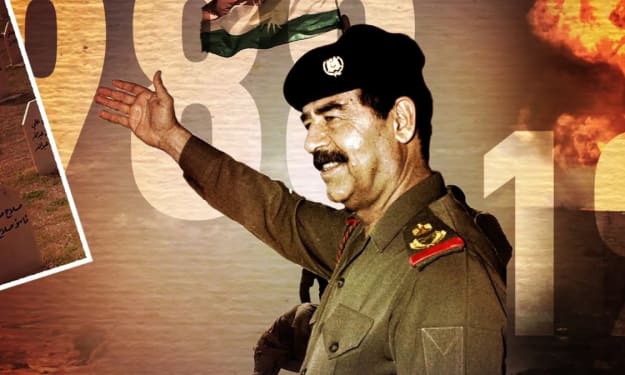
The House of Saddam: A Look into the Reign of Iraq's Notorious Dictator
Saddam Hussein was a name that for decades invoked fear, intrigue, and complexity and served as the President of Iraq from 1979 to 2003. His reign was characterized by brutal suppression of opposition, a plethora of regional and international conflicts, and a cult of personality that attempted to position him alongside history's great conquerors like Saladin and Nebuchadnezzar. The "House of Saddam" is not just a metaphor for his rule but a reference to his family, who were key players in the political saga of Iraq and the wider Middle East. This article delves into the life of Saddam Hussein, his rise to power, his family's involvement in the governance and downfall of Iraq, and the legacy he left behind.
By Lawrence Lease3 months ago in History
The Year 1978 in Review: Fun Facts, Trivia, and Historic Highlights
This quick read is a collection of fun facts, trivia, and historic events from the year 1978. Discover the year’s top news stories, most influential people, sports facts, historic firsts, entertainment trivia, and much more.
By Gregory DeVictor6 days ago in History


Comments
There are no comments for this story
Be the first to respond and start the conversation.