
Epic Chronicles of Greek Mythology
Gods, Heroes, and Eternal Tales

Part I: Dawn of Divinity
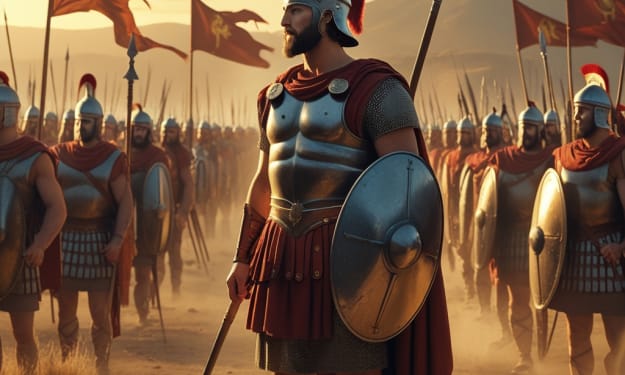
In the cosmos of ancient Greece, powerful deities ruled the heavens from their celestial abode, Mount Olympus. Zeus, king of gods, held dominion over the pantheon, while Hera, his queen, commanded the realm of marriage and family. Athena, the wise strategist, and Apollo, the radiant sun god, played their roles in shaping the world. This was the beginning of the grand tapestry of Greek mythology.
Part II: Rivalries and Romances
The tales of love and rivalry among the gods were as captivating as their powers. Aphrodite, goddess of love, was born from sea foam, and her beauty ignited desires that even gods couldn't resist. The amorous escapades of Zeus often led to turmoil with his wife Hera, creating an interplay of jealousy, passion, and divine intrigue.
Part III: Heroes and Quests
Amidst the celestial drama, heroes emerged on Earth to forge their destinies. Heracles, blessed with unmatched strength, embarked on the Twelve Labors—a series of feats that tested his mettle and honor. Jason and his crew of Argonauts sought the Golden Fleece, encountering sirens, harpies, and treacherous seas along the way.
Part IV: Legends of Tragedy and Triumph
Greek mythology also embraced the intricacies of human emotion and the inexorable pull of fate. Oedipus unknowingly fulfilled a prophecy that brought about his tragic downfall. The daring Perseus faced the Gorgon Medusa to save his love Andromeda. The stories of Prometheus, who stole fire from the gods, and Pandora's box of sorrows showcased the complexities of human curiosity and divine punishment.
Part V: The Trojan War and Beyond
The Trojan War, ignited by the abduction of Helen, united gods and mortals in an epic conflict. Achilles, Hector, and Odysseus became legendary figures, their tales immortalized by Homer's "Iliad" and "Odyssey." The gods' interventions in the war underscored their influence over human affairs, as well as the intertwining of destiny and free will.
Part VI: Echoes Through Time
The legacy of Greek mythology extended beyond the ancient world. Its stories inspired countless generations, shaping literature, art, and philosophy. The concept of hubris—the arrogance that led both mortals and gods to challenge fate—continues to resonate in modern narratives that explore the consequences of unchecked ambition.
Part VII: Modern Interpretations
In the modern era, Greek mythology's allure remains undiminished. Writers, filmmakers, and artists reinterpret these timeless tales, breathing new life into ancient stories. These adaptations delve into the psychological and symbolic depths of the myths, revealing the ever-evolving relevance of their themes.
Epilogue: Eternal Echoes
As the sun sets on the Olympian age, the echoes of Greek mythology continue to reverberate. From the gods' complex relationships to the heroes' courageous feats, these tales offer a mirror to humanity's virtues and flaws. Greek mythology stands as a testament to the power of storytelling to shape cultures, inspire creativity, and explore the profound mysteries of existence.
Part VIII: Divine Encounters
Mortals often found themselves entwined with the gods, leading to extraordinary unions and transformations. The love affair between mortal Paris and the goddess Aphrodite ignited the Trojan War. Arachne's hubris in challenging Athena to a weaving contest resulted in her transformation into a spider, forever weaving her intricate webs.
Part IX: Trials and Tribulations
The myth of Demeter and Persephone unveiled the origins of the seasons. Persephone's abduction by Hades plunged the world into winter, while her return to Earth marked the arrival of spring—a narrative of nature's cyclical patterns intertwined with the divine.
Part X: The Afterlife and Beyond
Greek mythology delved into the realm beyond life, where the river Styx flowed and the three-headed dog Cerberus guarded the gates. The myth of Orpheus's descent into the underworld to retrieve Eurydice epitomized the boundary between life and death, and the power of music to move both gods and spirits.
Part XI: Echoes of Honor
The city-state of Athens held Athena in high esteem as its patron deity. The myth of the contest between Poseidon and Athena for the city's favor underscored the values of wisdom and strategic thinking over raw power. The Parthenon, dedicated to Athena, remains an enduring symbol of ancient Greek architecture and the goddess's legacy.
Part XII: The Twilight of the Gods
As the ages shifted, the Olympian era drew to a close. The Titans and other primordial beings clashed with the gods in the Titanomachy, and the reign of Zeus and his siblings marked a new cosmic order. The eventual ascent of mortals to the heavens, as seen in the stories of Heracles and Ganymede, signaled a shifting relationship between gods and humanity.
Part XIII: Lessons for All Ages
Greek mythology's themes transcended time and culture. It delved into morality, fate, identity, and the eternal struggle between chaos and order. These stories served as cautionary tales, encouraging self-awareness and introspection while shedding light on the complexities of human behavior.
Part XIV: A Continuum of Inspiration
The tales of Greek mythology continued to resonate through history. The Renaissance witnessed a revival of interest in the classics, while the Romantic era explored their emotional depths. Today, films, literature, and art reimagine these stories, drawing parallels to modern societal challenges and personal dilemmas.
Part XV: A Legacy Unfading
As humanity hurtles through the ages, the gods and heroes of Greek mythology remain integral to our collective consciousness. Their stories remind us of the eternal struggle between ambition and humility, love and jealousy, and the forces that shape our lives. Greek mythology continues to spark conversations, provoke thought, and ignite the creative spirit within us all.
Epilogue: The Eternal Odyssey
From the soaring heights of Olympus to the depths of the underworld, Greek mythology weaves an intricate narrative that has endured across millennia. Its gods and heroes, flaws and triumphs, reflect the ever-changing tapestry of human experience. As long as stories are told and hearts beat with curiosity, the timeless tales of Greek mythology will remain immortal, guiding us through the labyrinth of existence.
About the Creator
Keep reading
More stories from Letícia Miguéis and writers in History and other communities.
Love's Triumph
In a world marred by prejudice and ignorance, where the shadows of the unknown clouded people's hearts, two fearless souls found a love so profound that it defied all barriers. This is the tale of Emily and Clara, and the journey that led them to discover not only love, but also compassion and the true essence of humanity.
By Letícia Miguéis2 years ago in History
Alexander the Great’s Looted Wealth from India: A Historical and Economic Estimation
While his campaigns reshaped the ancient world politically and culturally, one of their most lasting impacts was the massive wealth he acquired from conquered territories, especially during his Indian campaign. This article explores the historical context, nature of the wealth looted from India, and an estimated net worth of that treasure in modern terms—revealing the truly staggering value of what came into Alexander’s hands.
By Say the truth 4 days ago in History
A woman from a vanished female dynasty was discovered buried with 270,000 beads.
In a Copper Age tomb close to Seville, Spain, the Montelirio bead assemblage contains over 270,000 beads that identify the ladies buried there as elites. The discovery is the biggest collection of beads ever
By Francis Damia day ago in History
Wild Card Weekend Recap: What Happens Now?
I think I figured out why I love Wild Card Weekend so much. It's because it's the first playoff anything of the calendar year. The NFL season starts in the fall, and once upon a time, the champion was crowned either on or slightly before New Year's. The evolution of the NFL schedule has resulted in the playoffs starting just into the New Year, and currently, the final week of the season falls on the first weekend of the New Year, with Wild Card Weekend coming a week after that. So yes, chronologically, the NFL's Wild Card Weekend serves as the first playoff anything of the calendar year.
By Clyde E. Dawkins3 days ago in Unbalanced


Comments
There are no comments for this story
Be the first to respond and start the conversation.