
Enduring Tensions
The Root Causes and Evolution of the India-Pakistan Conflict
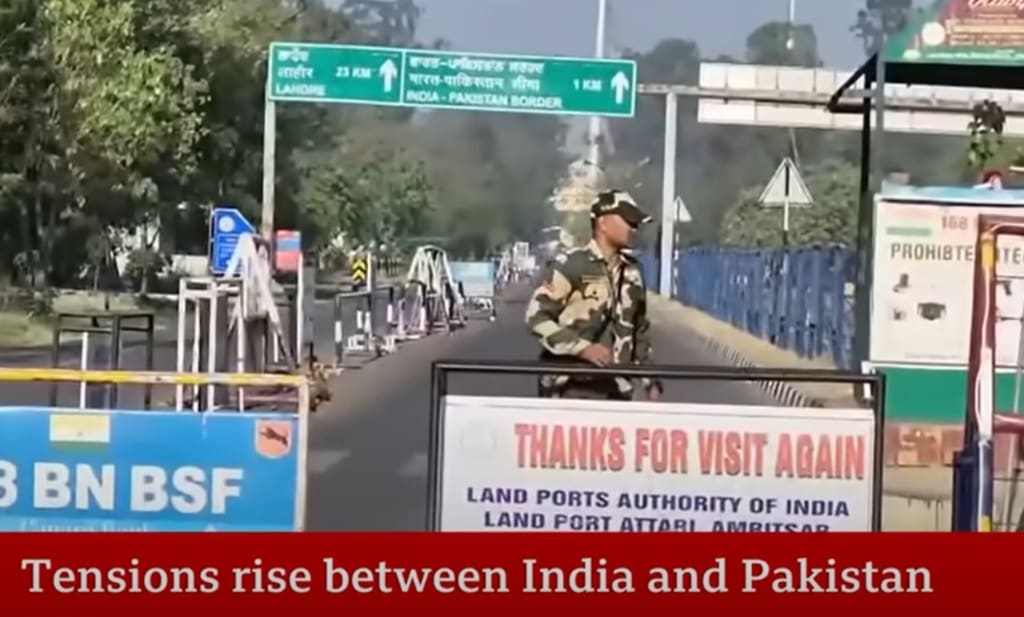
The relationship between India and Pakistan has been one of the most complex and strained bilateral relationships in the modern world. Since their simultaneous emergence from the end of British colonial rule in 1947, the two nations have experienced multiple wars, ongoing border skirmishes, diplomatic breakdowns, and persistent mutual distrust. Understanding the root causes and the evolution of the India-Pakistan conflict requires a detailed look into history, politics, ideology, and regional dynamics.
Historical Background: The Seeds of Partition
The roots of the conflict trace back to the partition of British India in August 1947. The decision to partition was based on religious demographics: Hindu-majority areas formed India, and Muslim-majority areas formed Pakistan. However, the division was hurried, poorly planned, and marked by mass violence, resulting in the deaths of an estimated one to two million people and the displacement of over 14 million.
One of the most contentious outcomes of partition was the status of princely states, particularly Jammu and Kashmir. Although the region had a Muslim-majority population, its Hindu ruler, Maharaja Hari Singh, chose to accede to India. Pakistan rejected this, arguing that Kashmir should have joined it based on religious demographics. This dispute over Kashmir became, and remains, the principal bone of contention between the two countries.
The First Indo-Pak War (1947-1948)
The first armed conflict between India and Pakistan broke out soon after independence, centered on Kashmir. Tribal militias supported by Pakistan invaded the region, prompting the Maharaja to request military assistance from India. In exchange, he signed the Instrument of Accession to India. The war ended in 1949 with a United Nations-brokered ceasefire, creating the Line of Control (LoC) that divided Kashmir into Pakistani-controlled and Indian-controlled parts. However, no permanent political settlement was reached, ensuring that the issue would continue to fester.
Subsequent Wars and Conflicts
The Second Indo-Pak War (1965)
In 1965, Pakistan launched Operation Gibraltar, aiming to infiltrate forces into Indian-administered Kashmir to incite rebellion. India responded with full-scale military action. After intense fighting, the war ended in a stalemate, with both sides accepting a ceasefire brokered by the Soviet Union and the United States, leading to the Tashkent Agreement.
The Bangladesh Liberation War and the Third Indo-Pak War (1971)
Tensions escalated again in 1971, but this time, the cause was unrelated to Kashmir. Instead, it stemmed from Pakistan’s internal conflict between West Pakistan (modern-day Pakistan) and East Pakistan (modern-day Bangladesh). India supported the independence movement in East Pakistan, leading to a direct military conflict with Pakistan. The war ended with a decisive Indian victory and the creation of Bangladesh, deeply humiliating Pakistan and sowing long-lasting resentment.
The Kargil Conflict (1999)
In 1999, just months after both countries conducted nuclear tests, Pakistani soldiers and militants crossed the LoC and occupied strategic peaks in the Kargil district of Indian-administered Kashmir. India launched Operation Vijay to push back the intruders. After heavy fighting and international diplomatic pressure, Pakistan withdrew its forces. The Kargil War severely damaged any hope for peaceful resolution that had been nurtured by the Lahore Declaration earlier that year.
Nuclearization and Its Impact
Both India and Pakistan declared themselves nuclear powers in 1998, changing the stakes of their rivalry. While nuclear weapons have arguably deterred full-scale wars since then, they have also emboldened lower-intensity conflicts and terrorist acts, with each side calculating that the other would avoid escalation to full nuclear war.
The presence of nuclear weapons has introduced a strategic paradox: while both countries seek to avoid all-out war, incidents like the 2001 Indian Parliament attack, the 2008 Mumbai attacks, and repeated cross-border skirmishes in Kashmir test the limits of restraint.
The Kashmir Dispute: Core of the Conflict
Kashmir remains the symbolic and strategic heart of the India-Pakistan conflict. For Pakistan, Kashmir represents the unfinished business of partition and a rallying point for national identity. For India, Kashmir's integration affirms its secular credentials, given its Muslim-majority population within a Hindu-majority country.
The situation worsened in August 2019, when India revoked Article 370 of its Constitution, stripping Jammu and Kashmir of its special autonomy. Pakistan vehemently opposed the move, downgrading diplomatic ties and intensifying its international campaign against India’s Kashmir policy.
Terrorism and Proxy Warfare
Since the 1980s, Pakistan's use of militant groups to wage a proxy war in Kashmir and elsewhere in India has further entrenched hostilities. Groups like Lashkar-e-Taiba (responsible for the 2008 Mumbai attacks) and Jaish-e-Mohammed (linked to the 2019 Pulwama attack) have received varying degrees of support from Pakistani intelligence services, according to numerous international investigations.
India, in turn, has accused Pakistan of maintaining a "state policy of terrorism," while Pakistan claims that India supports insurgency in Balochistan and other restive areas.
Diplomatic Attempts and Failures
Over the decades, several peace initiatives have been launched:
The Simla Agreement (1972) emphasized peaceful resolution through bilateral negotiations.
The Agra Summit (2001) attempted to revive dialogue but collapsed.
The Composite Dialogue Process (2004-2008) showed promise but ended after the Mumbai attacks.
More recently, backchannel diplomacy and informal talks have aimed at confidence-building, though tangible progress has remained limited.
Each diplomatic overture tends to collapse under the weight of domestic political pressures, military brinkmanship, and lack of trust.
Current Dynamics and the Role of International Players
Today, the India-Pakistan conflict exists in a globalized, interconnected world where the stakes are higher. While major powers like the United States, China, and Russia have historically influenced the dynamics, their ability to mediate or exert pressure is limited.
China's growing ties with Pakistan, particularly through the China-Pakistan Economic Corridor (CPEC), add another layer of complexity. Meanwhile, India's rising global stature and economic power have given it greater leverage on the international stage.
Both nations face internal challenges—economic difficulties, religious extremism, political instability—that could either fuel further conflict or push them toward peace, depending on how leadership evolves.
Conclusion
The India-Pakistan conflict is deeply rooted in history but sustained by present-day politics, ideology, and national identity. Its evolution—from conventional wars to nuclear deterrence and proxy conflicts—shows the adaptability of this rivalry to changing times.
True peace would require not just political agreements but a transformation of societal attitudes, economic cooperation, and addressing the core issues, particularly Kashmir. While the path remains fraught with danger, the sheer cost of continued hostility offers a compelling reason for both sides to seek, someday, a durable peace.
About the Creator
Janat
People read my topics because of thoughtful insights that bridge the gap between complex ideas and everyday understanding. I focus on real-world relevance,—making each read not just informative, but meaningful.
Aristotle: The Mind That Shaped Human Knowledge
Aristotle was born in 384 BCE in the small Greek town of Stagira, in northern Macedonia. His life unfolded during a time of political change, intellectual awakening, and cultural expansion across the Greek world. Though more than two thousand years have passed since his death, Aristotle’s ideas continue to influence philosophy, science, politics, ethics, education, and even everyday thinking. His story is not a legend built on myths, but the true journey of a curious mind that sought to understand everything—from the smallest living creature to the highest purpose of human life. Aristotle’s father, Nicomachus, was a physician to King Amyntas III of Macedon. Because of this, Aristotle grew up in an environment where observation, biology, and the study of nature were part of daily life. From an early age, he was exposed to the idea that the natural world could be studied systematically, not just explained through myths or religious stories. This early influence played a major role in shaping his later approach to knowledge. At around the age of seventeen, Aristotle traveled to Athens, the intellectual center of the Greek world, to study at Plato’s Academy. Plato was already famous as the student of Socrates and one of the greatest philosophers of his time. Aristotle remained at the Academy for nearly twenty years. Although he deeply respected Plato, he did not agree with all of his ideas. Plato believed that true reality existed in a world of perfect, unchanging “Forms,” while the physical world was only an imperfect reflection. Aristotle, however, believed that knowledge begins with observing the physical world itself. This difference would later define Aristotle’s unique philosophy. Despite their disagreements, Aristotle and Plato shared a strong teacher-student bond. Aristotle learned logic, ethics, metaphysics, and political theory at the Academy. Over time, however, his independent thinking became more noticeable. After Plato’s death in 347 BCE, Aristotle left Athens. Some historians believe this was partly because the Academy was now led by Plato’s nephew and partly because anti-Macedonian feelings were growing in Athens, which made life difficult for someone connected to Macedonia. Aristotle then spent several years traveling and studying. He lived in Asia Minor and later on the island of Lesbos, where he conducted detailed research on marine life. During this period, he carefully observed animals, plants, and natural processes. Unlike many thinkers before him, Aristotle did not rely only on abstract reasoning. He dissected animals, recorded their structures, and classified them based on shared characteristics. This work laid the foundation for biology and zoology as scientific disciplines. In 343 BCE, Aristotle’s life took a dramatic turn when he was invited by King Philip II of Macedon to tutor his young son, Alexander. This boy would later become Alexander the Great. Aristotle taught Alexander philosophy, ethics, politics, literature, and science. He introduced him to the works of Homer and emphasized the importance of reason and self-control. While Alexander would go on to become a military conqueror, Aristotle hoped his student would also rule with wisdom and justice. Though historians debate how much influence Aristotle truly had on Alexander’s actions, there is no doubt that their relationship connected philosophy with world-changing power. After Alexander became king, Aristotle returned to Athens around 335 BCE and founded his own school, the Lyceum. Unlike Plato’s Academy, the Lyceum focused heavily on empirical research and systematic study. Aristotle and his students walked while discussing ideas, which is why his followers were called the “Peripatetics,” meaning “those who walk about.” At the Lyceum, Aristotle organized research across many fields, creating one of the earliest models of a research institution. Aristotle wrote extensively, though most of his popular writings have been lost. What remains are mainly lecture notes and technical works. These texts cover an astonishing range of subjects: logic, physics, metaphysics, ethics, politics, rhetoric, poetry, biology, astronomy, and psychology. In logic, Aristotle developed the system of syllogisms, a method of reasoning that dominated logical thought for centuries. In ethics, his work Nicomachean Ethics explored the idea of virtue as a balance between extremes and argued that the goal of human life is eudaimonia, often translated as “flourishing” or “well-being.” In politics, Aristotle studied different forms of government, analyzing monarchies, aristocracies, and democracies. He believed that the best political system depended on the character and needs of the people, not on a single perfect model. He famously described humans as “political animals,” meaning that living in a community is essential to human nature. Despite his achievements, Aristotle’s later years were marked by difficulty. After Alexander the Great died in 323 BCE, anti-Macedonian sentiment rose sharply in Athens. Aristotle was accused of impiety, a charge similar to the one that had led to Socrates’ execution. Refusing to face trial, Aristotle left Athens, saying he would not allow the city to “sin twice against philosophy.” He retreated to Chalcis, where he died in 322 BCE at the age of sixty-two. Aristotle’s death did not end his influence. In fact, his ideas grew stronger over time. His works were preserved by scholars in the Islamic world during the Middle Ages and later reintroduced to Europe. Thinkers such as Avicenna, Averroes, and Thomas Aquinas studied and expanded upon Aristotle’s philosophy. For centuries, Aristotle was known simply as “The Philosopher,” a title that reflected his unmatched authority in many fields. The true story of Aristotle is not just about a man who lived long ago. It is the story of a thinker who believed that the world could be understood through careful observation, logical reasoning, and thoughtful reflection. He taught humanity to ask not only what things are, but why they are. In doing so, Aristotle shaped the foundations of Western thought and left a legacy that continues to guide minds across the world.
By The best writer about 15 hours ago in History
Rachel Reviews: The Spiral Archive by Pieter Hendrik
It's difficult for me to know where to start with a review of this book as it was, for me, an entirely unique experience and one that I'll probably never have again. I don't want that to be interpreted as unenjoyable but it has left me scratching my head a little and ruminating on its content, its themes and its characters.
By Rachel Deeming4 days ago in BookClub


Comments
There are no comments for this story
Be the first to respond and start the conversation.