
Elizabeth Blackwell
Women In History
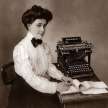

She was the first woman to earn a medical degree in the United States, becoming the first woman doctor of medicine in modern history. She played an important role in the United States and the United Kingdom as a social reformer. She was a pioneer in promoting education for women in medicine. Many have overlooked her because she was a woman!
She was Elizabeth Blackwell.
Elizabeth was born on 3rd February, 1821, in Bristol, England, into a large, prosperous and cultured family. Her father was Samuel Blackwell who was a sugar refiner and her mother was Hannah. Elizabeth was the third child and she had 4 sisters and 4 brothers. There were also 4 maiden aunts who lived with the family.
When a fire destroyed the sugar refinery, Samuel moved his whole family to the United States in the Summer of 1832. Her father believed that his children, which included his daughters, should have every opportunity to develop their talents and gifts. Education was an important part of Elizabeth’s life, and she had a governess as well as private tutors. At first, Elizabeth was not interested in a career in medicine, becoming instead a schoolteacher, which was one of the few acceptable careers to a young woman in the 1800’s.
When a friend became ill, Elizabeth realized the need for women doctors. She remarked that, had a lady doctor been there, her friend may not have suffered so much. However, Elizabeth’s introduction into medical school was a difficult one.
Every medical school she applied for rejected Elizabeth because she was female. Eventually, the male students of Geneva Medical College, New York, voted in favour of Elizabeth being accepted into the college, (although to the male students, it was a joke at first, they never considered that this young woman was serious!). Thus, she became the first woman to attend medical school in the United States.
Her time in college was extremely difficult, and to start with she was barred from classroom demonstrations. The townspeople thought that she was ‘odd’ because Elizabeth wasn’t settling down and getting married, as was expected, but she was instead carving out a career for herself. The male students harassed her. She 'challenged' the accepted principles of the day by doing something that appeared shocking --- Elizabeth wanted to become a doctor to help other women. But Elizabeth persevered and she ranked first in her class, becoming the first woman to graduate from medical school in the United States. When the dean, Charles Lee, granted Elizabeth her medical degree, he stood up and bowed to her.
Elizabeth Blackwell became the first qualified modern-day woman doctor of medicine.
In 1849, She continued her studies in Europe, visiting hospitals in Britain and Paris. However, again, Elizabeth was rejected by many of the hospitals in Europe because she was a woman. Elizabeth enrolled in a “lying-in” hospital, (La Maternite), on the understanding that she would be treated as a student midwife and not as a qualified physician. She met Hippolyte Blot who was the resident physician, and under his mentoring and training, she gained much of her medical experience. The foremost obstetrician of the day, Paul Dubois, said that, in his opinion, Elizabeth Blackwell would make the best obstetrician in the United States.
During her career, Elizabeth lost her left eye due to an accident which caused an infection, and the eye needed to be removed. Unfortunately, this stopped her chances of becoming a surgeon. After her recovery, Elizabeth enrolled at St.Bartholomew’s Hospital in London (1850). She made a positive impression but still met opposition when she wanted to observe the wards. At this time, Elizabeth would attend the lectures by James Paget, who was a foremost English surgeon and pathologist, and who founded scientific medical pathology.
Elizabeth returned to New York City in 1851, believing that there was less prejudice against women and with the hope of establishing her own medical practice.
There was still opposition, even in New York, but support came from some of the media publications, which included the New York Tribune. Elizabeth delivered lectures and published her book, “The Laws of Life With Special Reference to the Physical Education of Girls”, which was her first volume about the physical and mental development of girls that concerned itself with the preparation of young women for motherhood, a much needed publication at the time.
Elizabeth established a small dispensary in 1853, after her practice floundered. In 1857, along with Marie Zahrzewska (who Elizabeth was mentoring) and Emily (one of Elizabeth’s sisters), expanded the dispensary into the New York Infirmary for Indigent Women and Children. Women played a large part in the running of the Infirmary, which accepted in and out patients and was used for training nurses. Within the second year, patients had doubled.
In July, 1869, Elizabeth sailed to Britain to establish a women’s medical school, which she did in London. It took a little time, but in 1874, the London School of Medicine for Women opened. She worked with Jex-Blake who took over the school, and Elizabeth resigned her position in 1877.
It was in this year that Elizabeth retired from medicine.
Being a wealthy gentlewoman and now having time on her hands, Elizabeth became involved in social reform. She kept herself busy in many different reform movements from sanitation to family planning to women’s rights. She believed in Christian values and believed that these should influence people's morals. Elizabeth was against contraceptives, licentiousness and prostitution (which, as she was a Christian, this does not surprise us). She even argued for the rhythm method of birth control, which as a spinster does surprise us!
During her life, Elizabeth became friends with Florence Nightingale, and even exchanged letters with Lady Byron about women’s rights issues. She was always close to her family and visited them whenever she could. Elizabeth had a strong personality, she was very assertive in her ways and rarely played the subordinate role.
In 1895, Elizabeth published her autobiography “Pioneer Work in Opening the Medical Profession to Women”. In 1907, while on holiday in Scotland, she fell down a flight of stairs which left her mentally and physically disabled. When she returned hope, Elizabeth suffered a stroke on 31st May, 1910, which she died from. A sad end to a brilliant and very courageous woman.
Elizabeth Blackwell ‘opened the door’ for all of the women doctors we have today. We could just take it for granted that women can qualify to become doctors today, but we must never forget the sheer courage Elizabeth had to be the first woman to study in medical school and to qualify. Respecting her sheer perseverance, the dean stood up and bowed to Elizabeth when she graduated.
We must never forget what Elizabeth Blackwell did for all of us, a true 'pioneer' in the world of medicine for women, and yet how many of us are taught this in schools? When you go to medical school, are you taught about the women as well as the men who opened doors for our generation? This woman 'challenged' the norm by being the only 'female' in a class of males yet she stood firm and was determined to pave the way for future women doctors.
Elizabeth Blackwell is a real inspiration for us ladies, young and old, in this century.
About the Creator
Ruth Elizabeth Stiff
I love all things Earthy and Self-Help
History is one of my favourite subjects and I love to write short fiction
Research is so interesting for me too
Keep reading
More stories from Ruth Elizabeth Stiff and writers in History and other communities.
The Evolution of Aircraft Design Through Failure and Innovation
Aircraft design did not emerge fully formed or flawlessly engineered. Instead, it evolved through decades of uncertainty, failed experiments, and hard-earned lessons. Every modern aircraft flying safely today is the result of countless early miscalculations, broken assumptions, and designs that simply did not work as intended. Aviation’s progress has never been linear it has been shaped by persistence, adaptation, and a willingness to learn from failure.
By Beckett Dowhanabout 5 hours ago in History
Stanislav Kondrashov Oligarch Series: The Roots of Oligarchy in the Mediterranean
When people hear the word “oligarchy,” they often think of modern contexts. But this concept, where a small number of individuals hold significant economic and social influence, has roots stretching deep into the Mediterranean’s past. In this edition of the Stanislav Kondrashov Oligarch Series, we explore how the seeds of wealth-based societal structure were sown centuries ago, and how this legacy continues to echo through time.
By Stanislav Kondrashov7 days ago in History
Miss Persephone's Manual to a Seemingly Ordinary Life
Miss Persephone was found at the dining table, her blue eyes swollen, her tears arriving and retreating like the tides of the ocean. Earlier that day, her family had visited her in the retirement home where she had lived for eight years. It was her eightieth birthday.
By Imola Tóth5 days ago in Fiction



Comments (1)
So any hidden figures in history, especially women. A wonderful story of bravery, opposition and strength in the face of bigotry.