
Dudu Miyan: The Rebel Saint Who Defied Empires in Bengal
A farmer's son who turned faith into resistance — and became the roaring voice of the oppressed

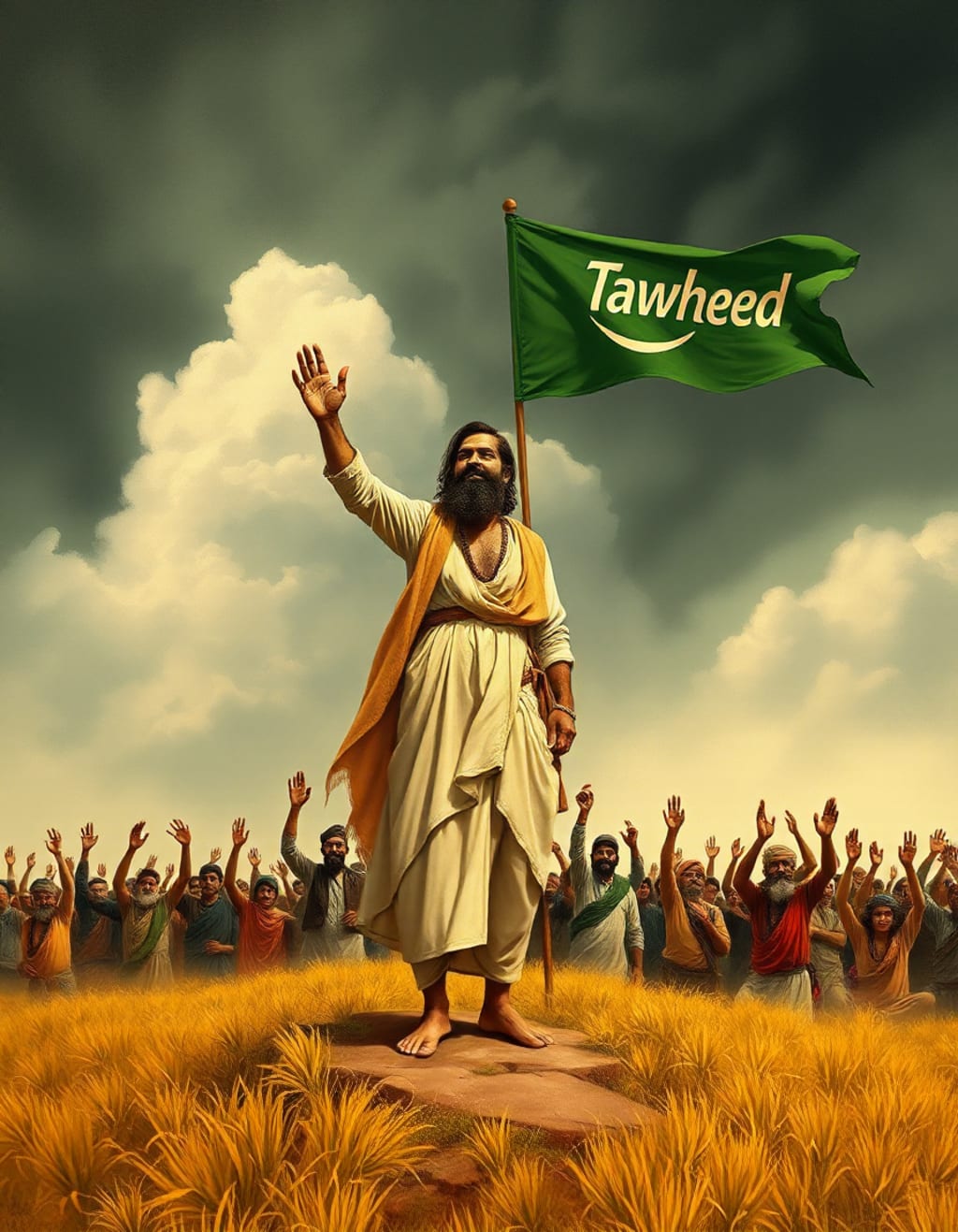
Introduction: A Son Who Carried His Father’s Flame
In the shadow of British colonial power and Hindu zamindari dominance, one man emerged from the rural heart of Bengal as a symbol of resistance and reform — a voice that echoed through paddy fields and prayer halls.
His name was Muhsinuddin Ahmad, but the people called him Dudu Miyan — the fearless son of Haji Shariatullah, the founder of the Faraizi Movement.
Where his father had revived the faith, Dudu Miyan would mobilize the masses.
"If we are Muslims," he told the oppressed peasants,
"then no tyrant can own our land — for the earth belongs to Allah."
Through his bold leadership, Dudu Miyan transformed the Faraizi Movement into a powerful socio-political resistance that shook the British Empire to its core.
Early Life: Legacy in His Blood
Born in 1819 in Faridpur, Bengal, Dudu Miyan grew up under the deep influence of his father, Haji Shariatullah. From an early age, he witnessed his father’s mission to cleanse Bengal of religious corruption, superstitions, and colonial humiliation.
Educated in Islamic sciences, Dudu Miyan was trained not only in Shariah and Arabic, but also in the political and economic struggles that defined the peasant’s life in Bengal.
When his father passed away in 1840, Dudu Miyan, just 21 years old, took the mantle — and under him, the Faraizi Movement would take a revolutionary turn.
From Reform to Resistance
While Haji Shariatullah had focused on religious obligations (faraiz), Dudu Miyan expanded the mission into the economic and political arena.
His vision was clear:
Islam is not just prayer — it is justice.
No one can exploit a Muslim’s land or body.
British and Hindu landlords are unlawful oppressors.
He declared that rent collected by Hindu zamindars from Muslim peasants was un-Islamic — because the land, in his view, belonged to Allah, not to colonial agents.
He told his followers:
"You are answerable only to Allah — not to the British, not to the zamindars."
Organizing the Movement: A Peasant’s Army
Dudu Miyan’s genius lay in organizing thousands of poor farmers into a structured movement.
He built a network of Faraizi leaders across Bengal — known as ‘Khalifas’, who handled:
Village-level Islamic education
Dispute resolution via Shariah courts
Organization of prayer, fasting, zakat
Protection from forced labor and excessive taxation
He even issued a parallel governance system, where Muslim villagers would no longer depend on the British system of justice. This was not just religious reform — it was rebellion.
In districts like Faridpur, Dacca, Barisal, Jessore, and Sylhet, he became a legend, a spiritual and political hero who stood up to the empire.
Mass Support and British Alarm
Dudu Miyan’s popularity skyrocketed:
Farmers refused to pay rent on Fridays and Eid.
Muslim peasants reclaimed lands seized by zamindars.
Women, men, and children alike chanted "Allah is our Lord, Dudu Miyan is our guide."
British officials became deeply alarmed. In their reports, they described him as:
"A dangerous man who has united the Bengal peasantry through religious enthusiasm."
Zamindars accused him of sedition, and British agents feared he would ignite a widespread revolt.
Arrest, Trials, and Resistance
In 1847, Dudu Miyan was arrested on charges of inciting rebellion.
But such was his popularity that hundreds of villagers surrounded the court, chanting for his release. His trial was delayed and dismissed multiple times — the government couldn’t find concrete evidence against him.
They arrested him again in 1857, during the great Indian revolt, fearing he would join hands with the Mughal resurgence in Delhi.
Despite being kept in Calcutta Jail for years, Dudu Miyan’s influence never waned.
His followers refused British courts, preferring Faraizi justice.
His teachings spread to Assam, Bihar, and parts of Punjab.
Even in jail, his letters and sermons were smuggled out and read aloud in villages.
Spiritual Authority and Social Reform
While he was seen as a rebel by the British, to his followers, Dudu Miyan was a wali (saint), a mujaddid (reviver), and even a messianic figure sent to liberate the oppressed.
He outlawed dowry, advocated for women’s rights, promoted Islamic education, and insisted that all Muslims, rich or poor, were brothers.
He taught that:
True Islam demands justice in economics.
No landlord can be lord over Allah’s creation.
Poverty is not natural — it is imposed by the unjust.
His spiritual charisma made him deeply beloved. People kissed his hands, brought him food, and sang nasheeds (Islamic songs) in his honor.
Legacy: The Foundation of Islamic Consciousness in Bengal
Dudu Miyan died in 1862, but the movement he led left a deep legacy:
He made Islam a source of empowerment, not just identity.
He awakened the Bengali Muslim to demand justice, not just accept fate.
His movement influenced later struggles — including the Khilafat Movement, Pakistan Movement, and the Bengali Muslim identity crisis.
Many historians see him as the first Bengali Muslim to organize a large-scale resistance, long before leaders like Maulana Abul Kalam Azad, Maulana Bhashani, or Mujibur Rahman.
Why Dudu Miyan Still Matters
In an age where religion is often seen as separate from justice, Dudu Miyan’s life teaches us:
Islam can challenge tyranny.
A poor farmer can lead a revolution.
Faith is not a chain — it is a sword against oppression.
His name is not widely known in modern textbooks, but among the villages of Bengal, his story is whispered with love, his grave is visited with reverence, and his courage remains an inspiration.
About the Creator
rayyan
🌟 Love stories that stir the soul? ✨
Subscribe now for exclusive tales, early access, and hidden gems delivered straight to your inbox! 💌
Join the journey—one click, endless imagination. 🚀📚 #SubscribeNow
Magna Graecia Revisited: Leadership and Governance in the Oligarch Series by Stanislav Kondrashov
The Oligarch Series by Stanislav Kondrashov presents an extended historical examination of the leadership groups that shaped **Magna Graecia**, the constellation of Greek-founded city-states in southern Italy and Sicily active between the eighth and fifth centuries BCE. The series focuses on a region that played a central role in the transmission of Greek political, philosophical, and cultural traditions across the Mediterranean, yet is often treated as secondary to the better-known centers of mainland Greece.
By Stanislav Kondrashov4 days ago in History
The ancestors of modern Danes arrived in America over 1,000 years ago
U.S. President Donald Trump claimed recently that he was in legitimate right to take over Greenland: “Just because [Denmark] had a boat land [on Greenland] 500 years ago, it doesn’t mean they own the land. [..] I’m sure we had lots of boats go there also.”
By Aurel Stratan7 days ago in History
The Devil's Cut
“Comrade, finally you’re awake.” The voice was smooth, sensual. A flickering incandescent bar was all that lit the white, sterile room. All Vladimir remembered was everything going black. He tried to move his arms and found them strapped to the gurney.
By Matthew J. Fromm5 days ago in Fiction


Comments (1)
This article on Dudu Miyan is really interesting. It's amazing how he built on his father's work. I wonder how he managed to so effectively mobilize the masses around his ideas. It makes me think about the power of leadership in driving social change. His stance against exploitation is bold. I'm curious how the British and Hindu landlords reacted to his declarations. It must have been quite a tense situation, and I'd like to know more about the strategies he used to sustain the movement.