
Haji Shariatullah: The Revivalist Who Awakened Bengal’s Muslim Spirit
A farmer’s son who returned from Makkah to reform an entire region — with faith, fire, and fearlessness

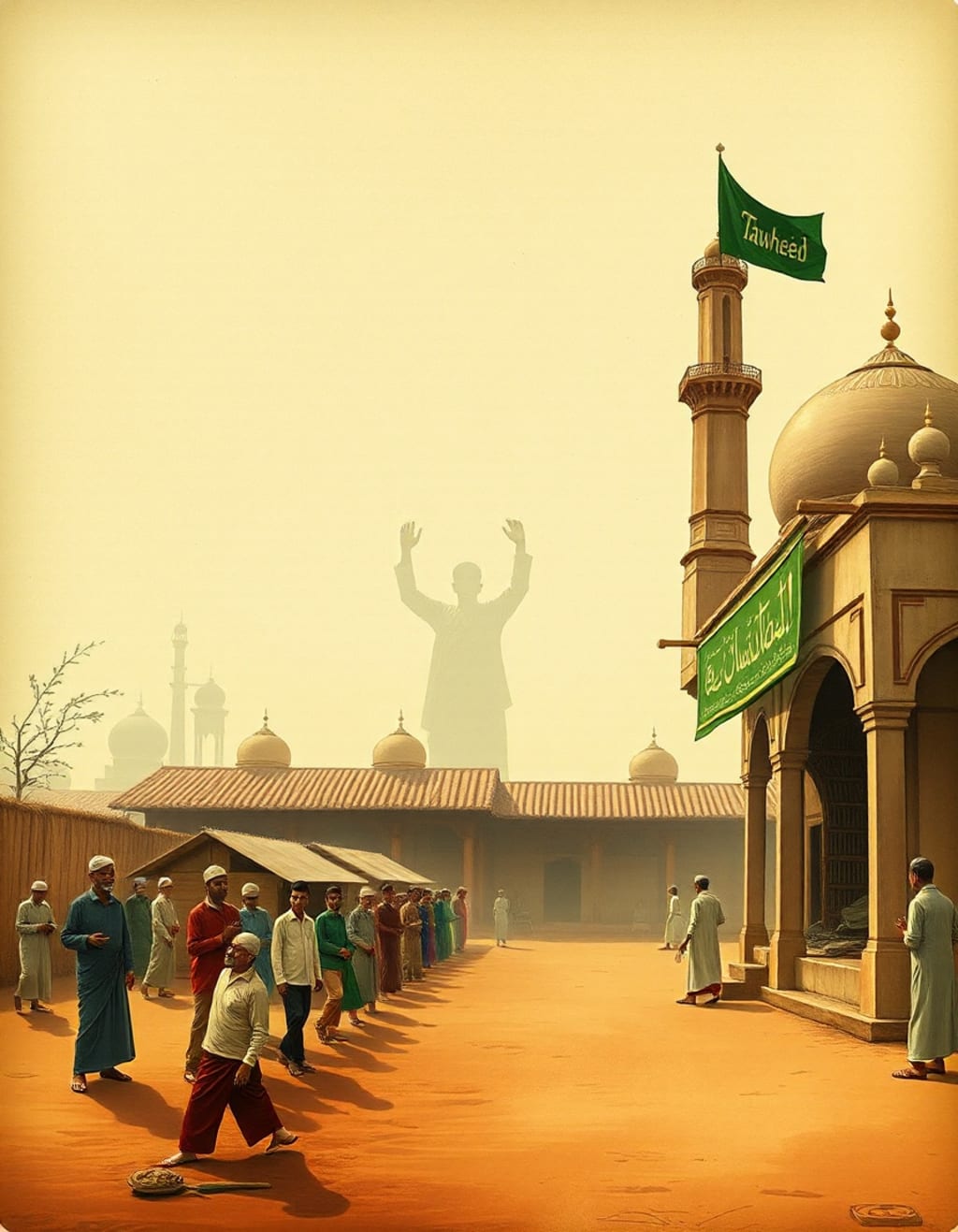
Introduction: Bengal in Darkness, A Voice from Makkah
In the early 19th century, Bengal’s Muslims were scattered, impoverished, and spiritually adrift. British colonialism had crushed their rulers, Hindu landlords dominated the agrarian economy, and Islamic practices were rapidly mixed with local innovations and superstitions.
It was into this atmosphere of spiritual decay and political paralysis that Haji Shariatullah returned — not as a warrior, not as a scholar in royal courts, but as a revivalist from the soil, a reformer with one mission:
“Bring Islam back to its pure form. Awaken the Muslims. Free their souls — and then their land.”
He launched the Faraizi Movement, one of the earliest Islamic reform movements in British India. It was not just about prayer and ritual; it was about dignity, self-respect, and identity.
Early Life: From a Peasant’s Home to the Kaaba’s Shadow
Haji Shariatullah was born in 1781 in the village of Shibchar in Faridpur district (present-day Bangladesh). His family was poor, but spiritually rooted. His father, a humble farmer, ensured his young son was taught the Quran and basics of Islam.
But young Shariatullah wasn’t content. At just 18 years old, he left for Makkah, determined to seek real Islamic knowledge. There, under renowned scholars of the Haramayn, he studied Hadith, Fiqh, and Tafsir for almost 20 years.
It was in Makkah where he saw what pure Islam looked like — not the distorted, syncretic version back home. This vision haunted him and empowered him. He returned in 1818 as “Haji Shariatullah”, ready to reignite the flame of Tawheed in Bengal.
The Birth of the Faraizi Movement
Upon his return, Shariatullah was shocked at what he saw:
Muslims praying at shrines seeking favors from the dead
Mixing of Islamic rituals with Hindu customs
Lack of education and understanding of the Quran
British and Hindu landlords exploiting Muslim peasants
Islamic obligations like salah, zakat, fasting being ignored
He called it “A state of Jahiliyya (ignorance)”, and he couldn’t stay silent.
Thus began the Faraizi Movement — named after “Faraiz”, the obligatory duties in Islam. Its core message:
“A Muslim must fulfill all that Allah made obligatory — and abandon all that corrupts the faith.”
Reforming the Masses: Islam, Clean and Strong
Haji Shariatullah didn’t go to kings or courts — he went to villages, mosques, fields, and bazaars. He preached in Bengali and Arabic, addressing the farmers, weavers, and villagers — the soul of Bengal.
He taught them:
Salah is the key to dignity — Pray regularly.
Zakat is purification — Share your wealth.
Tawheed is non-negotiable — Worship only Allah.
No Sufi innovations — No grave worship, no shirk.
Live by the Quran and Sunnah — Nothing else.
He appointed “Muallims” (teachers) across the region to spread the message. His message spread like wildfire through Faridpur, Dhaka, Comilla, Jessore, and Barisal.
For the first time in years, Muslim farmers stood tall, refusing to bow before anyone but Allah.
Social Reform: Fighting Exploitation
The Faraizi Movement was not just religious — it was politically subversive. Haji Shariatullah empowered the oppressed Muslim peasants, many of whom were tenants under Hindu zamindars backed by the British.
He told them:
You are not born to be slaves.
No rent on Eid or Friday — these are holy days.
Refuse to participate in un-Islamic rituals imposed by landlords.
This defiance angered zamindars and British officials, who began branding the movement as rebellious. But the poor masses saw him as a liberator, a man of God who taught them how to live again.
Opposition and Persecution
Haji Shariatullah faced intense opposition:
Local ulema who had grown used to compromises branded him a rebel.
Hindu landlords called him a “troublemaker” and demanded his arrest.
The British accused him of “political sedition in the name of religion.”
He was arrested multiple times, yet released — for they found no law he had broken. His movement was peaceful, but its ideological power shook the colonial foundation.
Despite the threats, he never backed down. He wrote treatises in Arabic and Bengali, trained his followers to debate using evidence, and maintained that true Islam was not a private act — it was a public revolution.
Legacy: More than Just a Religious Reformer
Haji Shariatullah died in 1840, but the Faraizi Movement didn’t end. It was taken forward by his son, Dudu Miyan, who made it even more political — calling for economic justice, land rights, and freedom from British rule.
Through their combined efforts, the Faraizi Movement became:
One of the earliest organized resistance efforts in British India.
A model for later reformers and independence activists.
A legacy of grassroots Islamic revivalism rooted in Tawheed and justice.
Teachings That Still Resonate
Haji Shariatullah’s message, though 200 years old, feels painfully relevant today. His teachings included:
Islam is a complete way of life, not just rituals.
Religious reform must begin with personal purification.
Oppression, whether political or spiritual, must be opposed.
Educate the common man — don’t just preach to the elite.
Faith must be tied to freedom.
His idea of Islamic revival through obligation (Faraiz) remains one of the most organized and successful grassroots reform movements in Muslim South Asia.
Conclusion: The Revivalist of Bengal’s Spirit
Haji Shariatullah didn’t wear a crown, lead an army, or hold an office. But he revived a nation’s soul, reawakened its religious conscience, and reminded a broken people that Allah’s law is greater than any empire.
He was a farmer’s son who walked through the villages with no wealth, only words — and those words changed history. Today, his movement is seen as the first step toward the eventual Muslim awakening in East Bengal, which would shape politics, identity, and resistance for the next 150 years.
About the Creator
rayyan
🌟 Love stories that stir the soul? ✨
Subscribe now for exclusive tales, early access, and hidden gems delivered straight to your inbox! 💌
Join the journey—one click, endless imagination. 🚀📚 #SubscribeNow
Savoy Hotel – Mussoorie: The Colonial Luxury Hotel Where an Unsolved Murder Still Walks the Corridors
The First Night: Beauty Wrapped in Silence Mussoorie looks peaceful from a distance. Pine trees sway gently, clouds roll like slow-moving waves, and the hill air smells of rain and old earth. But as evening falls, the silence becomes heavier—almost watchful.
By Gaurav Gupta4 days ago in History
Nobel Peace Prize
The Nobel Peace Prize has stood as one of the world’s most recognized honors. Awarded annually in Oslo, it is meant to celebrate individuals or organizations that have made significant contributions toward peace, diplomacy, and humanitarian progress. While its mission appears straightforward, the Nobel Peace Prize has never been free from debate. In recent years, conversations surrounding global politics—particularly discussions about the Trump Nobel Peace Prize—have brought renewed attention to how peace is defined, measured, and rewarded in the modern era. The Origins and Meaning of the Nobel Peace Prize The Nobel Peace Prize was established by Alfred Nobel, the Swedish inventor best known for creating dynamite. In his final will, Nobel directed that a portion of his wealth be used to recognize efforts that foster peace among nations, reduce standing armies, or promote diplomacy and cooperation. Since its first award in 1901, the prize has honored activists, diplomats, organizations, and world leaders whose actions shaped international dialogue. Unlike other Nobel categories, the peace prize is awarded by a Norwegian committee rather than a Swedish institution. This distinction reflects Nobel’s desire to separate the prize from national interests and focus instead on global responsibility. Over time, the definition of “peace” has expanded. Early recipients were often disarmament advocates or mediators. More recent laureates have included human rights defenders, climate activists, and international organizations working in conflict zones. Politics and the Nobel Peace Prize Despite its humanitarian ideals, the Nobel Peace Prize has always intersected with politics. Recognizing peace efforts often means evaluating political leadership, international negotiations, and long-term consequences—none of which are easy to measure in real time. Some awards have been widely celebrated, while others sparked controversy. Critics often argue that certain laureates were honored prematurely, before the lasting results of their actions became clear. Supporters counter that the prize is meant to encourage peace efforts, not merely reward completed achievements. This tension has made the Nobel Peace Prize a reflection of global priorities at any given moment, rather than a simple historical judgment. Donald Trump and Nobel Peace Prize Discussions Few modern political figures have generated as much debate in connection with the Nobel Peace Prize as Donald Trump. During and after his presidency, conversations about a potential Trump Nobel Prize emerged repeatedly, particularly among supporters who pointed to his role in diplomatic initiatives. The phrase Trump Nobel Peace Prize gained traction following agreements and negotiations in regions long marked by conflict. Advocates argued that these diplomatic efforts aligned with Alfred Nobel’s vision of reducing international tension through dialogue rather than force. At the same time, critics questioned whether these actions met the broader ethical and humanitarian standards traditionally associated with the award. They pointed to domestic divisions, foreign policy controversies, and unresolved global conflicts as reasons for skepticism. This divide highlights a core challenge of the Nobel Peace Prize: peace is rarely absolute, and political leadership is often complex and contradictory. Trump Nobel Peace Prize 2026: Speculation and Context As global politics continue to evolve, speculation around a Trump Nobel Peace Prize 2026 has appeared in media discussions and public commentary. It is important to note that nominations for the Nobel Peace Prize are confidential for decades, and speculation does not confirm consideration or selection. However, the mere discussion of Trump Nobel Peace Prize 2026 reflects how the award has become part of broader cultural and political conversations. Supporters view such recognition as validation of diplomatic achievements, while critics see the speculation as politicizing an institution meant to rise above partisan debate. This dynamic is not unique to Trump. Many past leaders, from various ideological backgrounds, were debated heavily before or after receiving the prize. The Nobel Peace Prize often mirrors global disagreements rather than resolving them. How the Nobel Committee Makes Its Decision Each year, hundreds of nominations are submitted by qualified individuals, including academics, lawmakers, and previous laureates. The Nobel Committee evaluates these nominations through research, expert consultation, and internal debate. The process considers intent, impact, and long-term significance. However, because peace efforts often unfold over years or decades, the committee must make decisions without full historical clarity. This reality explains why some awards age gracefully while others remain controversial. The committee rarely responds directly to public pressure or online campaigns. Media attention, including discussions around a Trump Nobel, does not guarantee influence over the final decision. The Broader Impact of the Nobel Peace Prize Beyond individual recipients, the Nobel Peace Prize plays a symbolic role. It brings global attention to issues that might otherwise be ignored, from humanitarian crises to fragile peace processes. Even controversial nominations can spark meaningful debate about what peace truly means in the modern world. The prize also raises questions about accountability. When leaders are considered for such recognition, the public is encouraged to examine policies, outcomes, and moral responsibility more closely. In this sense, discussions surrounding the Trump Nobel Peace Prize are not just about one individual. They reflect deeper conversations about diplomacy, leadership, and the evolving standards by which peace is judged. Conclusion: A Prize That Reflects the World The Nobel Peace Prize remains one of the most influential and debated honors in global society. Its power lies not only in recognizing peace efforts but also in challenging the world to think critically about conflict, cooperation, and responsibility. Whether discussions involve historic activists or modern political figures like those associated with Trump Nobel Peace Prize 2026 speculation, the award continues to reflect the complexities of international relations. Peace is rarely simple, and neither is the process of honoring it. Ultimately, the Nobel Peace Prize serves as a reminder that striving for peace is an ongoing journey—one shaped by ideals, actions, and the difficult choices that define human history.
By Saboor Brohi 4 days ago in History
Center Stage with Paul Stewart
*** I'm keen to republish the interviews I did for my series with Vocal creators. It's been a few years and I thought it might be nice to revisit these wonderful conversations. I'll be releasing them one at a time for a few weeks/months.
By Heather Hubler4 days ago in Interview



Comments
There are no comments for this story
Be the first to respond and start the conversation.