
Donald Trump is looming over Australia's election
Australia's election

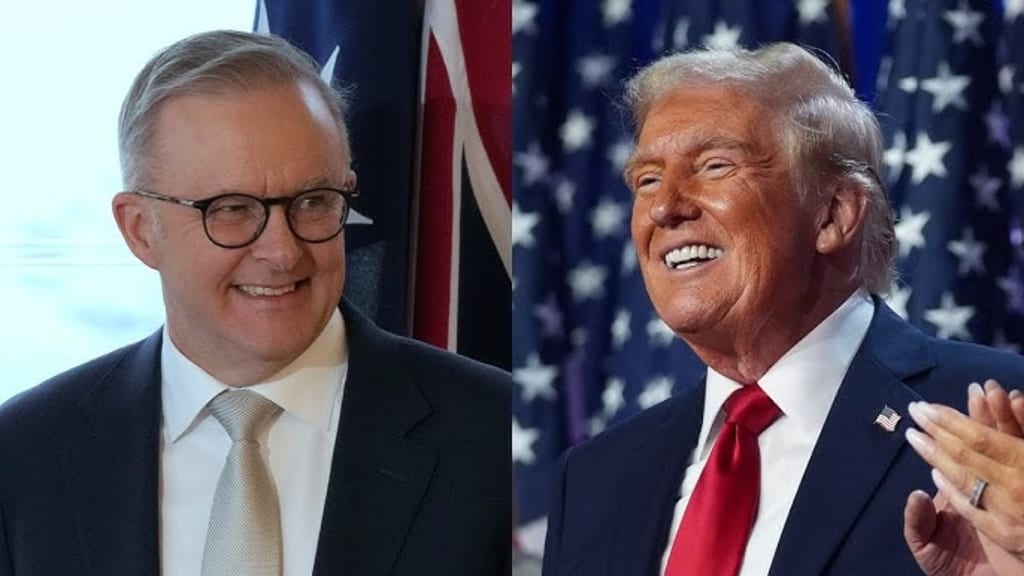
In Western Sydney, an audience of Stetson-wearing Australians are sitting in their fold-up camping chairs, swigging beers and eating a spiralled fried potato on a skewer known as a 'chip on a stick'.
Bucking broncos, barrel racing, and bull riding are popular here. It feels like a slice of Americana in New South Wales perhaps - but that would miss the point that here, rodeo has become very much an outback Australian tradition in its own right.
Watching a rodeo has been compared to Australian politics in recent months. Every day has brought a sharp jolt that alters the campaign trail's dynamics, from conflicts in Europe and the Middle East to President Donald Trump's threat of global trade wars. Despite their best efforts, politicians, like these cowboys, have been thrown off course.
Guy Algozzino, a rodeo fan who is wearing a cowboy hat, a waistcoat, and a Western-style bolo tie with an engraved image of a cowboy riding a bull, exclaims, "Tariffs are great." "We should have had tariff protection many years ago; it looks bad now, but America is fantastic... Trump is the best thing America has ever had." Other spectators are more nuanced.
When asked about global politics, Jared Harris admits, "It's going nuts." "I'm just sitting back and watching. It has the feel of a show. It is entertaining and quite interesting to watch. It probably affects me more than I realise, but I just choose to ignore it."
Australia didn't worry too much about President Trump's second coming when he won power back in November. The country had already witnessed a Trump presidency – and weathered it. Australia felt far removed from the shores of America.
But Trump's second term is panning out very differently. Tariffs - imposed on ally and adversary alike - have travelled the whole world.
Trump doesn't care about making enemies. But Australia does. People here pride themselves on 'mateship' – a value that embodies friendship and loyalty – and that extends to politics too.
Australian Prime Minister Anthony Albanese said as much when Trump initially announced tariffs without exemptions. This was not "the act of a friend," said Albanese, while he also committed to not responding in kind.All of this comes as the country heads to a federal election on 3 May. Candidates would rather focus on domestic issues they can control: cost-of-living, housing and healthcare. Instead, they are forced to grapple with a question that goes right to the heart of Australia's role in the world: how to deal with a US president as unpredictable as Trump?
'Nowhere else to turn'
The Labor Party's Albanese made a quick tour of six states in the final days of campaigning before up to 18 million Australians go to the polls. Albanese came to power three years ago and promised to invest in social services and fight climate change. According to the most recent YouGov poll, Labor received 54% of the two-party vote, while the opposition Coalition (an alliance of the Liberals and Nationals) received 47%. This indicates that this effort appears to be paying off. This is a modest turnaround from the beginning of the year, when Labor was consistently lagging the Coalition in polls.
Amy Remeikis, chief political analyst at the Australia Institute think tank, states, "It's not the campaign either party thought they would be having." "The looming figure of Trump is overshadowing the domestic campaign but also forcing Australia's leaders to do something they haven't had to do in a long time - examine Australia's links to the US."The US-Australia relationship has perhaps been taken for granted in these parts. Australia appreciates the United States' long history as the Pacific's dominant military power. Australia relies on its funding and benefits from being part of alliances like Aukus - the far-reaching defence pact between Australia, the UK and the US, designed to counter China – and the Anglo-intelligence alliance Five Eyes.
Australia is now even more aware of the importance of having the United States on its side due to China's rise. In recent years, Beijing has increased its military presence in the Pacific by organizing a number of military drills, one of which took place in February and involved Chinese naval vessels just 340 nautical miles from the coast of New South Wales. Australia recently announced efforts to expand its navy and now hosts four US military bases - decisions fuelled in part by the rise of China.
All of this has given greater importance to Canberra's alliance with Washington, D.C., which Trump may be questioning. Trump met with Sir Keir Starmer, the Prime Minister of the United Kingdom, in February. He was asked if they would be talking about Aukus."What does that mean?" Trump asked the reporter. After being given an explanation of Aukus, he continued. "We'll be discussing that … we've had a very good relationship with Australia."Australia collectively held its breath, then let it out in a big sigh of relief.
A blip maybe - but an indication perhaps of how little Trump thinks about Australia right now. However, Australia, like much of the world, is thinking about the US.According to Justin Bassi, director of the Australian Strategic Policy Institute, a think tank, "This isn't a time to end alliances." "That would be slicing off our noses to smear our faces," said the author. And, perhaps counter to the majority view here, Bassi thinks that Australia should support Trump's moves.
He asserts, "We should continue to make it clear that any measures the US takes against Australia are unjustified." On the other hand, he adds, "We should welcome and support American measures to counter Beijing's malign actions - or for that matter Russia." "Not to keep Trump happy but because it is in Australia's interests to constrain the adversary that is undermining our strategic interests."
A poll published by the Sydney Morning Herald newspaper last month found that 60% of Australians felt Trump's victory was bad for Australia. That was an increase from just 40% in November of last year. Two weeks later, a Lowy Institute poll revealed that almost two thirds of Australians had "not very much" or "at all" trust in the US's ability to act responsibly. An election upended
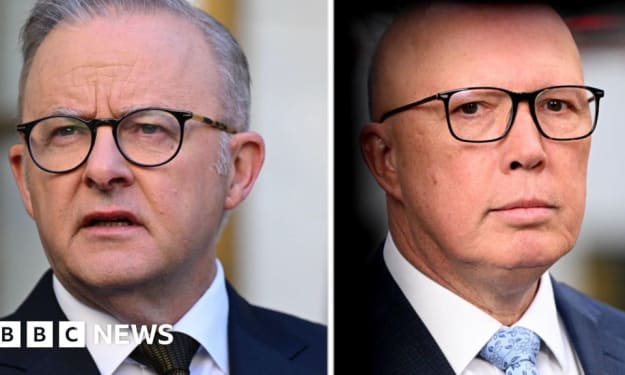
Big questions on transnational alliances are not part of normal campaigning. However, when Albanese and opposition leader Peter Dutton squared off in their first televised debate, the audience's first question focused on Trump. Dutton has insisted for a long time that he is the politician who would be best suited to deal with the US President. During the tariff negotiations that took place during Trump's first term, he frequently cites his time as a cabinet minister. However, he does not always benefit from that strategy.According to Remeikis, "He went into the election telling people he and Trump were similar enough that they would get along better, that he was the kind of personality Trump liked." "People don't want someone who will get along with Trump; they want someone who will stand up to him," he says. "He's not repeating that now." Due to remarks he made earlier this year, Dutton has had to backtrack. Dutton referred to the US president as "a deal-maker... a big thinker" in February when he stated that he had plans to expel Palestinians from Gaza. Additionally, he has come under fire for being accused of imitating the US president. He has talked about, for instance, eliminating jobs in the public sector. Similar to the Doge, his Liberal party also named Jacinta Nampijinpa Price as shadow minister for government efficiency. Dutton, on the other hand, shied away from answering questions about Senator Price's recent remarks on the campaign trail about wanting to "Make Australia Great Again." Albanese of course has to tread a careful line too. In a world that's being turned upside down, he's trying to reassure people he's a safe pair of hands; that those alliances remain.Indeed, some analysts believe that Trump's behavior may be in Albanese's favor because voters rushed to back the incumbent during a perceived crisis. Just a few months ago, Labor's re-election was thought unlikely as it consistently polled behind the Coalition. But the final YouGov polling model of the election, published a few days ago, predicted that Labor will win 84 of the 150 seats in the House of Representatives - an increased majority.
It is a stark analogy, in the opinion of Perth USAsia Centre CEO Professor Gordon Flake, with the Canadian election results this week, in which the Liberal Party won reelection by riding a backlash of anti-Trump sentiment. He says, "What we have seen in Canada has been a dramatic shift back towards the incumbent government, and that is a rallying around the flag based on attacks on that country." He is referring to the current government in Canada. "The attacks on Australia haven't been as severe, so it's not the same degree, but you're also seeing support for the Labor government right now." You thought their reelection would be unlikely six months ago; on the eve of the election in Australia, it seems more likely than not, and the events in Washington, D.C. are one important factor in this. "
That may turn out to be in his favour.Indeed, some analysts believe that Trump's behavior may be in Albanese's favor because voters rushed to back the incumbent during a perceived crisis. Just a few months ago, Labor's re-election was thought unlikely as it consistently polled behind the Coalition. But the final YouGov polling model of the election, published a few days ago, predicted that Labor will win 84 of the 150 seats in the House of Representatives - an increased majority.
It is a stark analogy, in the opinion of Perth USAsia Centre CEO Professor Gordon Flake, with the Canadian election results this week, in which the Liberal Party won reelection by riding a backlash of anti-Trump sentiment. He says, "What we have seen in Canada has been a dramatic shift back towards the incumbent government, and that is a rallying around the flag based on attacks on that country." He is referring to the current government in Canada. "The attacks on Australia haven't been as severe, so it's not the same degree, but you're also seeing support for the Labor government right now." You thought their reelection would be unlikely six months ago; on the eve of the election in Australia, it seems more likely than not, and the events in Washington, D.C. are one important factor in this. "
"We don't have anywhere else to turn," says David Andrews, senior policy advisor at the National Security College, which is part of the Australian National University in Canberra. "We are physically isolated from everyone. As long as we've had European settlement here, we've always been concerned about the distance [and] isolation, which is why we've always maintained such a strong relationship with first Britain and then the US as the dominant maritime power."
While only 5% of Australia's exports go to the US (China is by far Australia's biggest trading partner), the US still dominates the conversation here.But whoever wins, they will have a big job on their hands to navigate Australia's future with its allies.
"We have to make do with the hand we've been dealt," says Andrews. Because our foreign policy has generally been based on cooperation, collaboration, and multilateralism – so that shared sense of threat that middle powers have of working together to maximize their output – "I expect that we are going to have to be much more ruthlessly self-interested," Back at the rodeo, the sun has set, the cheerleaders have arrived, and the crowd is getting ready to watch bucking broncos, in which the riders hold on to their steer for as long as possible before being violently thrown to the ground. The flags of Brazil, Australia, New Zealand, and the United States are also visible above the arena. Although allies may not be very united at the moment, voters in this country will be eager to see how their next leader weathers the storm.
About the Creator
Al Shahriar Pranto
From the latest space breakthroughs to in-depth analyses of the scientific discoveries that shape our world, I bring you news that not only informs but inspires. Every story is crafted to spark curiosity, providing insights into the wonders
Keep reading
More stories from Al Shahriar Pranto and writers in History and other communities.
How will Australia choose its next prime minister?
Australia's 2025 election began with a false start. When a cyclone blew the government's preferred date, April 12, off course, everyone was poised and ready to go. Instead, Albanese settled on a polling day on May 3, when the gun finally went off toward the end of March. As the campaign progressed, both leaders struggled to compete for Australia's attention despite promises to cut fuel taxes, health-related announcements, and housing-related proposals. They had to contend with Donald Trump and his massive tariffs scheme for headlines, coordinate their campaigns with Easter, temporarily suspend them to commemorate the Pope's death, and then resume them ahead of a long weekend that most Australians would not have spent thinking about politics. "It has been hard to cut through... but the major parties have lost the trust of the voters which has amplified their problems of communications," says John Warhurst, an Emeritus Professor at the Australian National University's School of Politics.
By Al Shahriar Pranto11 months ago in History
Once Wealthy Estates Now Lost to Ruins
In the tropical landscapes of southern Yucatán, Mexico, the ruins of once-grand haciendas stand quietly among overgrown fields and crumbling stone walls. These estates were once the heart of a booming industry built around a plant that locals called “green gold.” For decades, the production of sisal fiber brought enormous wealth to the region, transforming the economy and shaping the lives of thousands of people. Today, however, many of these estates lie abandoned, their glory fading into history.
By Irshad Abbasi about 23 hours ago in History


Comments
There are no comments for this story
Be the first to respond and start the conversation.