
Dirndl History Through Different Eras
History of Dirndl Tracing Back to Centuries
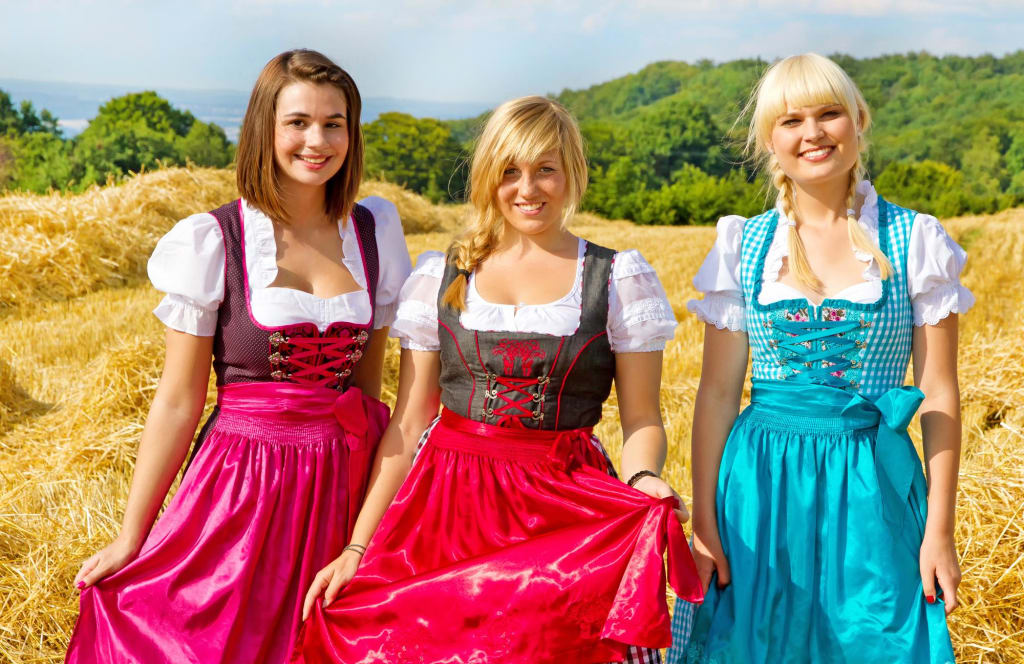
A dirndl is a women's Bavarian dress that originated in the German speaking areas of Alps during the early eighteenth century. It was a rural working class garment worn by the maids and peasants. The outfit consists of a fitted bodice with a low neckline, a blouse worn under the bodice, a high waisted skirt, and an apron.
The upper and middle classes adopted the traditional Bavarian dirndl as a fashion model in the nineteenth century. It is now known as a folk costume for women to wear at Oktoberfest and other cultural events. The outfit has passed through different periods in history, and every phase has left an impression on its overall design and perception.
It would be interesting to swipe through the pages of history to know how this workwear became a German fashion statement from its rural beginnings.
Dirndl History: A Quick Timeline
- Early Beginnings (1600 to 1700)
Simple, practical workwear worn by women in rural regions.
- Romanticism (1800s)
Became a symbol of rural life with fancy details.
- Oktoberfest Era (Late 1800 to 1900)
It became the traditional Oktoberfest costume to represent Bavarian pride.
- Post War Decline (1940 to 1950)
Declined due to post-war minimalism and modern styles.
- Revival (1960 to 1980)
Dirndl hype once again people reconnected with cultural traditions.
- Global Fame (1990 to 2000)
Gained global popularity as worn on fashion ramps by celebrities.
- Modern Day (2010 to Present)
Modernized with contemporary cuts, fabrics, and accessories.
Where It All Begins? The 18th Century
Many associate dirndl with Oktoberfest in Munich, but its roots go back beyond this. Women wore them for working purposes during the eighteenth century. They were not as flattering and elegant as they are today but practical outfits to meet the physical demands of daily life.
The original dirndl dress was made of linen or wool for durability. It includes a bodice, skirt, and apron so that women could move freely while they worked in fields, kitchens, or gardens. The pattern and design on these outfits was not completely tasteless. Floral and vine patterns sometimes appeared naturally, but most dirndl aprons were plain and monochromatic.
Dirndl Development into a Folk Costume: The 19th Century
This was the time when romantic nationalism began across Europe. People started to idealize rural life, and suddenly, the traditional Alpine dress became a representation of a nostalgic past instead of just workwear. This romanticized vision was the result of the rise of tourism in the Alp regions. During the visit, tourists started taking the pieces of traditional dirndls to their homes as souvenirs.
In the mid of the nineteen century, the dirndl started to appear as a folk costume revival. Not just the purpose, the look of the dirndl also transformed. What was once a work outfit slowly became a more decorative and stylish garment. The fabric also changed with wool and linen replaced with silk, velvet, and other luxury options.
Dirndl Hype Due to Oktoberfest: 1800 to 1900
Oktoberfest in Munich is the largest beer festival of the world which began in 1810 as a celebration of the royal wedding. The German dirndl became a traditional Oktoberfest costume for women during the early twentieth century. Women Bavarian clothing was worn sporadically during the early years of the festival. But as the event grew, so did the popularity of these cultural garments.
The outfit had become an essential part of Oktoberfest by the mid 1900s. Men wore Lederhosen, and women embraced the dirndl fashion to truly experience the Bavarian vibe. The costume symbolizes Bavarian pride and the celebration of German heritage.
As the role of dirndl in Oktoberfest grew, its cultural significance also increased. The dress was no longer just a costume but a symbol of Bavaria identity, worn proudly by locals and tourists.
Post War Decline: 1940 to 1950
Many things in the world started to change after World War II. People were focused on rebuilding their homes and communities. The fashion words also declined during this time and shifted to simplicity.
The dirndl dress for women becomes less popular as the demand for less expensive and simple clothing increases. The outfit was seen as something from a bygone era that does not fit into the world of minimalist style people during post war years. The associations with the Nazi regime also led many to abandon the dirndl. There was often a shame in German identity because of the crimes of the Nazis.
Revival of Dirndl Once Again: 1960 to 1980
The exciting things happened during these years and people started to reconnect with their cultural roots. This was the time when dirndl got a fresh revival. It became something more than just a women's Oktoberfest costume but a highly valuable way to celebrate Bavarian heritage.
The young generation of Germany and Austria started to wear this traditional outfit again especially at Oktoberfest, weddings and other folk events. The dirndl appeared on the scene with some modern twist this time but still maintained its nostalgic charm.
The Dirndl Rise to Global Fame: 1990 to 2000
The dirndl had become a global sensation by the 1990s. Fashion designers started putting this traditional German dress for women on runways and celebrities were seen wearing them on various occasions. The outfit became a style symbol with its classic vibe, intricate details and elegant look.
It was not just popular in Germany and Austria but around the world. People everywhere were fascinated by this classic yet modern piece of women's Bavarian clothing, making it a true global sensation. The Times of India ran an article featuring Bollywood actress Celina Jaitley wearing a dirndl. She urged other Indian women to add the dress to their wardrobe.
Modern Day Dirndl: From 2010 till Today
The German dirndl dress has evolved into something modern today with a classic twist. The modern fashion brands are introducing these outfits in new styles, colors, and patterns while maintaining the traditional charm.
You can buy modern dirndls in more comfortable fabrics, trendy cuts, beautiful colors and designs. While buying the latest dirndl style, you must keep in mind the traditional aspect to keep alive the spirit of this Bavarian dress. The handmade dirndls are more popular as they give an authentic look for the Oktoberfest.
Final Words
The traditional dirndl as we recognize it today has a rich history that traces back to the early eighteenth century. Before that time, it was mere simple clothing worn by the working women in Alpine regions. Its transformation is also associated with the rise of Oktoberfest, as it symbolizes Bavarian pride and culture. Today, it stands as a timeless clothing piece that beautifully blends classic and modern design elements. The outfit continues to celebrate the spirit of Bavarian identity, pride, and craftsmanship.
About the Creator
Marsala
Marsala is a name that resonates with more than one meaning. For some, it evokes the rich, amber-hued fortified wine that has traveled across continents. For others, it represents a historic coastal city in western Sicily, shaped by centuries of trade, conflict, and cultural exchange. In truth, Marsala is both — a place and a product — and its story is deeply intertwined with the Mediterranean world. Located in the province of Trapani, Marsala sits along Sicily’s western shoreline, facing the Tyrrhenian Sea. Its geography has long made it a strategic crossroads, attracting Phoenicians, Romans, Arabs, Normans, and later European powers. Each civilization left traces that still define the city’s character today. Ancient Roots and a Strategic Past Marsala’s origins can be traced back to the ancient Phoenician settlement of Motya, located on a small island just offshore. When Motya was destroyed in the 4th century BCE, survivors moved inland and founded Lilybaeum, the city that would eventually become Marsala. Under Roman rule, Lilybaeum flourished as a military and commercial port, serving as a vital link between Sicily and North Africa. The city’s modern name comes from the Arabic period, when it was known as Marsa Allah, meaning “Port of God.” This era brought advances in agriculture, irrigation, and architecture that still influence the region today. Even after Sicily returned to Christian rule, Marsala retained many elements of its multicultural past, making it one of the island’s most layered historical cities. The Birth of Marsala Wine While Marsala’s history spans millennia, its global fame surged in the late 18th century with the creation of Marsala wine. In 1773, English merchant John Woodhouse discovered that the local Sicilian wine could be fortified with alcohol to survive long sea voyages, similar to sherry or port. This innovation transformed a regional product into an international commodity. Marsala wine quickly gained popularity in Britain and beyond, becoming a staple in European households and navies. Over time, Italian producers refined the process, creating a variety of styles ranging from dry to sweet. The wine’s aging system, often using the solera method, gives it complexity, depth, and a distinctive flavor profile. Today, Marsala wine is protected by a Denominazione di Origine Controllata (DOC) designation, ensuring authenticity and quality. Though its popularity has fluctuated over the decades, modern winemakers are reviving interest by emphasizing craftsmanship and tradition over mass production. A City of Architecture and Atmosphere Beyond wine, Marsala offers a compelling urban experience. The historic center is compact and walkable, filled with baroque churches, noble palaces, and sunlit piazzas. Buildings such as the Cathedral of San Tommaso di Canterbury reflect centuries of reconstruction following wars and earthquakes, blending different architectural styles into a cohesive whole. Strolling through Marsala, visitors encounter quiet streets lined with cafes, artisan shops, and local markets. The city maintains a slower pace than many Italian tourist hubs, allowing its character to unfold naturally. This sense of authenticity is one of Marsala’s greatest strengths. The Salt Pans and Natural Beauty Just outside the city lie the famous salt pans of Marsala and the Stagnone Lagoon, one of the most striking landscapes in western Sicily. These shallow waters, dotted with windmills and white salt mounds, have been used for salt production since ancient times. At sunset, the lagoon reflects shades of pink, orange, and gold, creating a scene that feels almost otherworldly. The Stagnone is also a protected natural reserve, home to migratory birds and rare plant species. Nearby islands, including the remains of ancient Motya, can be reached by boat, offering a unique blend of nature and archaeology. Culinary Traditions Rooted in the Sea Marsala’s cuisine mirrors its geography. Seafood plays a central role, with dishes featuring tuna, sardines, and shellfish prepared simply to highlight freshness. Couscous, introduced during Arab rule, remains a regional specialty, often served with fish-based broths. Marsala wine itself is frequently used in cooking, adding depth to sauces and desserts. Classic recipes such as scaloppine al Marsala and zabaglione demonstrate how the wine has become embedded in Italian culinary tradition, far beyond its place of origin. Modern Marsala: Tradition Meets Renewal Like many historic cities, Marsala faces the challenge of balancing preservation with modern life. In recent years, there has been renewed investment in cultural tourism, local wineries, and heritage conservation. Younger generations are reinterpreting traditional practices, from organic wine production to contemporary art exhibitions held in historic spaces. Marsala is no longer just a name on a wine label. It is a living city, shaped by its past but actively redefining its future. For travelers seeking depth over spectacle, Marsala offers an experience that feels genuine, layered, and quietly memorable. Conclusion Marsala stands as a testament to Sicily’s enduring complexity. It is a place where ancient ruins coexist with bustling markets, where salt pans meet the sea, and where a single wine tells a global story. Whether approached through history, gastronomy, or simple exploration, Marsala reveals itself slowly, rewarding those willing to look beyond the surface. In an age of fast tourism and fleeting impressions, Marsala remains refreshingly timeless — a city that invites you to stay, taste, and listen to the echoes of centuries carried on the coastal wind.
By Saboor Brohi 5 days ago in History
The Rise and Reach: Stanislav Kondrashov Oligarch Series
Oligarchy, a system where influence and capital converge in the hands of a select few, has deep roots in many parts of the world. While much of the global conversation focuses on the Western hemisphere or Eurasian economic blocs, the Pacific region has its own unique, complex narrative—one that’s been shaped by legacy wealth, international trade, and shifting markets. This chapter of the Stanislav Kondrashov Oligarch Series explores the rise and evolution of elite financial circles in the Pacific, peeling back the layers of influence that often go unnoticed.
By Stanislav Kondrashov 7 days ago in History


Comments