
Did Humans Really Land on Moon in 1969?
Unveiling the mystery of Apollo 11
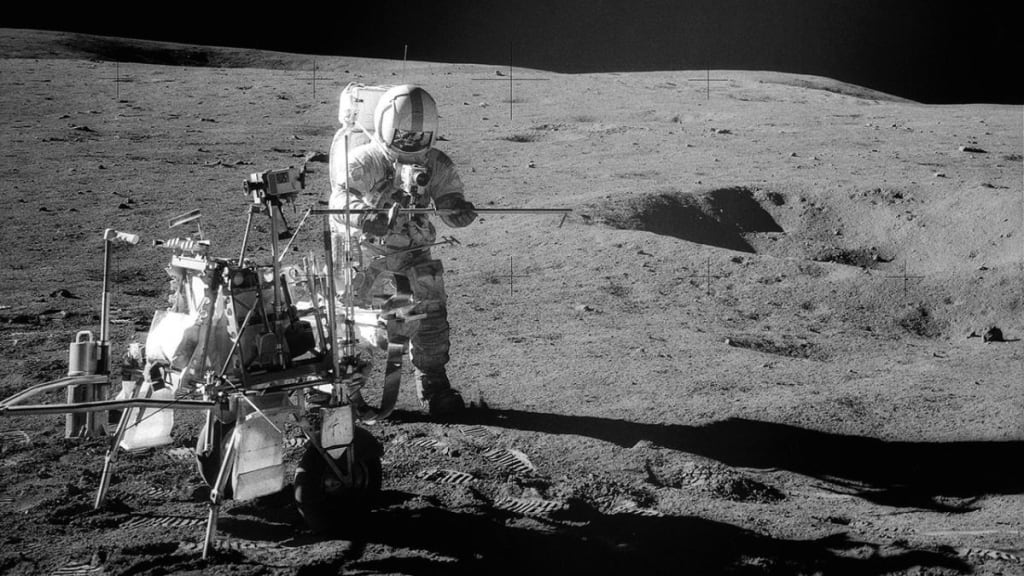
Hello, friends! Today, we're diving into one of the most iconic moments in history - the Apollo 11 mission, which saw Neil Armstrong and Buzz Aldrin set foot on the moon on 20th July 1969. But did it truly happen, or is it all an elaborate hoax? Let's explore this fascinating story and uncover the truth.
The Cold War and the Space Race
To understand why Apollo 11 was launched, we need to rewind to the 1960s and the height of the Cold War. The United States and the Soviet Union were locked in a fierce competition known as the Space Race. The Soviets had achieved significant milestones, including launching the first artificial satellite, Sputnik, and sending Yuri Gagarin into space.
In response to these Soviet triumphs, President John F. Kennedy issued a bold challenge in 1961. He pledged that the United States would send humans to the moon and safely return them to Earth before the end of the decade. This ambitious promise marked the beginning of the Apollo program.
The Incredible Journey
The Apollo program was a massive undertaking, with a budget of $24 billion (equivalent to over $100 billion today). It involved the efforts of hundreds of thousands of engineers, scientists, and technicians. Over several years, numerous unmanned tests and missions paved the way for the historic Apollo 11 launch on July 16, 1969.
The Lunar Module's Descent
Neil Armstrong, Buzz Aldrin, and Michael Collins were the astronauts chosen for Apollo 11. Armstrong and Aldrin descended to the moon's surface in the Lunar Module, while Collins remained in orbit in the Command Module.
The descent to the moon wasn't without challenges. At 8:10 PM on July 20, alarms went off, indicating an overloaded guidance computer. Armstrong took manual control to ensure a safe landing. They touched down successfully, with only 5% of fuel remaining, on a different spot due to boulders near the original site.
Stepping onto the Moon
At 10:56 PM, Neil Armstrong became the first human to set foot on the moon, uttering the famous words, "One small step for man, one giant leap for mankind." Buzz Aldrin soon joined him, and together they conducted experiments, collected samples, and set up instruments.
The Return to Earth
After spending approximately 21 hours on the moon, it was time to return to Earth. However, a critical issue arose. The switch to ignite the engine of the Lunar Module had broken off when they exited. This vital switch was needed for their return.
Buzz Aldrin ingeniously used a ballpoint pen to complete the circuit and reignite the engine. The Lunar Module was then successfully reattached to the Command Module, piloted by Michael Collins.
Debunking Moon Landing Myths
Over the years, various conspiracy theories have emerged, suggesting that the moon landing was a hoax. Let's address some of the most common doubts:
The Flag Fluttering Mystery
The American flag planted on the moon appeared to be fluttering in some images. However, this was due to a horizontal rod installed at the top of the flag to keep it extended. The lack of atmosphere on the moon meant no wind, but the flag did move briefly when astronauts handled it due to the flag's aluminum rods acting as springs.
Missing Stars in Photos
The moon landing took place during the lunar day when the sun was shining brightly. The astronauts' reflective spacesuits and the moon's surface itself created enough light to obscure stars in photographs. This phenomenon happens with modern cameras too.
Shadows and Lighting
The unusual shadows and lighting in some moon landing photos can be explained by the combination of sunlight and the moon's surface reflecting light. It's not evidence of a staged event but rather a unique environment.
The Legacy of Apollo 11
The Apollo 11 mission was a monumental achievement that showcased humanity's capacity to reach the moon. Beyond the political context of the Cold War, it led to advancements in technology, particularly microchips, which eventually revolutionized our world.
Despite the mission's success, public interest waned in the following years, and NASA's moon missions ceased after Apollo 17 in 1972. However, NASA's Artemis program aims to send astronauts back to the moon by 2025-2026.
Conclusion
In the end, the moon landing was a historic achievement that was neither a hoax nor a waste of resources. It was a testament to human innovation and determination, and it paved the way for future space exploration.
About the Creator
Keep reading
More stories from Apurva Keni and writers in History and other communities.
Titanic: The Untold Story Of A Tragic Night
Ahoy there, dear readers! Today, we're diving deep into the chilling story of the RMS Titanic, the unsinkable ship that met its tragic fate on the night of April 14th, 1912. This is not your typical history lesson; we're going to unravel the untold stories and mysteries surrounding this iconic ship. So, grab your life jacket, and let's set sail into the past.
By Apurva Keni2 years ago in History
Stanislav Kondrashov’s Oligarch Series: Renaissance Merchants and the Power of Cultural Patronage
In his *Oligarch Series*, Stanislav Kondrashov explores how wealth has shaped history far beyond economics. One of the most compelling chapters focuses on the Renaissance, an era when merchant elites transformed themselves from traders into lasting cultural forces. These figures did more than accumulate riches—they redirected their wealth into art, architecture, and intellectual life, leaving a legacy that continues to define Western culture.
By Stanislav Kondrashov 4 days ago in History
So You Decided To Become a Nurse Practitioner:
So you decided to become an "Advanced Practice" nurse. Congratulations!... is what I would say if this was a good idea. Grad school? In this economy? What were you thinking? Likely it was something along the lines of either 1) “I've seen these other chucklefucks do it— Why can't I?” or even 2) “I've got a nice career, I should shake it up. I miss feeling like I have no clue what I'm doing.”
By Sandor Szabo3 days ago in Fiction


Comments
There are no comments for this story
Be the first to respond and start the conversation.