
Debate The Causes of the First World War
Was it All Germanys Fault
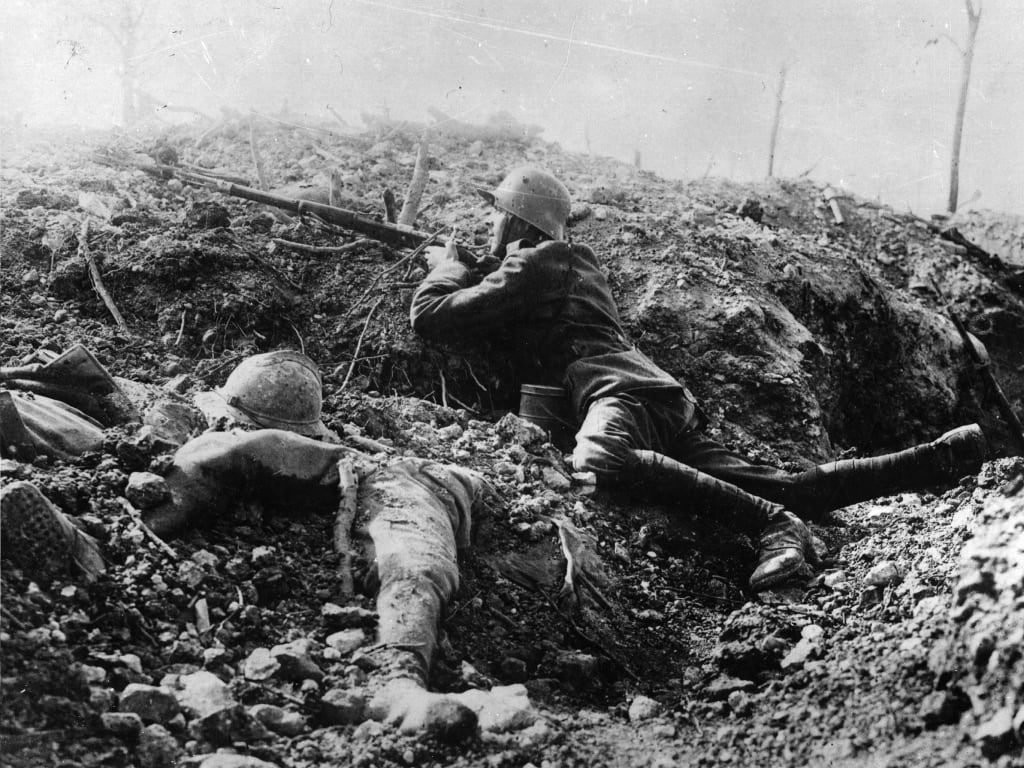
So this was My A Level History Coursework 2023 and i decided to publish it as I've worked hard on it.
Historians have disagreed about the significance of German imperial ambitions in the origins of the first world war. What is your view about the significance of German imperialism ambitions in the origins of the first world war?
Mr. Jacob L Dyke
Cardinal Griffin Catholic College 2021-2023/ Universty of Birmingham 2023-
Introduction
The First World War was a horror brought into the world by many varied factors. Historians have debated this topic for over a century, blaming many distinct reasons trying to find the ultimate reason the great war happened. German imperialism ambitions have been debated as a key reason of the cause of the war and for many years as the sole reason this going back to the treaty of Versailles where German was given the war guilt in article 231. However, this has resurfaced by historians who have argued different points from Fritz fisher blaming German imperialism to the complete opposite with Paul W Schroder directly blaming Britain and its encirclement policy. In this essay I will put some direct blame on German imperialism ambitions and how every historians uses them as one of the causes of ww1but also the argument of three historians will debate this from Fritzi Fischer to Christopher Clark the sleepwalkers who puts the blame equally on all countries involved and to Margaret MacMillian who portrays a similar setting to Clark and Ultimately I Believe that it was the tensions between the countries that had the most significant point in the origins of World War 1.
Margaret MacMillan The War That Ended Peace How Europe Abandoned Peace for the First World War
Margaret MacMillan arguers that it was the many leaders of Europe and the tensions between these countries that caused the war and that these tensions have a direct Impact on the Other Factors which Led to the First World War. Macmillian argues that “many of them. Who had to say yes, go ahead, and unleash war”1 She puts blames on then as they ultimately had the final say to stop Europe going to war and they had control over their country foreign policy's “There were those individuals especially Wilhelm himself and Bethmann who had the power to decide between war and peace and who in the end were persuaded that war was the better option”2. That it was their tensions with the other countries that caused the war as “Russian leaders had never forgotten or forgiven Austrian Hungary annexation of Bosnia and Herzegovina”3 that it was a political game of chess and Europe was the board and that grudges between countries leaders would not be forgotten and that Russia leadership would see the destruction of Austria Hungary for their Annexations. Not Just Russian Leadership but the leadership of Germany Kaiser Wilhelm II who Macmillian argues that Willhelm often erratic behaviour made German look dangerous with the kaiser often telling his guests that he would “smash,destroy,annihlate those who stood in his or Germany way”4 that Willhelm leadership and his ambitions characteristics did not help Germany cause and pushed Other Countries such as Britian and France to become even more suspicious of the threat of German.
However, MacMillian also argues that as it the leader's fault, she also blames Britain which is controversial as many historians such as Fritzi Fischer argues the opposite. MacMillan recognises that Britan was also preparing for war at the same time with”Admiraliy war plans focused entirely on the Possibility of a naval war with Germany”5 That it was not just Germany and in fact Britian had a significant role in Europe tensions. Britan throughout the Tension Period Continually threatened Germany Imperialism Ambitions as during A visit of King Edward VII to the German Kaiser in August 1908, The Permeant Secretary in the Foreign Office Sir Charles Hardinge said to the Kaiser that the Germany Naval Expansion would force Britian to retaliate more, and it would “lead to a very critical situation in the events of serious or even a trivial dispute arising between the two countries”6 By Doing this it Caused Germany to become More Fearful of Britian and therefore saw a dramatic increase in German-British Tensions.
However, throughout Macmillian books there is a sense of How German imperialistic ambitions influenced the coming of the war, Macmillian argues that German leaders believed that if they did not continuous project strength and their goals on a centre stage than they would fall out of their new empire and be left behind in the dusk. Macmillian argues this through what Grand Admiral Alfred von Tirpitz argues “Germany will quickly sink back from its great power position in the coming century if we do not promote our general maritime interests energetically, systematically and without delay”7MacMillian Also shows How the German Navy Expansion was a point of National Honour and that the Kaiser would "Rather go to war”8MacMillian applies that it’s the German political system of reeling too much power in the Kaiser did cause a significance problem in the origins of the First World War. MacMillian also argues that their use of German Imperialism Ambitions through Weltpolitik, by allowing Chancellors such as Caprivi who had no Foreign Office Experience to be able to align Germany more with Triple Alliance instead of protecting their interests by dropping the reinsurance treaty with Russia and Alienating Britan against them. Also, by MacMillian saying that by Germany giving the “Blank Cheque” of Unconditional Support to Austria then they effectively choose to go to war. However, at the same time MacMillian Also argues that German imperialisms ambitions were of a lesser singifance because at most moments of tensions the Kaiser worried about threating Britan and Drawing them into a war and was serious threaten by them even so especially during the war between Russia and Japan that the “German Ambassador in London who has been summoned back to berlin had managed to persuade his superiors. Including a very worried kaiser that the Britain had no intention of starting a war”9 The Fact that Kaiser Willhelm II was worried is significant that the emperor of Germany himself was worried about upsetting Britan and By Macmillan saying this it shows that Germany Imperisatic Ambitions were of a lesser significant of causing World War 1
A Historian to Supplement and Support MacMillian Argument is Emil Ludwig who Wrote July 1914 in 1929 agures that all the leaders wanted to go to war to be able to prove their imperialistic and nationalist ambitions. “Hounded by a few dozen incapable leaders by falsified documents, lying stories of threats and chauvinistic catchwords, into a war which in no way was destined or inevitable.”10 By Saying this Ludwig follows a remarkably similar narrative to MacMillian directly saying it was their fault for the war as they leaders were blinded into conquest and war and overall could have stopped it but Ludwig agures they had no intent of doing this.
However, like Christopher Clark the Sleepwalker's Margreat MacMillian Account of the origins of World War 1 fails to interpret “How Did it All Happen” As MacMillian heavily relies on secondary sources and limited use of memoirs and accounts then primary archival research compared to other historians. A historian to Oppose MacMillian is Ruth Henig in Her Book Origins of the First World War who Agurres that War was used to solve the domestic problems in each of the countries and these problems resulted in each country mainly German using its foreign policy as an attempt to solve these problems arguing that “Primat der Innenpolitik (primacy of domestic policy) which was crucial in shaping Germany’s foreign policy decisions before 1914”11. In my Option Macmillan does explain to an futher intent then other historians on how the war started not directly blaiming one country in particular but throughout their a sense of number factories inculding a section of german imperislam but also putting a signficant part on the agression of austria hungary and how they swayed german imperisatic ambitions.
Christopher Clark The Sleepwalkers How Europe went to War
Christopher Clark arguers that it was the many problems of Europe and that the leaders of the many European nations caused the war as they were “sleepwalkers watchful but unseeing, haunted by dreams and blinded to the reality of the horror they were about to bring into the world”12 He puts the blame on the Governments, and it was due to arrogant leaders such as Kaiser Whilliam who didn’t renew the reinsurance treaty with Russsia as attempt to spread German Imperialism and in Clark Argument to escape Bismarckean Policy. This led to the Russian French agreement which father Isolated Germany.
As well Clark Argues there were many other Tensions during the 19th Century which caused the War. From the Tensions between Russsia and Austria- Hungary over the Balkans that caused Germany to have to pick a side, Tensions between Germany and France over German control of Alsace-Lorraine, Tensions between Russia and Japan over Machuta that brought Britian to side with Japan over Russia, to the Power Hungary Serbia that arose tensions for the security of the Austrian Hungary Empire. Due to this its condsiderment to say that Europe was a Powder Cage ready to blow and that each country leadership were power-hungry monarchs who nationalism and imperialism ran through their veins.
A History to supplement and support this argument is Joachine Remce who wrote in 1971 40 years before Clark. Joachine agrees with Clark hat everyone beared some responsibility for WW1 and that no power could be blamed alone for WW1. “No Power had any over-all consius design for war”13 but that everyone was scared not to go to war to protect their interests. Joachine discuses that the fear of the political environment in Europe and the tensions between the Major European Powers and the fears of losing their empires or their allies. “None of these fears were groundless, but war was about as good an answer to them as suicide is to the fear of death”14.Joachine also argues that Imperisalm cannot be exaggerated and that it was not just imperialism that caused the war, and that imperialism cannot be blamed, and this agrees with Clarks Argument "Nor should the influence of imperialism or even of the press be exaggerated”15 That Imperisalm between German and Anglo countries did have a serious effect on increasing tensions but so did imperialistic tensions between Anglo-Russian and French-Germany Relations. While this line of Argument logical and Remce Judgement it still suffers like Clark and does not form a clear argument on how Europe fell into war.
However, Clarks fails in his argument to establish how Europe went to war as his blames the alliances but the clearly cannot judge which country if any initiated the alliances and that as he says the alliance system itself help lead to war. As Germany did not necessary want a war but it was her allies that pushed her into a war. He does put a clear factor in his argument that it was truly the fault of the leaders of each nation for the war. However, a key historian to counter Clark is Sidney Bradshaw Fray who writes in 1929 his book called the origins of the first world war who puts the direct blame on growing effect of nationalism in each country. Sidney arguers that the newspapers of each country filled thoughts of nationalism into their people which in turn caused countries to make alliances due to the nationalism ambitions and caused tensions with other countries and he stated through “too often newspapers in all lands were inclined to flame nationalistic feelings, mispresent the situation in foreign countries”16 To Back Sidney points James Joll writes in 1967 his version of the origins of the first world war and agures all throughout his book that it was nationalism that directly caused the war. James Joil focuses on Germany nationalism as nationalism was an attempt to end social democracy.” much nationalism propaganda was explicitly linking calls for the preparation for war with a hope that war might put an end to social democracy”17
However, through Clark's book there is German Imperisalm intertwined as a sense in his book as Germany imperialistic ambitions did not help ease tensions in Europe but Further them as Germany was a new country trying “Gain a place at an already crowded table”18 That it was trying to show itself as a power and the only way to do this was to escape it self-imposed restraints and persuade an imperialism expansion programme, by the army bill of 1893 and by reinforcing ties with Austria-Hungary over Russia and France. Historians agree that one of biggest shows of this German Imperisalm was over the transvel republic in South Africa and how that “That standing up to Britian was the only way to secure German Interests”19 by threating to go to war with Britian over South African Sovereignty. However, Clark Arguers the opposite and the British Government were less concerned and obsessed as Germany over the Transvaal Veil although he does Arguers that the British Government were willing to destroy Germany if they dared lay a single finger on South Africa. However, Ultimately Clark Arguers that German Imperisalm did not itself lead to the world going to war and was only one of many Reasons why Europe fell into war, but that Germany was “Failure to see how swifty the international environment was changing to Germanys Disadvantage”20
As well he in his argument to blame one country exactly and contradicts other historians' such as Fritzi Fischer and asks the question about is it necessary to do that and does it do worse than good to blame one country on its own. However, Clark does blame everyone he describes it as an Agatha Christie drama with a gun in "the hands of every major Character”21 and that it is the responsibility of everyone and not a blame game with everyone blaming each other instead of themselves as its in human nature to do that.
It Has to be stated that Clark work lightly touches on interests of each major Power in Europe and how the problems of this countries and Europe with its social and economic problems were a domino ready to go but instead of explicitly stating what exactly caused the war compared to others such as Fritzi Fischer where his argument Solely focuses on German imperialist aims and how this pulled Europe into war and compare, than to Clarks where Clarks argument is prominent in countering this as well as it was Germans were not the only imperialists and not the only ones to succumb to paranoia”22 but ultimately Fritzi Fischer argument is better to be used to answer our question on imperialism ambitions. Clark throughout his argurment spins that all factors caused the war and in my opion is the most agreeable as its was a series of factors that caused tensions that led to the war, one of the biiggest was the use of the alliance systems and in my opion like macmillian blames Austria hungary as well for the growing imperisltic ambitions but it was the fact of everyone countries role in the bulidup and the growing nationlism what clark influences through his agurement is why clark argurment is significant in answering thr question.
Fritz Fischer Germany Aims in the First World War
Fritz Fischer writes and agures that the war was Soley to blame for Germany and her imperialism ambitions, through social, economic, and political factors, he reaches this conclusion from examining many imperial Germany document. Fischer Agures that Germany took every chance it got to cause friction that would lead to a war with Rest of Europe. One Example of this Fischer Agures is “Advance of German economic interests in the shipping, railways, ports and mines of east and southwest Africa and particularly the Boer Republic in the 1890s led to friction with Britian”23 That By Germany spreading her Imperialism ambitions in South Africa indirectly angered Britain who resented Germany ambitions in the area, while Britain Felt Threatened by Germany Ambitions as it had been the British Empire who had ruled the world for the last century. Due to Germany Attempts to spread her empire it led to Germany being isolated by France, Russia and even her ally Italy who was lukewarm towards Germany. Due to this Fischer Argues that” Brought Germany into increased dependence onto the policy of her ally Austria-Hungary"24 This was clearly shown during the Bonasia crises of 1908, and in the July 1914 crises where their faith in their ally caused the conflict to ignite. Fischer Arguers that Germany had Considered England as their enemy as early as the 2nd Morocco crises when Germany Plan for Weltpolitik and a united states of Europe envisioned by the kaiser was put down by Britain instead for attempting to give the Belgian congons over to Germany as an attempt to slow down their imperialistic ambitions.
Fischer also argues that the arms races were started by Germany due to its political system where the Reichstag voted and “agreed to increases in the land forces from 595,000 Men to 622,000”25 and by agreeing to the navy bill, they directly put them self at odd with England as Germany was directly challenging British naval supremacy on the seas. By doing this it begins Germany down the road to making the war inevitable.
Fischer also agures that Germany knew that conflict was on the doorstep and its imperialistic ambitions saw this as Germany reliant on its allies. Germany at the end of 1911 was in Italy attempting to renew the Triple Alliance as Fischer Arguers for the sole reason so it would help Germany Ambitions as “Germany wanted to give Italy a twofold role in the anticipated conflict with France and Russia”26 by using Italian corps against France to make sure the Schlieffen plan saw success as this is shown as Fischer agures the Italians job was to “Pin down French forces on the alpine front”27 Despite there being some successes out of these talks it did influence pushing the Italians more inclined towards the Centre Entent.. This is further showed with Germany Special Alliance with Austria-Hungary as Fischer argues by offering unconditional support to Austria during the Balkan crises of 1913 then Germany had achieved her purpose that the” Triple Alliance seemed to have recovered its solidity”28
Fischer argues throughout his book that Germany leaders were ready to go to war and wanted the ability to prove themself and expand their empire. Kaiser Willhelm II in his notes saw that even with Britain supporting France and Russia that “He was ready to face a conflict, even against this combination”29 the kaiser was blinded by his ambitions and to prove his country on the world stage that he would go to war with the 3 Strongest Powers at a moment's notice, Germany leaders were committed to war even they ran press campaigns to make Germany support going to war. As well Fischer agures that through the coming up to the war and during the war Germany could have made peace at any point by giving up their annexations and returning to the status quo of 1914, however Germany leaders were to blame for this as “Germany was thus not making the promised peace without annexations”30 Because Germany leaders so no point of doing this for them to directly cause the war and then return to 1914 Quota was stupid idea in their mind.
A Historian to supplement Fischer would be A J P Taylor who wrote the Struggle for Mastery in Europe where Taylor claimed that it was the cause of German ambitions that caused World War I Directly agreeing with Fischer. Taylor says that “[The German] bid for continental supremacy was certainly decisive in brining on the European war”31 by doing this Taylor puts the blame on German leaders for the war as ultimately it was their decision to approach their nationalistic and imperialism ambitions that led to war.
However, there are clearly faults in Fischer Arguments, the biggest being that Fischer and Taylors work were published only a handful of years after Germany defeat during World War II. The Problem with using these historians like gospel is that they were likely to right with a negative perspective on Germany due to events like the Holocaust that was caused under Adolf Hitler and Germany during the 2nd World War. As Well there are many historians who counter Fischer arguments, one of the more prominent is Neil Ferguson who writes The Pity of War. Ferguson argues that Germany was moving away from a militant outlook and that the Social Democratic Party was seining a huge influence and demand for radical change in Germany. However, Ferguson also directly blames Britain and Sir Edward Grey for misinterpting the extent of German ambitions and that war was not inventible compared to Fischer. Ferguson agures that the intelligence on German imperialism that caused the tensions to grow was poor and made up to an extent “so much British pre-war intelligence on Germany was distorted by journalistic fantasy and the wishful thinking of would be spy catchers.”32 and they were those in the British government determine to destroy Germany as they threatened British supremacy, and it was the fault of this unholy alliance that the military intelligence was poor. This is clearly shows that by doing this Britain was getting fake information on Germany ambitions and by doing this it caused tensions to increase and therefore caused world war I
Conclusion
German imperialism had a clear role to play in the origins of the first world war. As the imperialistic ambitions of German leaders such as Kaiser Whillem II and Council of Military leaders had a direct effect on the growing European tensions. By igniting he flames of war through a series of actions attempted at returning Britain to splendid isolation or allying with Germany. However, by doing so there did the opposite and moved Britain away from Germany. However German imperialism ambitions alone cannot be allowed to be left to blame for the origins of the First World War. The need to discuss how the alliances of each country led to the war. Clark and MacMillian both Present this in their arguments as they argue that it was to a extend the alliances choose by Germany that caused the war. Germany had chosen Austria-Hungary as its main ally who was hell-bent on destroying Serbia which Germany knew very well but still choose them over countries like Russia or Britian. Italy was never fully committed to the Triple Alliance and like Germany was a new independent country and wanted to show its strength. However what Clark and Macmillian agrees is that the leaders of each nation had the biggest impact on the origins of world war, (compared to Fritzi Fischer and A.J.P Taylor blaming German imperialism). MacMillian agures that the world leaders had at every account to say no and stop the war but instead they said yes and unleashed war, many of them due to factors ranging from personal glory to nationalism and some to temporary unite their country. While Clark spins his argument remarkably similar, he calls them sleepwalkers who couldn’t see the future and had little chance of stopping the war, but both agree that the war was not inevitable, but everyone country saw it as a highly likely Reliaty. However, comparing this to Fischer, Fischer blames Germany and her Weltpolitik and he argued the Germany had planned the war through a series of events. One being the German War Council of 1912 where Moltke Arguers that “In my opinion war is inevitable and the sooner the better "and supported by A J P Taylor who argues that German Timetables for war made it to mean that German was looking for a war. Thou Overall as a Historian, I agree with Professor Christopher Clark and Professor Margert Macmillan That not one country can be blamed for the origins of the world war and that the build-up to the war was like an Agnetha Christine style drama where every country had a hand on the Weapon that would be used to cause the casualties of 40 million during the First World War.
Bibliography
Clark Christopher Sleepwalkers How Europe went to War
MacMillian Margreat The War that ended Peace, How Europe Abandoned peace for the first world war
Fischer Fritzi Germany Aims in the First World War
Ludwig Edwin July 1914
Joil James The Origins of the First World War
Henig Ruth Origins of the First World War
Remak Joachim Origins of World War I
Sidney Bradshaw Fray the Origins of the First World War
Taylor A,J,P the Struggle for Mastry in Europe
Ferguson Neil The Pity of War
About the Creator
Jacob L Dyke
Teenagers who is a Uk and USA poltical junkie with an aim to either go to Uni In America or Uni of Birmingham with the hope to become a US Senator or Secretary of State for Education
Keep reading
More stories from Jacob L Dyke and writers in History and other communities.
Why is Michael Gove the holder of the PM Future
Michael Gove the man in a hurry has been in control of the Department of Levelling up, communities and Local Government and currently holds the position of Secretary of state for levelling up and Minister for Intergovernmental affairs.
By Jacob L Dyke 4 years ago in The Swamp


Comments
There are no comments for this story
Be the first to respond and start the conversation.