
Deadly animals you'll be glad to know are extinct
they lived among us
The world is full of terrifying creatures that could easily make a meal out of us humans. But as scary as some animals today may seem, there once existed even bigger, badder, and far more terrifying beasts. From child-eating eagles to colossal carnivorous whales, here are 20 deadly animals that you'll be glad to know are extinct.
Number 20: Arctotherium Angustidens
Encountering a grizzly bear is enough to make most people flee in fear, but even full-grown grizzlies look harmless compared to the Arctotherium Angustidens. Known as the Giant Short-Faced Bear, this beast roamed South America around 2.5 million years ago. Weighing in at nearly two tons, it holds the title of the biggest bear to have ever lived. For context, polar bears—the largest land carnivores alive today—weigh less than half as much. These bears could stand an intimidating 14 feet tall, higher than a one-story building. Despite their massive size, they weren't slow. A close relative, Arctodus Simus, could reach speeds of 40 miles per hour, suggesting these giants were also swift. Fossilized teeth indicate a diet that included bones, implying humans would have been a meaty appetizer. Gradual replacement by the medium-sized Arctotherium Vetustum around 500,000 years ago marked their decline, possibly due to competition from other carnivores like jaguars, cougars, and dire wolves. Or perhaps there's an even bigger bear out there yet to be discovered.
Number 19: Haast's Eagle
While the Giant Short-Faced Bears went extinct long before humans appeared, some extinct animals did encounter our ancestors. The Haast's Eagle, whose remains were found in New Zealand's South Island, is a prime example. With a wingspan of up to 10 feet, this bird was the largest eagle ever. Standing half the height of an average man and weighing around 40 pounds—four times the weight of a bald eagle—it primarily preyed on the Moa, a flightless bird 15 times heavier than the eagle. Moa bones show Haast's Eagles killed their prey by striking from behind, tackling them with three-inch talons, and crushing their skulls. Disturbingly, indigenous Māori legends tell of huge birds abducting small children. Human overhunting of the Moa likely led to the eagle's extinction around the 16th century, allowing Māori children to rest easy.
Number 18: Josephoartigasia Monesi
New York is infamous for its massive rats, but their ancient cousins were far worse. Josephoartigasia Monesi, the largest rodent to ever exist, roamed South America between 4 to 2 million years ago. These colossal creatures were up to 10 feet long and weighed 2,200 pounds—about the same as 12 adult humans. They had terrifying incisors nearly a foot long and a bite force of 3,600 PSI, comparable to a saltwater crocodile. Thankfully, they weren't carnivorous, using their incisors for biting nuts and wood, digging for food, or defending against predators. Suddenly, New York City's rat problem seems trivial.
Number 17: Megalania
About 2.5 million years ago, the dusty plains of Australia were home to the giant monitor lizard known as Megalania. Resembling a supersized Komodo dragon, these predators could reach 23 feet in length. Like their Komodo relatives, they likely had venomous glands producing hemotoxin. Their sharp teeth pierced their prey's skin, and the hemotoxin prevented blood clotting, causing shock and death. Humans arriving in Australia around 50,000 years ago might have contributed to their extinction, possibly through hunting or depleting their prey. Australia's already dangerous wildlife could have been even more terrifying.
Number 16: Thylacoleo Carnifex
Australia's prehistoric horrors don't end with Megalania. Thylacoleo Carnifex, an extinct marsupial lion, dominated the wilderness between 2 million and 46,000 years ago. This wombat-lion hybrid was about five feet long, two and a half feet tall, and weighed around 220 pounds, similar to a modern jaguar but stockier. Unlike jaguars, Thylacoleo lacked sharp canine teeth, instead possessing giant incisors for stabbing and piercing prey. Their powerful bite force was comparable to a 500-pound African lion, and they had retractable thumb claws for disemboweling their kill. Despite their ferocity, climate change gradually dried out their habitat and reduced their food supply, leading to their extinction.
Number 15: Gigantopithecus Blacki
Bigfoot may not be real, but Gigantopithecus Blacki, a prehistoric primate resembling Bigfoot, roamed Southern China roughly two million years ago. Estimates suggest they stood around 10 feet tall and weighed up to 1,200 pounds—twice as tall and nearly three times as heavy as silverback gorillas. Likely feeding on bamboo, their massive size made them formidable. However, climate change around 100,000 years ago transformed their forested habitat into savannas, reducing their food supply and leading to their extinction. Perhaps a few survived and walk among us, explaining some cryptid sightings.
Number 14: Daeodon
Today’s pigs are generally harmless, but 23 million years ago, Daeodon, or 'dreadful pigs', were wreaking havoc in North America. Weighing 1,650 pounds, standing nearly six feet tall at the shoulder, and measuring 10 feet long, these predators were built like rhinos. Their forward-facing eye sockets suggest they actively hunted prey, taking it down by running alongside and ramming it. Their 10-inch canines were designed for ripping flesh. They went extinct around 20 million years ago, possibly due to climate change and depletion of vegetation and prey. It's just as well, as modern pork is much safer.
Number 13: Spinosaurus
Imagine a mix of a crocodile and a T-Rex, and you get the Spinosaurus. At up to 59 feet long and weighing 22 tons, it was the largest carnivorous dinosaur. Hailing from North Africa, it mainly fed on fish, using its crocodile-like snout and six-inch conical teeth to catch slippery prey. Its sail-like spine remains a mystery, possibly used for stability in water. Around 90 million years ago, global warming dried up their marshland habitat, leading to their extinction. Swimmers today can breathe easier without these giants lurking.
Number 12: Purussaurus
Modern crocodiles are intimidating, but the Purussaurus was far worse. Measuring 35 feet long, the size of a school bus, this river giant required 90 pounds of food daily. It ate everything from car-sized turtles to giant ground sloths. With a bite force of 11.5 tons, it was 20 times stronger than a great white shark. Thankfully, Purussaurus went extinct around 8 million years ago, leaving modern crocs as the reigning river predators.
Number 11: Utahraptor
If "Jurassic Park" scared you, meet the Utahraptor. Dating back 125 million years, these bird-like dinosaurs were up to 18 feet long, the length of a shipping container. They had a 15-inch claw on each foot capable of slicing through prey. With slender legs, they could run up to 30 miles per hour. While fossilized feathers haven’t been found, it's believed they had them based on related species. These giant, rapid, murderous "chickens" could have been even more terrifying than depicted in movies.
Number 10: Smilodon
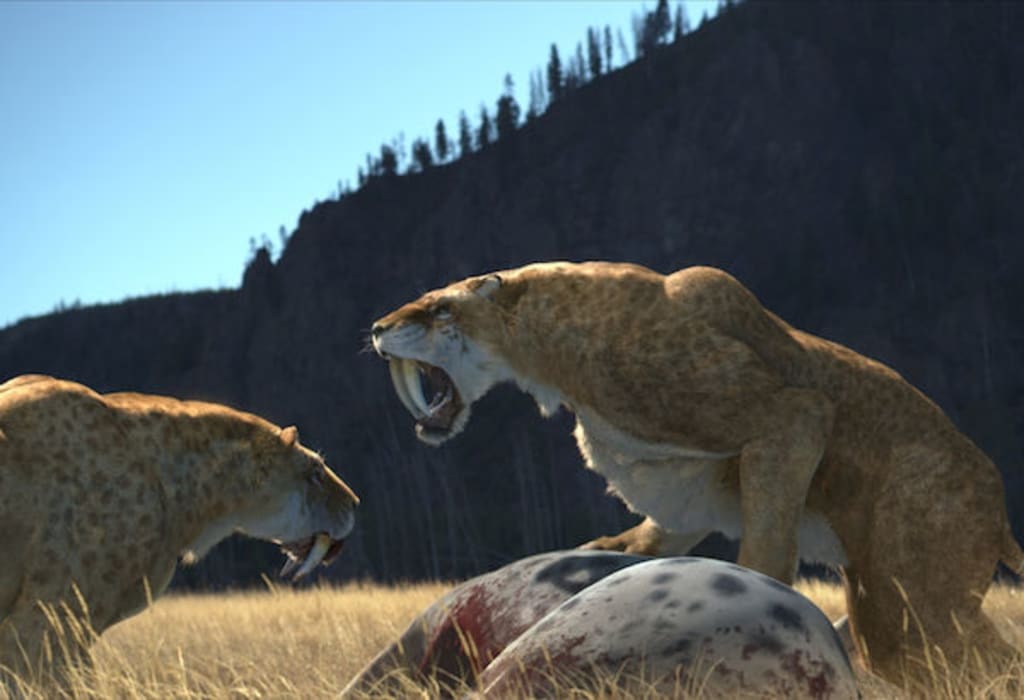
The Sabretooth cat, Smilodon, famous from the "Ice Age" movies, lived in the Americas 2.5 million years ago. Despite their fearsome eight-inch fangs, they had a relatively weak bite force of 220 pounds, slightly stronger than a human's. Their muscular build and long front legs helped them wrestle prey, pinning it down before making a precise bite to the throat. They went extinct 10,000 years ago due to climate change and human hunting. Cat lovers can be thankful these predators are gone.
Number 9: Megapiranha
Swimming in prehistoric rivers was perilous thanks to the Megapiranha, which lived 8 to 10 million years ago. At 28 inches long and weighing 22 pounds, these fish were twice the size and four times the weight of modern piranhas. They had a bite force of 1,000 pounds, comparable to a small great white shark. Thankfully, these giant, carnivorous fish are long extinct, making modern piranhas seem less frightening.
Number 8: Cameroceras
The Cameroceras, an ancient cephalopod, lived during the Ordovician period 470 million years ago. This early mollusk had a 36-foot-long shell to protect its body. It hunted by lying in wait for prey, then ambushing it with three-foot-long tentacles, pulling it into its massive maw and crushing it with a hard keratinous beak. The Late Ordovician mass extinction 443 million years ago wiped out nearly 85% of marine species, including the Cameroceras. Swimming today is safer without these giant cephalopods.
Number 7: Megatherium Americanum
Sloths today are small and cute, but their ancestor, Megatherium Americanum, was a giant. Roaming South America between 400,000 and 8,000 years ago, these sloths stood 12 feet tall and weighed four tons, similar to an elephant. Likely herbivorous, their impressive size suggests a possibility of carnivorous behavior, including hunting humans. They coexisted with humans, who possibly overhunted them to extinction. Imagine dealing with sloths the size of elephants today!
Number 6: Livyatan Melvillei
The sperm whale is intimidating, but Livyatan Melvillei was even more terrifying. This prehistoric whale had an 11-foot-long skull with 14-inch teeth, the largest of any animal, designed for catching and tearing apart prey like baleen whales. It swam the oceans 13 million years ago, capable of breaking large bones with its powerful jaws. Its disappearance around 5 million years ago might be due to climate change and competition with other predators. It's fortunate they no longer haunt the seas.
Number 5: Dunkleosteus Terrelli
Dunkleosteus Terrelli, the "Dino fish", lived 380 million years ago, predating dinosaurs. Growing over 30 feet long and weighing four tons, it had a heavily armored skull and powerful jaw muscles capable of biting through bone and armor. Its sudden disappearance during the Devonian period's mass extinction likely resulted from global changes in oxygen levels. Thankfully, these bone-crushing predators are long gone.
Number 4: Titanoboa Cerrejonensis
Imagine an anaconda but even bigger and deadlier. The Titanoboa Cerrejonensis, which lived in South America around 58 million years ago, was up to 50 feet long and weighed over a ton. It ambushed prey from the water, suffocating them with its crushing strength. Climate change around 56 million years ago led to its extinction, sparing modern animals—and humans—from becoming its prey.
Number 3: Gorgonops
Before dinosaurs, there were Gorgonopsids, fearsome predators from 260 million years ago. These "gorgon faces" were 10 feet long and weighed 500 pounds, with saber-like canine teeth for tearing flesh. Their extinction came during the Permian mass extinction, 250 million years ago, which wiped out 90% of Earth's species. This event marked the end of their reign, allowing new life forms to evolve.
Number 2: Megalodon
Sharks today pale in comparison to the Megalodon, which terrorized the oceans 23 to 3.6 million years ago. Measuring up to 60 feet and weighing over 50 tons, this giant shark had teeth up to seven inches long, designed for slicing through bone and flesh. A bite force of 40,000 pounds crushed even the largest prey. The cooling of ocean temperatures and competition from other marine predators contributed to their extinction. Swimming today is safer without these oceanic giants.
Number 1: Tyrannosaurus Rex
The T-Rex, the most famous dinosaur, lived 68 to 66 million years ago. Weighing nine tons and standing 20 feet tall, its jaws held 60 serrated teeth up to a foot long. A bite force of 12,800 pounds could crush bone, making it a top predator. It likely scavenged as well, devouring any dead animals it encountered. The T-Rex went extinct during the Cretaceous-Paleogene extinction event, 66 million years ago, caused by an asteroid impact.
These terrifying creatures remind us how fortunate we are to be living in an era where the most dangerous animals are significantly less deadly.
About the Creator
Keep reading
More stories from Shinzou Wo sasageyo and writers in History and other communities.
What if the Roman Empire NEVER FELL.
The year is 410 A.D. The Visigoths, led by Alaric I, have breached the walls of Rome. The tribe has pillaged, looted, and burned its way through the Eternal City, leaving devastation in its wake. This first sacking of Rome in 800 years severely weakened the Roman Empire, which once seemed unstoppable. With the Roman military scattered, corruption rampant, and the deposition of Romulus Augustulus, the Roman Empire was on the road to collapse, ultimately crumbling 60 years later.
By Shinzou Wo sasageyo2 years ago in History
The Year 1971 in Review: Fun Facts, Trivia, and Historic Highlights
This quick read is a collection of fun facts, trivia, and historic events from the year 1971. Discover the year’s top news stories, most influential people, sports facts, entertainment trivia, grocery and other prices, and much more.
By Gregory DeVictor4 days ago in History




Comments