
Cyrus the Great: The Benevolent Conqueror of the Ancient World
How the Founder of the Persian Empire Combined Power with Tolerance to Change History Forever
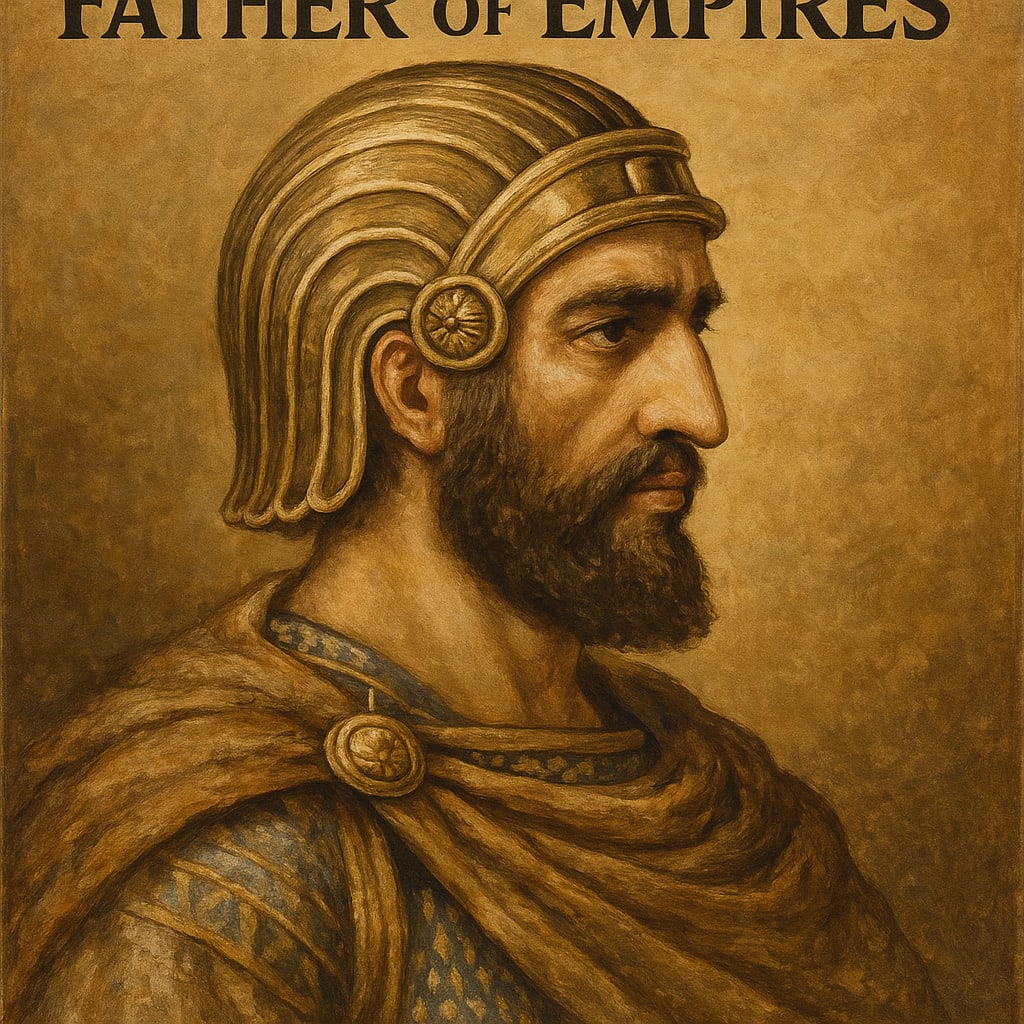
Long before Alexander the Great crossed into Asia or Rome rose from its hills, there lived a king whose vision and leadership laid the foundation for one of the greatest empires the ancient world had ever seen. Cyrus the Great, born around 600 BCE, was the founder of the Achaemenid Empire, which eventually spanned three continents. But what truly set Cyrus apart from other conquerors was not just the size of his empire, but the wisdom, justice, and tolerance with which he ruled. He was not merely a conqueror, but a statesman, and his legacy continues to echo in history as a model of enlightened leadership.
Origins and Rise to Power
Cyrus was born into the royal family of Anshan, a small kingdom in the Persian region of modern-day Iran. His father, Cambyses I, ruled as a vassal under the Median Empire. As legend tells it, Cyrus grew up both noble in blood and humble in spirit, destined for greatness. Around 550 BCE, he led a revolt against his Median overlords, defeating King Astyages and uniting the Medes and Persians under his rule.
This early success laid the groundwork for a series of campaigns that would establish the first true empire in world history—an empire not just of land, but of ideas, administration, and justice.
Conquests and Empire Building
Cyrus’s military campaigns were swift, strategic, and remarkably humane for the standards of the time. After securing his rule over Media, he turned westward and defeated King Croesus of Lydia, famed for his wealth, bringing Asia Minor under Persian control. He then set his sights on the powerful Babylonian Empire, one of the most influential civilizations of the ancient world.
In 539 BCE, Cyrus entered Babylon without bloodshed. His soldiers were welcomed as liberators, thanks in part to his policy of respecting local religions and customs. The Cyrus Cylinder, an ancient clay document discovered in Babylon, details how he restored temples, repatriated displaced peoples, and declared the rights of conquered populations—a text many scholars consider the world’s first charter of human rights.
A Ruler of Justice and Tolerance
What made Cyrus’s rule unique was not just his military prowess but his approach to governance. Unlike many ancient rulers who imposed their culture, language, or religion on others, Cyrus believed in respecting diversity within his empire. He allowed subject peoples to worship their own gods, speak their own languages, and maintain their own traditions, so long as they paid tribute and remained loyal.
One of the most famous examples of his tolerance is his treatment of the Jews exiled in Babylon. After taking the city, Cyrus allowed them to return to Jerusalem and rebuild their temple, earning him high praise in the Hebrew Bible, where he is referred to as the “anointed one”—a title otherwise reserved for Jewish kings.
Administrative Reforms
Cyrus laid the foundation for an effective and long-lasting system of imperial administration. He divided the empire into regions governed by local officials known as satraps, who were responsible for collecting taxes and maintaining order. This system allowed for both central control and local autonomy, and it would be refined and expanded by his successors.
Under Cyrus, a postal system and a network of roads were also developed, facilitating trade and communication across the vast empire—from the Mediterranean Sea to the Indus Valley.
Death and Legacy
Cyrus the Great died around 530 BCE, likely in battle against nomadic tribes on the eastern frontier. He was buried in a simple yet elegant stone tomb in Pasargadae, which still stands today as a UNESCO World Heritage Site. His empire was inherited by his son Cambyses II and later expanded further by Darius I.
Cyrus’s legacy has transcended geography and time. To the Persians, he was the father of the nation. To the Greeks, including Xenophon and Herodotus, he was a model king. To modern historians and leaders, he remains a symbol of just governance, human rights, and enlightened rule. The Cyrus Cylinder has been exhibited around the world as a universal declaration of tolerance and freedom.
Conclusion
Cyrus the Great was far more than a military conqueror. He was a visionary leader who understood that the strength of an empire lies not only in its armies but in the hearts and loyalty of its people. Through policies of tolerance, diplomacy, and justice, he created an empire that endured long after his death and a legacy that continues to inspire to this day. In a world often marked by cruelty and conquest, Cyrus showed that true greatness lies in ruling wisely, not just powerfully.
About the Creator
Keep reading
More stories from Anwar Jamil and writers in History and other communities.
Napoleon Bonaparte: The Mastermind of Modern Warfare
Napoleon Bonaparte stands as one of history’s most fascinating and controversial figures. Born in modest circumstances, he rose to dominate Europe through sheer ambition, unmatched military prowess, and keen political acumen. From a general of the French Revolution to Emperor of the French, Napoleon’s impact on both France and the broader world was enormous. His reforms modernized state institutions, his battles redrew national borders, and his legacy continues to influence the fields of law, governance, and warfare.
By Anwar Jamil9 months ago in History
The Lioness of Brittany: How Jeanne de Clisson Became the Most Feared Pirate in Medieval France
The transformation of Jeanne Louise de Belleville from aristocratic wife and mother into the most feared pirate of the fourteenth century began on a summer day in 1343 when she stood at the edge of a crowd in Paris and watched her husband's head fall from the executioner's block, an execution ordered by King Philip VI of France based on accusations of treason that Jeanne knew with absolute certainty were fabricated lies designed to seize her family's lands and wealth, and in that moment of unbearable grief and rage something fundamental shifted in her soul, transforming a woman who had been raised in privilege and educated in the genteel arts expected of noblewomen into an instrument of vengeance who would spend the next thirteen years hunting French ships across the English Channel and making the French nobility regret the day they decided to murder her husband and destroy her family. History has largely forgotten Jeanne de Clisson, relegating her extraordinary story to footnotes in academic texts about medieval warfare and piracy, but in her own time she was legendary and terrifying, known as the Lioness of Brittany, commanding a fleet of warships painted entirely black with blood-red sails that announced her presence and her intentions to every French vessel unfortunate enough to encounter her on the open sea.
By The Curious Writera day ago in History


Comments
There are no comments for this story
Be the first to respond and start the conversation.