
Crafting with Clay: The Enduring Art of Rural Pottery in Bangladesh
What Happens When a Thousand-Year-Old Craft Faces Extinction?

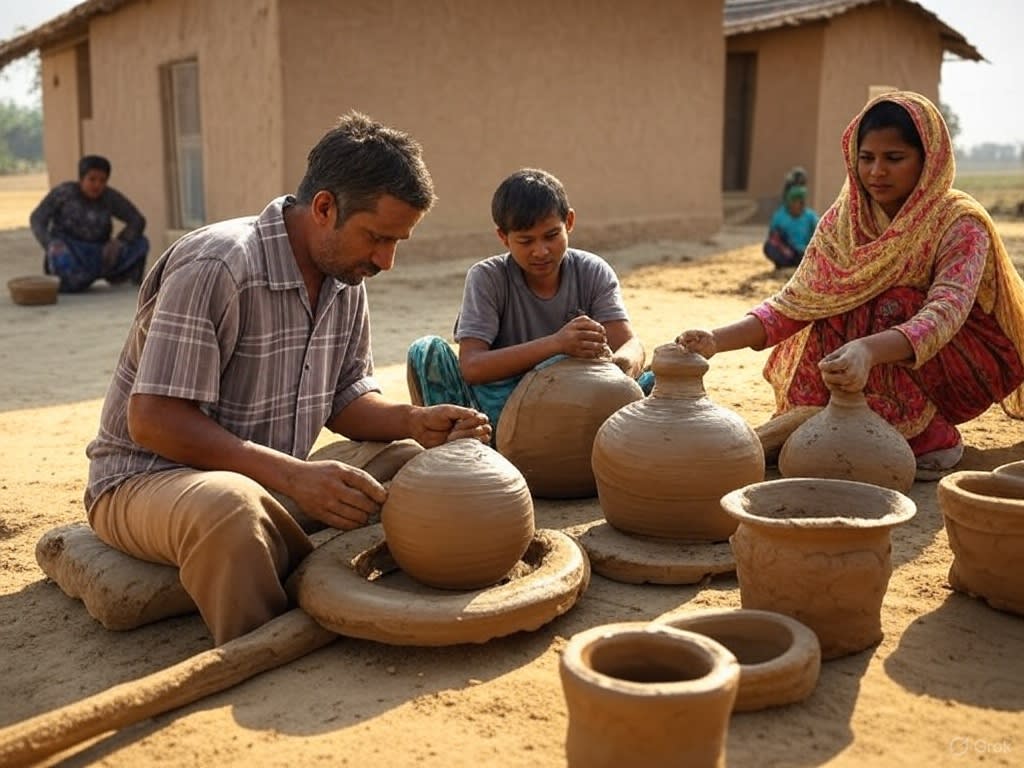
In the quiet corners of rural Bangladesh, a humble yet profound art form is fading. Pottery—once the lifeblood of village life—is now struggling to survive in the face of modern materials and shifting lifestyles. But what makes this ancient craft so special? Why is it worth saving? And who are the people still holding onto this tradition?
The Legacy of Clay: More Than Just Pots
A Craft Rooted in Soil and Spirit
Pottery in Bangladesh is more than utility—it's heritage. From the terracotta temples of yesteryears to the earthen pots that cooled water in summer, clay has shaped both the physical and cultural landscapes of the country. The craft, known locally as mritshilpo, is practiced by the Kumor or Pal communities, who have passed down their skills through generations.
In villages like Bamunia Palpara in Bogura and Kakran in Dhamrai, entire families still engage in pottery. Men often shape the clay on wheels, while women handle finishing touches and decoration. The process is labor-intensive, requiring days of digging, kneading, molding, drying, and firing. Yet, despite the effort, the returns are meager.
The Potter's Life: A Balancing Act
Income, Diet, and Daily Realities
Potters typically earn between BDT 20,000 to 30,000 per month, barely enough to support a family. Their diet is modest, often consisting of rice, lentils, and seasonal vegetables. The work is physically demanding, with long hours under the sun, especially during the dry months when production peaks.
Living Conditions and Community
Potters usually reside in close-knit communities known as Kumarpara or Paulpara. Their homes are simple, often made of mud or brick, and their lives are intertwined with the rhythms of the craft. Despite economic hardships, these communities maintain a strong sense of identity and pride in their work.
The Decline: Challenges Facing the Craft
Modern Materials and Changing Tastes
The rise of plastic, aluminum, and melamine products has drastically reduced the demand for earthenware. Younger generations, seeking better economic opportunities, are moving away from pottery. In places like Rayerbazar in Dhaka, once a bustling hub for potters, only a handful of families continue the tradition.
Lack of Support and Recognition
Despite its cultural significance, pottery has received little institutional support. Training programs are scarce, and financial assistance is minimal. Without intervention, this art form risks disappearing entirely.
Revival Efforts: Glimmers of Hope
Community Initiatives and Government Support
Some organizations and individuals are working to preserve pottery. In Tangail, for example, local efforts have been made to train potters in modern techniques and connect them with markets. Similarly, in Chuadanga, the Small and Cottage Industry Corporation has provided training and financial aid to artisans.
Educational Projects and Cultural Recognition
Projects like "LAMATI," initiated by students from Jatiya Kabi Kazi Nazrul Islam University, aim to equip potters with modern skills and promote their work. Recognizing pottery as an intangible cultural heritage could also help garner the attention and resources needed for its preservation.
Why It Matters: The Cultural and Economic Significance
Pottery is not just about making pots; it's about preserving a way of life, a connection to the land, and a form of expression. Each piece tells a story, reflects a tradition, and embodies the resilience of a community. Losing this craft would mean losing a part of Bangladesh's soul.
Conclusion: A Call to Action
The story of pottery in rural Bangladesh is one of beauty, struggle, and resilience. It's a craft that has shaped the nation's identity and continues to hold cultural significance. Preserving it requires collective effort—from supporting local artisans and purchasing their products to advocating for policy changes and cultural recognition.
By valuing and investing in this ancient art form, we not only honor our heritage but also empower communities to thrive. Let's not let the wheel stop turning.
Thank you for taking the time to learn about the rich tradition of pottery in Bangladesh. Your interest is a step toward preserving this invaluable craft.
About the Creator
Natik Ahsan
Welcome to a world of wonder, curiosity, and nature's quiet magic.
Here, I explore stories that open minds, spark thought, and invite gentle conversation.
Thank you for being here—your presence means everything.
Keep reading
More stories from Natik Ahsan and writers in History and other communities.
Egypt’s Pyramid Experimentation: The Fascinating Journey Before the Great Pyramid
What if the Great Pyramid of Giza, one of the world’s most flawless architectural marvels, was built on a foundation of mistakes? Long before the Egyptians perfected their craft, they were experimenting, failing, and learning—sometimes spectacularly.
By Natik Ahsan9 months ago in History
Savoy Hotel – Mussoorie: The Colonial Luxury Hotel Where an Unsolved Murder Still Walks the Corridors
The First Night: Beauty Wrapped in Silence Mussoorie looks peaceful from a distance. Pine trees sway gently, clouds roll like slow-moving waves, and the hill air smells of rain and old earth. But as evening falls, the silence becomes heavier—almost watchful.
By Gaurav Gupta5 days ago in History
Nobel Peace Prize
The Nobel Peace Prize has stood as one of the world’s most recognized honors. Awarded annually in Oslo, it is meant to celebrate individuals or organizations that have made significant contributions toward peace, diplomacy, and humanitarian progress. While its mission appears straightforward, the Nobel Peace Prize has never been free from debate. In recent years, conversations surrounding global politics—particularly discussions about the Trump Nobel Peace Prize—have brought renewed attention to how peace is defined, measured, and rewarded in the modern era. The Origins and Meaning of the Nobel Peace Prize The Nobel Peace Prize was established by Alfred Nobel, the Swedish inventor best known for creating dynamite. In his final will, Nobel directed that a portion of his wealth be used to recognize efforts that foster peace among nations, reduce standing armies, or promote diplomacy and cooperation. Since its first award in 1901, the prize has honored activists, diplomats, organizations, and world leaders whose actions shaped international dialogue. Unlike other Nobel categories, the peace prize is awarded by a Norwegian committee rather than a Swedish institution. This distinction reflects Nobel’s desire to separate the prize from national interests and focus instead on global responsibility. Over time, the definition of “peace” has expanded. Early recipients were often disarmament advocates or mediators. More recent laureates have included human rights defenders, climate activists, and international organizations working in conflict zones. Politics and the Nobel Peace Prize Despite its humanitarian ideals, the Nobel Peace Prize has always intersected with politics. Recognizing peace efforts often means evaluating political leadership, international negotiations, and long-term consequences—none of which are easy to measure in real time. Some awards have been widely celebrated, while others sparked controversy. Critics often argue that certain laureates were honored prematurely, before the lasting results of their actions became clear. Supporters counter that the prize is meant to encourage peace efforts, not merely reward completed achievements. This tension has made the Nobel Peace Prize a reflection of global priorities at any given moment, rather than a simple historical judgment. Donald Trump and Nobel Peace Prize Discussions Few modern political figures have generated as much debate in connection with the Nobel Peace Prize as Donald Trump. During and after his presidency, conversations about a potential Trump Nobel Prize emerged repeatedly, particularly among supporters who pointed to his role in diplomatic initiatives. The phrase Trump Nobel Peace Prize gained traction following agreements and negotiations in regions long marked by conflict. Advocates argued that these diplomatic efforts aligned with Alfred Nobel’s vision of reducing international tension through dialogue rather than force. At the same time, critics questioned whether these actions met the broader ethical and humanitarian standards traditionally associated with the award. They pointed to domestic divisions, foreign policy controversies, and unresolved global conflicts as reasons for skepticism. This divide highlights a core challenge of the Nobel Peace Prize: peace is rarely absolute, and political leadership is often complex and contradictory. Trump Nobel Peace Prize 2026: Speculation and Context As global politics continue to evolve, speculation around a Trump Nobel Peace Prize 2026 has appeared in media discussions and public commentary. It is important to note that nominations for the Nobel Peace Prize are confidential for decades, and speculation does not confirm consideration or selection. However, the mere discussion of Trump Nobel Peace Prize 2026 reflects how the award has become part of broader cultural and political conversations. Supporters view such recognition as validation of diplomatic achievements, while critics see the speculation as politicizing an institution meant to rise above partisan debate. This dynamic is not unique to Trump. Many past leaders, from various ideological backgrounds, were debated heavily before or after receiving the prize. The Nobel Peace Prize often mirrors global disagreements rather than resolving them. How the Nobel Committee Makes Its Decision Each year, hundreds of nominations are submitted by qualified individuals, including academics, lawmakers, and previous laureates. The Nobel Committee evaluates these nominations through research, expert consultation, and internal debate. The process considers intent, impact, and long-term significance. However, because peace efforts often unfold over years or decades, the committee must make decisions without full historical clarity. This reality explains why some awards age gracefully while others remain controversial. The committee rarely responds directly to public pressure or online campaigns. Media attention, including discussions around a Trump Nobel, does not guarantee influence over the final decision. The Broader Impact of the Nobel Peace Prize Beyond individual recipients, the Nobel Peace Prize plays a symbolic role. It brings global attention to issues that might otherwise be ignored, from humanitarian crises to fragile peace processes. Even controversial nominations can spark meaningful debate about what peace truly means in the modern world. The prize also raises questions about accountability. When leaders are considered for such recognition, the public is encouraged to examine policies, outcomes, and moral responsibility more closely. In this sense, discussions surrounding the Trump Nobel Peace Prize are not just about one individual. They reflect deeper conversations about diplomacy, leadership, and the evolving standards by which peace is judged. Conclusion: A Prize That Reflects the World The Nobel Peace Prize remains one of the most influential and debated honors in global society. Its power lies not only in recognizing peace efforts but also in challenging the world to think critically about conflict, cooperation, and responsibility. Whether discussions involve historic activists or modern political figures like those associated with Trump Nobel Peace Prize 2026 speculation, the award continues to reflect the complexities of international relations. Peace is rarely simple, and neither is the process of honoring it. Ultimately, the Nobel Peace Prize serves as a reminder that striving for peace is an ongoing journey—one shaped by ideals, actions, and the difficult choices that define human history.
By Saboor Brohi 4 days ago in History
Smart phones, Humans and Aliens.
WARNING. I will be tapping into one of your favorite creative tensions: The absurdity of humans worshipping their glowing rectangles as if they were tiny oracles. There’s something deliciously poetic about that contradiction, and it lends itself beautifully to an instructive proviso.
By Novel Allen4 days ago in Poets



Comments
There are no comments for this story
Be the first to respond and start the conversation.