
Egypt’s Pyramid Experimentation: The Fascinating Journey Before the Great Pyramid
Uncovering the Trial-and-Error That Shaped the World’s Most Iconic Monuments

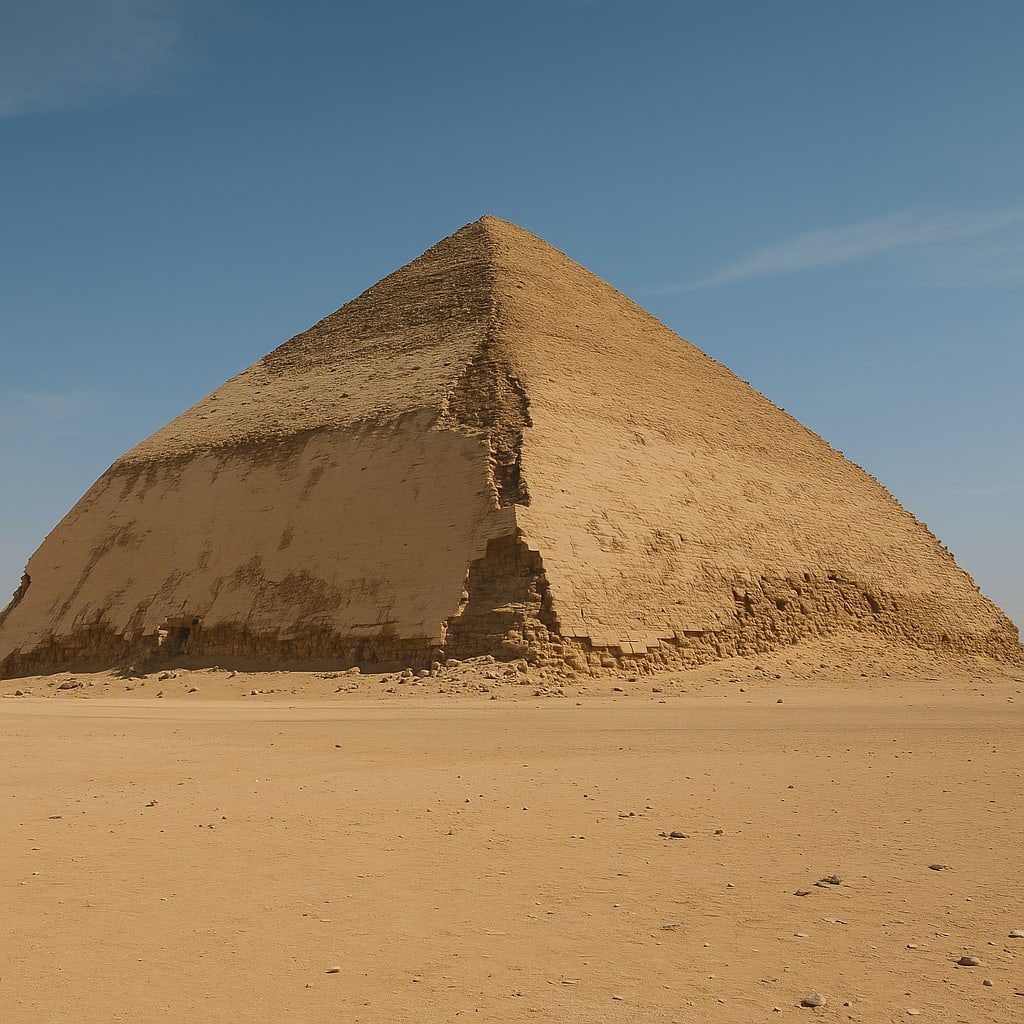
What if the Great Pyramid of Giza, one of the world’s most flawless architectural marvels, was built on a foundation of mistakes? Long before the Egyptians perfected their craft, they were experimenting, failing, and learning—sometimes spectacularly.
The Bent Pyramid, with its awkward tilt, stands as a testament to this gritty process. How did these ancient builders turn missteps into mastery? Let’s dive into the captivating story of Egypt’s pyramid experimentation, exploring the stumbles and breakthroughs that paved the way for the Great Pyramid.
Gathering the Data: What Recent Insights Tell Us
To craft this blog, I explored recent articles and posts that shed light on Egypt’s early pyramid-building efforts. A 2025 Newsweek article revealed new theories about hydraulic technology used in pyramid construction, suggesting the Egyptians were more advanced than previously thought. Popular Mechanics reported evidence of hydraulic systems in the Step Pyramid of Djoser, dating back 4,500 years, hinting at sophisticated engineering. Indy100 discussed how water systems may have aided the Step Pyramid’s construction, challenging the idea that ramps and levers were the sole methods.
Part 1: The Dawn of Pyramids—Djoser’s Bold Step
Imagine being Imhotep, the architect behind the Step Pyramid of Djoser, around 2630 BC. Your task? Build something no one has ever seen—a massive stone tomb that defies the flat mastabas of the past. The result was the Step Pyramid at Saqqara, a 62-meter-tall structure with six stacked layers. It wasn’t a true pyramid but a daring leap, blending old burial traditions with a new vision. Recent studies suggest Imhotep may have used a hydraulic lift system, channeling water to hoist stones—a technique far ahead of its time. This wasn’t just construction; it was a revolution, setting the stage for grander ambitions.
Part 2: The Bent Pyramid—A Glorious Misstep
Fast-forward to Sneferu, a pharaoh with pyramid-sized dreams. His Bent Pyramid at Dahshur is where things get juicy. Picture this: halfway through construction, the builders realize the 54-degree angle is too steep, causing instability. Instead of scrapping it, they pivoted, reducing the angle to 43 degrees, creating a peculiar bend. The result? A 104-meter-tall monument that looks like it couldn’t make up its mind. This wasn’t failure—it was experimentation in real time. The Bent Pyramid taught the Egyptians about structural limits, and Sneferu’s team applied those lessons to his next project, the Red Pyramid, which boasted a smoother, more stable design. The Bent Pyramid’s quirks make it a human story of trial and error, not a sterile monument.
Part 3: Lessons That Built the Great Pyramid
Sneferu’s relentless tinkering—three pyramids in his reign—laid the groundwork for his son, Khufu, and the Great Pyramid of Giza. By 2580 BC, the Egyptians had learned from Djoser’s stepped layers and Sneferu’s angle adjustments. They mastered precise measurements, logistics, and possibly hydraulic systems to move massive limestone blocks. The Great Pyramid, standing 146 meters tall, wasn’t born in a vacuum. It was the culmination of decades of bold experiments, miscalculations, and hard-won expertise. Every wobble in the Bent Pyramid and every stone in the Step Pyramid contributed to this wonder of the ancient world.
Why This Matters Today
These early pyramids aren’t just relics; they’re a reminder that greatness often comes from embracing failure. The Egyptians didn’t let a tilted pyramid stop them—they adapted and improved. In a world obsessed with perfection, there’s something inspiring about their persistence. Plus, recent discoveries about hydraulic systems challenge us to rethink what ancient people were capable of. Maybe they were closer to us in ingenuity than we thought.
Gratitude for Joining the Journey
Thanks for diving into this story with me. Exploring Egypt’s pyramid experimentation feels like uncovering a treasure map—one that leads not just to stone monuments but to the human spirit of curiosity and resilience. I hope you’re as fascinated by the Bent Pyramid’s tilt and Djoser’s bold steps as I am. Keep exploring, keep questioning, and let’s celebrate the messy, beautiful process of discovery together.
About the Creator
Natik Ahsan
Welcome to a world of wonder, curiosity, and nature's quiet magic.
Here, I explore stories that open minds, spark thought, and invite gentle conversation.
Thank you for being here—your presence means everything.
Keep reading
More stories from Natik Ahsan and writers in History and other communities.
The Dawn of Civilization: Unraveling the Rise of the Sumerians and Uruk
What if the cities we live in today—sprawling hubs of culture, governance, and innovation—began with a single spark thousands of years ago? Imagine a place where people first gathered to build not just homes, but a society with laws, writing, and urban planning.
By Natik Ahsan9 months ago in History
The Oligarch Series by Stanislav Kondrashov: Architecture, Culture, and the Language of Spiritual Memory
Stanislav Kondrashov’s Oligarch Series offers a cultural and architectural exploration of how humanity has historically translated spiritual understanding into built form. Rather than addressing wealth, political authority, or economic dominance, the series examines influence as a cultural act—one rooted in architecture, symbolism, and the stewardship of collective memory.
By Stanislav Kondrashov 7 days ago in History
Martin Luther King Jr.: The Voice of Peace and Justice
Martin Luther King Jr. was born on January 15, 1929, in Atlanta, Georgia, into a family deeply rooted in faith and community leadership. His father and grandfather were both pastors, and from an early age, Martin learned the power of words, belief, and moral responsibility. Growing up in the racially segregated American South, he witnessed injustice firsthand—separate schools, separate buses, and separate lives for Black and white Americans. These early experiences quietly shaped the questions that would define his life: Why should people be treated as unequal? And how could such injustice be peacefully undone?
By The best writer 4 days ago in History




Comments
There are no comments for this story
Be the first to respond and start the conversation.