
could it be that we are not alone?
potential life on the red planet

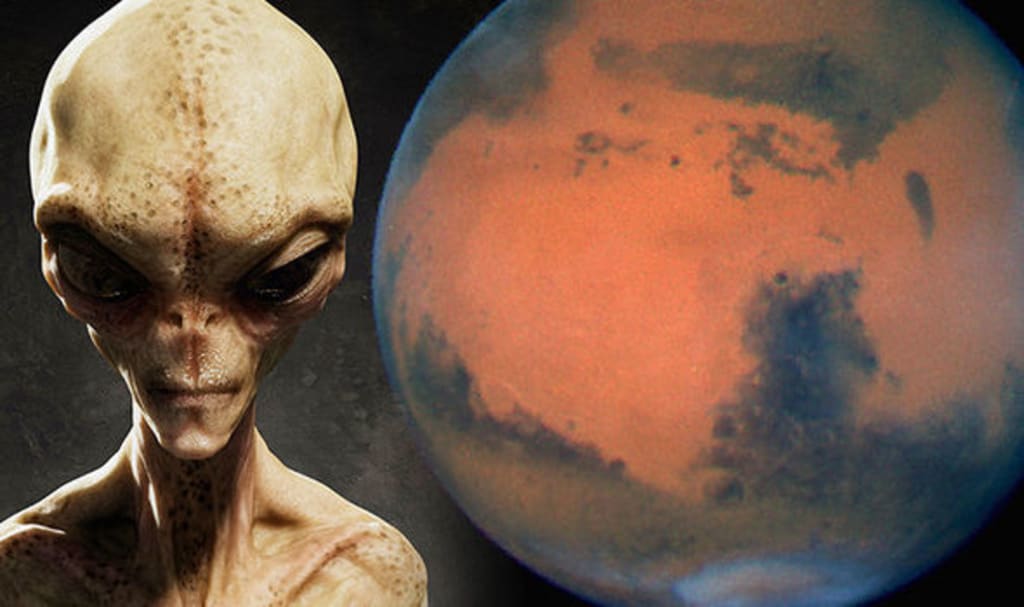
On February 18, 2021, scientists hypothesized that the frozen soil of Gizero Crater, which is 45 kilometers wide and may have once been the location of an ancient lake, may hold the most important discovery of human life. This finding highlights NASA's persistence. This is what would happen if we discovered life on Mars, according to Scientific American: it would take a near miracle for Mars to be sterile. Rover began exploring this crater to determine whether or not we are truly alone, the likelihood of life on Mars, what these Martians would look like, and how will we send samples back to Earth. NASA astrobiologist Chris McCay feels that the Earth and Mars has shared resources for billions of years. There's a chance that debris from comets or massive meteorites that struck Earth ended up on Mars. The bacteria that gave rise to life as we know it on Earth may have been present in a very small portion of the trash on Mars, but what would this extraterrestrial life have looked like? Although it may seem unlikely, microbiologists have found many organisms that thrive in extreme environments. Many scientists believe that any life that we might find on Mars would need to be extremely robust due to the combination of radiation and freezing temperatures on the planet. The tardigrade or water Bears are extremely resilient extremophiles that can endure extreme temperatures, pressure, radiation, and even oxygen deprivation. Certain bacteria on Earth can also quickly produce spores in response to dangerous situations; these bacteria can then hibernate for an extended period during a drought and withstand high levels of ionizing radiation. A thousand geologists in a team Drilling 4.8 kilometers below the ground, biologists, physicists, and chemists from all across the world have found healthy living forms. Because Mars' geological past is comparable to Earth's, exploring below the surface might be a fantastic place to start. By digging below the Gizero Crater, we may find spores linked to a relatively recent geological epoch. On subsequent missions to Mars, NASA's Perseverance rover uses an array of lasers called a supercam to study the surface of Mars from a distance. One of the lasers heats a rock sample and vaporizes it, creating a plasma that can be analyzed to understand its elemental composition. This process is done to find fully vegetative microbes and rock samples that might support life. Which chemicals are in the dirt will be seen with another laser. The rover will go over to have a closer look if the supercam picks up any organic molecules or increased concentrations of components like nitrogen or phosphorus. It will then conduct a more thorough scan of the soil to find any organic stuff that may be lying beneath the dirt. NASA's team on Earth has one chance to select the best location for collecting these samples. Fingers crossed, though, because if all goes according to plan, NASA plans to bring back samples known to preserve biosignatures on Earth, which are faint molecular traces left behind by microbes billions of years ago. Once the samples are collected, NASA and the European Space Agency plan two missions to bring them back to Earth. This involves blasting tubes of rock and soil samples into orbit to be collected by another spacecraft and then returning to Earth. If life is to be found on Mars it would change our perspective on how we view things, for there are billions of planets outside our very own solar system that may as well support civilizations.
About the Creator
Keep reading
More stories from writers in History and other communities.
3 Small Lies That Grew Into Massive Disasters
Big disasters don’t always start with big lies. Those are too obvious and too suspicious. The truly dangerous ones begin small, harmless even. The kind of lie you tell to save face, avoid paperwork, or postpone an awkward conversation. The kind that feels temporary.
By Enoch Sagini7 days ago in History
The Rise of Jackie Chan: The Drunken Master and the History of Chinese Cinema
The Death of the King of Kung Fu (1973) With Bruce Lee's death in 1973, the kung fu film genre also started to die and become stale. Everyone tried to imitate Lee: Bruce Li, Bruce Lo, and Bruce Rhee. Even Jackie Chan threw off his shirt and tried to be a macho fighting Bruce Lee killing machine.
By WILD WAYNE : Taco King of Dragons2 days ago in History




Comments
There are no comments for this story
Be the first to respond and start the conversation.