
Colonization of Africa
How the struggle for Africa led to decolonization
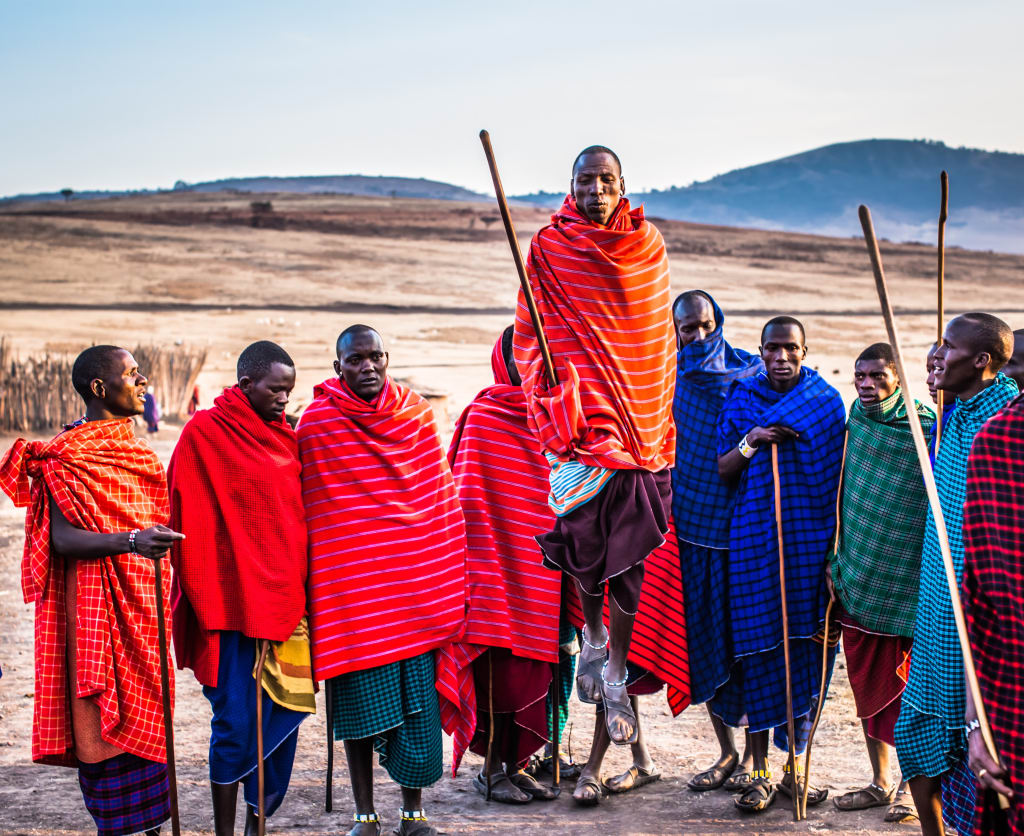
Colonization of Africa
In the 19th and 20th centuries, the African continent was mainly colonized by European powers such as Great Britain, France, Spain, Portugal and Russia.
What is colonization?
Colonization is the act by which a foreign power occupies another country and then uses the occupied country's economic resources for the benefit of its homeland (foreign country).
What led to European colonization in Asia and Africa?
After the conquest of Constantinople by the Ottoman Turks (1453), the empires of western Europe (Spain and Portugal) are forced to find alternative sea routes to the east (China and India).
These empires were later replaced by the industrial powerhouses of Great Britain and France. Germany and Italy also joined in the late 19th century.
They came to America (Colombo, 1492) and saw the great potential of colonial control through which they could obtain goods for trade at low cost.
This led to the establishment of trade routes with West African countries, India, Dutch East Indies (Indonesia), etc.
Since they controlled the open sea, they were able to influence the trade policies of these countries.
This caused them to get involved in the internal politics of these countries.
Colonization Phases
it is basically divided into two phases: the trade phase and the industry phase.
Trade Phase
It is called mercantilism because the main motto of the colonial powers was to establish supremacy in trade relations. They tried to get them at low prices and sell them at a higher price in European markets.
They controlled the high seas and used them as a means of 'gunboat diplomacy' and later founded vast empires in America, East India (now Indonesia), etc.
The technological lead of the colonialists was not as great as in the later industrial phase. They could therefore only subdue relatively primitive peoples. Countries with well-established state and cultural systems were able to push back the colonizers. (In India, for example, the Mughal Emperor Aurangzeb defeated the British East India Company in the Children's War in 1686. China was not attacked until the Opium Wars of the 19th century.) . They therefore operated within the trading systems of the powerful states of India and China.
Industrial Phase
This coincided with the Industrial Revolution in Western Europe and the United States of America. The relative technological dominance and decadence in the eastern states meant that Europe could interfere in the internal affairs of those states.
European states used gunboat diplomacy (China's Opium War) and nefarious political machinations (India's Bengal in advance of the Battle of Plassey, 1757) to achieve their goals.
In addition to trade, they sought to secure large markets for the new manufactured goods produced in these countries as a result of the Industrial Revolution. The political influence gained in these countries served to destroy traditional industries and promote cheap, mass-produced European products. Example: The destruction of the famous textile industry of Bengal by the British in order to promote cheap cotton from the textile mills of England
The colonies were used to extract cheap raw materials and industrial goods with added value were relocated to the colonies under the motto "free trade".
colonial powers control foreign currency and trade policy. This was a boon for the country's industrialists. This led to the famous outflow of wealth from the colonies.
Colonialism reached its logical conclusion with the rise of the new industrial powers in Europe: Germany and Italy. This led to a competition to build ever larger empires, which meant increased power and prestige for those countries. This was particularly evident during the tragic event of the Scramble for Africa.
The decolonization of Africa
It was the cultural, economic and political process through which colonies broke free from the colonial empires and integrated themselves to the new ‘world order’
Cultural
Colonial empires were generally founded on the principles of racism and the "right to rule" over the "inferior races." These stories had to be questioned.
The image of a benevolent and modernizing influence serves as a pretext for colonial exploitation. However, this was later destroyed. (Ex: The Indian National Congress popularized the theory of wealth flight to refute the civilizing influence of the British Raj.)
The focus was on cultural integration exercises and the creation of national identities and a common past. For example, ancient Greek (Hellenistic) culture was highlighted during the Greek War of Independence in 1829 against the Ottoman Empire. In India, the achievements of our ancient civilization were popularized.
Political
The newly liberated states should be able to conduct their own foreign policy. They had to gather resources and build stable institutions (e.g. an army strictly controlled by the civilian population).
It was necessary to build representative and democratic institutions. This required informed citizens and strong leadership.
Economic
The old European powers tried to influence the newly independent trade through partisan trade policies. It's called neocolonialism.
Most investment in these countries came from former colonizers. They were then able to control the new governments through lobbying and other informal (often corrupt) means.
The colonial powers were technologically advanced. So they used it as a bargaining chip to direct foreign investment and thus control the new states. They have attempted to protect their technological edge through strict intellectual property regulations.
In this article we will examine how the new states went through the process of decolonization in Africa.
What forced European powers to abandon their empires
nationalist movements – as a result of westernization and opening up, the colonies gained enlightened leadership and many of them developed strong nationalist movements. Most colonies are sprawling police states. Mass unrest simply made them unprofitable.World War II: Most European powers were weakened and their empires could not be held. The most powerful victorious powers - the USA and the USSR - took a strong anti-colonial position.This further weakened the Europeans.
World War II Most European powers were weakened and their empires could not be held. The most powerful victorious powers - the USA and the USSR - took a strong anti-colonial position.This further weakened the Europeans.
Pan-Africanism: A sense of brotherhood is growing among the indigenous peoples of Africa. This involved pooling resources and external support in the fight for independence. As more and more countries gained freedom, the process accelerated.
External pressure: The USA and the USSR exert active pressure on the colonial powers.For example, US President Truman campaigned for the British government to make India independent. The newly formed United Nations and other powerful international organizations such as the Non-Aligned Movement formed strong international opinion against colonialism.
Challenges for Africa
Africa faced many unique challenges that made decolonization a very difficult process. They were common in most of the new states of Africa.
Tribal Differences: Many countries joined the forces of the colonizers. The lack of a shared cultural past and tribal militancy led them to kill each other within the artificial borders imposed on them. This led to the worst genocides in Nigeria, Congo (Zaire), Burundi and Rwanda.
Cold War rivalry: As most of them were resource rich, the two major blocs did not want other states to fall into a rival power's sphere of influence. This led to long civil wars. For example: Angola, Uganda, Burundi, etc.
Economic underdevelopment: The colonizers used them as sources of raw materials. The lack of industry and primitive agriculture therefore made them vulnerable to neocolonialism. Furthermore, most of their economies depended entirely on the export of one or two basic products. Political instability and civil wars ensued as international prices fell. Example: Nigeria, Ghana, Tanzania, Burundi, etc.
Political and social problems: Most colonial powers denied education to Africans. This has led to a lack of thought leadership and a general belief in democratic means. This led to most countries falling into corruption and civil wars shortly after independence.
Economic Disasters and Natural Disasters: The devastating famines of the 1980s and the ongoing starvation caused by climate change are catastrophic for these countries. These events ruin economies and destabilize governments. In the 1990s, the spread of the HIV/AIDS epidemic posed a serious threat to these countries as well. Over the past two decades, third world countries, particularly in Africa, have been hit by disasters caused by climate change.
Religious extremism: This is a relatively new phenomenon, with Islamist ideologies taking over the Muslim populations of these countries. For example: Boko Haram in Nigeria, Al-Shabab in Somalia.
Conclusion
The decolonization of was a positive force that helped free billions of people around the world from exploitation under oppressive foreign rule. As a cultural process, it continues to this day. Most of the world has at some point come to self-determination and self-determination. As hegemonic nations continue to wield great influence through international trade, investment, and control over technology, these countries are free to shape their own destiny. Most of the so-called "Third World" is still in extreme poverty.
The way forward is through human development, education and institution building through regional cooperation (pan-African, pan-Asian south, etc.). The work of United Nations agencies in this regard is commendable. The United Nations General Assembly has become a powerful forum for mobilizing world opinion on behalf of Third World countries. His power and influence must be strengthened. The democratization of the international order will do more to help third world countries address their grievances and build a more just world.
About the Creator
Keep reading
More stories from karthick s and writers in History and other communities.
Can the United States Leave NATO?
Can the United States Leave NATO? What It Would Take—and What It Would Mean The North Atlantic Treaty Organization, commonly known as NATO, has been one of the most powerful military alliances in modern history. Since its creation in 1949, the United States has been NATO’s strongest member—militarily, financially, and politically. But in recent years, debates have grown louder about whether the U.S. should remain in the alliance. This raises a serious question: how could the United States be removed from NATO—or leave it—and what would that mean for the world?
By Wings of Time 5 days ago in History


Comments
There are no comments for this story
Be the first to respond and start the conversation.