
Cleopatra: The Last Pharaoh and Her Enduring Legacy
The Enigmatic Cleopatra: Queen, Diplomat, and Icon
# The Enigmatic Cleopatra: Queen, Diplomat, and Icon
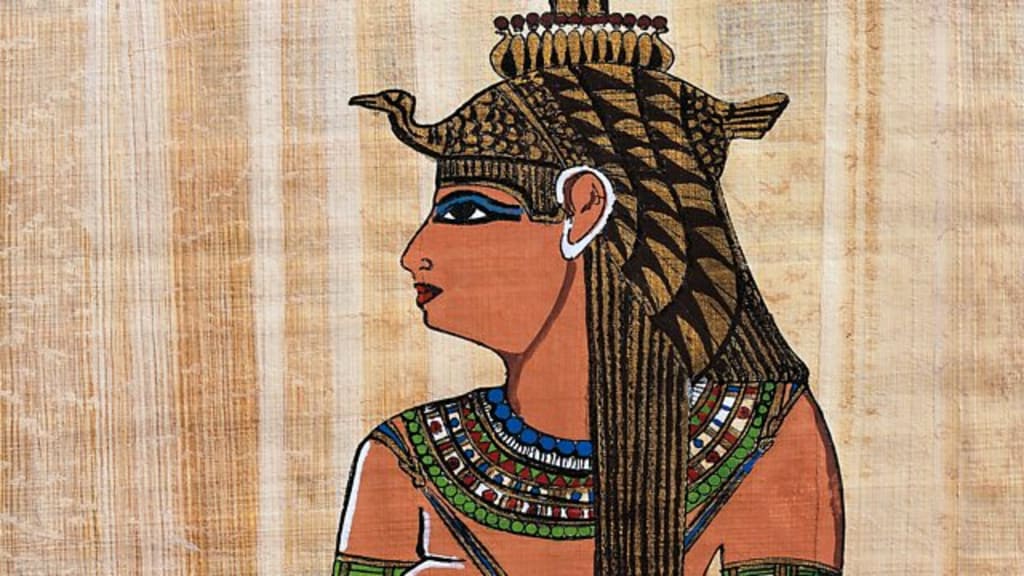
Cleopatra VII Philopator, commonly known simply as Cleopatra, is one of the most renowned figures of ancient history. Her life, marked by power, romance, and tragedy, has captivated historians, writers, and filmmakers for centuries. As the last active ruler of the Ptolemaic Kingdom of Egypt, Cleopatra's legacy is a blend of myth and reality. This article delves into the life of Cleopatra, exploring her rise to power, her political acumen, her relationships with Julius Caesar and Mark Antony, and the enduring impact of her legacy.
## Early Life and Rise to Power
Cleopatra was born in 69 BCE to the Ptolemaic dynasty, a Greek family that ruled Egypt after the death of Alexander the Great. The Ptolemies had adopted many Egyptian customs and traditions, but they remained culturally Greek. Cleopatra's full name, Cleopatra Thea Philopator, means "Cleopatra the Father-Loving Goddess."
### Education and Intelligence
Cleopatra was exceptionally well-educated for her time. She spoke several languages, including Greek, Egyptian, Hebrew, and Latin, among others. Her linguistic skills and deep understanding of various cultures were crucial to her diplomatic endeavors and helped solidify her reputation as a shrewd and intelligent leader.
### Ascension to the Throne
Cleopatra ascended to the throne in 51 BCE, following the death of her father, Ptolemy XII Auletes. Initially, she co-ruled with her younger brother, Ptolemy XIII, as was customary in the Ptolemaic tradition. However, tensions between the siblings quickly escalated, leading to a civil war. Cleopatra fled to Syria but soon returned with an army to reclaim her throne.
## The Alliance with Julius Caesar
Cleopatra's quest for power took a dramatic turn when she allied herself with Julius Caesar, one of Rome's most powerful figures. Their relationship was both political and romantic, and it significantly influenced the course of Egyptian and Roman history.
### The Famous Encounter
According to historical accounts, Cleopatra famously smuggled herself into Alexandria, wrapped in a rug or a linen sack, to meet Caesar. Her bold move impressed the Roman general, and they quickly formed a strategic alliance. Cleopatra's charm, intelligence, and political acumen won Caesar's support in her struggle against Ptolemy XIII.
### Restoration to Power
With Caesar's military backing, Cleopatra was restored to the throne. Ptolemy XIII drowned in the Nile while trying to escape after a defeat. Cleopatra then co-ruled with her younger brother, Ptolemy XIV, whom she later married as per custom, though she effectively held the reins of power.
### Birth of Caesarion
Cleopatra and Caesar's relationship bore a son, Ptolemy XV Philopator Philometor Caesar, commonly known as Caesarion. Cleopatra hoped that Caesarion would eventually be recognized as Caesar's legitimate heir, which would secure her dynasty's future.
## Cleopatra and Mark Antony
After Caesar's assassination in 44 BCE, Cleopatra's political landscape shifted dramatically. She soon allied herself with another powerful Roman figure, Mark Antony, one of Caesar's loyal supporters and a member of the Second Triumvirate.
### The Alliance and Romance
Cleopatra met Mark Antony in 41 BCE, and their meeting marked the beginning of both a political alliance and a legendary romance. Antony needed Cleopatra's financial support and military aid to secure his position in Rome, while Cleopatra sought to protect Egypt's sovereignty and her throne.
### The Donations of Alexandria
In 34 BCE, Antony and Cleopatra celebrated a grand ceremony known as the Donations of Alexandria. During this event, Antony declared Cleopatra the "Queen of Kings" and granted various territories to her and their children. This act was controversial in Rome and fueled the animosity between Antony and Octavian, Caesar's adopted heir and future Emperor Augustus.
### The Final Conflict with Rome
The rivalry between Antony and Octavian culminated in the Battle of Actium in 31 BCE. Cleopatra and Antony's combined forces were decisively defeated by Octavian's fleet. Following their defeat, Antony and Cleopatra retreated to Alexandria, where they made a final stand.
## The Death of Cleopatra
Cleopatra's life ended in a dramatic and tragic manner, adding to her enduring legend. After Antony's defeat, he committed suicide, believing that Cleopatra had already done the same. Faced with the prospect of being paraded in a Roman triumph and losing her kingdom, Cleopatra chose to end her own life.
### The Method of Suicide
The exact method of Cleopatra's suicide remains a topic of debate among historians. According to the most popular account, Cleopatra allowed an asp, a venomous snake, to bite her. Other theories suggest she may have used a poisonous ointment or a sharp implement. Regardless of the method, Cleopatra's death marked the end of the Ptolemaic dynasty and the beginning of Roman rule in Egypt.
## Cleopatra's Legacy
Cleopatra's legacy is a complex blend of historical facts, romanticized stories, and cultural depictions. Her life and reign have inspired countless works of art, literature, and film, making her one of history's most iconic and enduring figures.
### A Powerful Female Ruler
Cleopatra remains a symbol of female power and intelligence. She navigated the treacherous waters of politics and diplomacy with skill and determination, securing her place in history as one of the most formidable leaders of her time.
### Cultural Depictions
Cleopatra's story has been retold and reimagined in various cultural forms. Shakespeare's play "Antony and Cleopatra," and the 1963 film starring Elizabeth Taylor, are just a few examples of how her life has captured the popular imagination.
### Modern Interpretations
In recent years, scholars have sought to reexamine Cleopatra's life and legacy, moving beyond the stereotypes and misconceptions that have often overshadowed her true accomplishments. These modern interpretations highlight her political acumen, her efforts to protect Egypt's independence, and her role as a bridge between the ancient Egyptian and Greco-Roman worlds.
## Conclusion
Cleopatra VII Philopator's life was marked by extraordinary achievements, dramatic events, and enduring mysteries. As the last Pharaoh of Egypt, she navigated a complex political landscape, forging alliances with some of Rome's most powerful figures. Her intelligence, charisma, and determination left an indelible mark on history. Today, Cleopatra remains an enigmatic and captivating figure, symbolizing the intricate interplay of power, politics, and personal ambition in the ancient world.
About the Creator
Keep reading
More stories from Mbeha maliwa and writers in History and other communities.
The Hidden Challenge: How Overthinking Sabotages Hitters and How to Overcome It
# The Common Pitfalls of Hitters: Understanding Their Biggest Mistake Hitting in baseball is an intricate blend of skill, strategy, and mental fortitude. It's an art form that requires years of practice and unwavering dedication. Despite this, even the best hitters can fall into traps that hinder their performance. One of the most significant mistakes hitters make involves a fundamental aspect of the game that often gets overlooked. This article will explore this critical error, examine its causes, and provide strategies to help hitters overcome it.
By Mbeha maliwa 2 years ago in History
There Are Tree That Literally Grow Gold and Scientists Are Obsessed
I remember the exact moment I stopped thinking about gold the way everyone else does. I was standing in a sun-drenched clearing, watching the way afternoon light moved through the canopy above me, turning every leaf translucent and warm. It looked, genuinely, like the trees were glowing.
By CurlsAndCommas4 days ago in History


Comments
There are no comments for this story
Be the first to respond and start the conversation.