
Christmas Through the Ages
A Historical and Cultural Evolution of the World’s Most Beloved Celebration

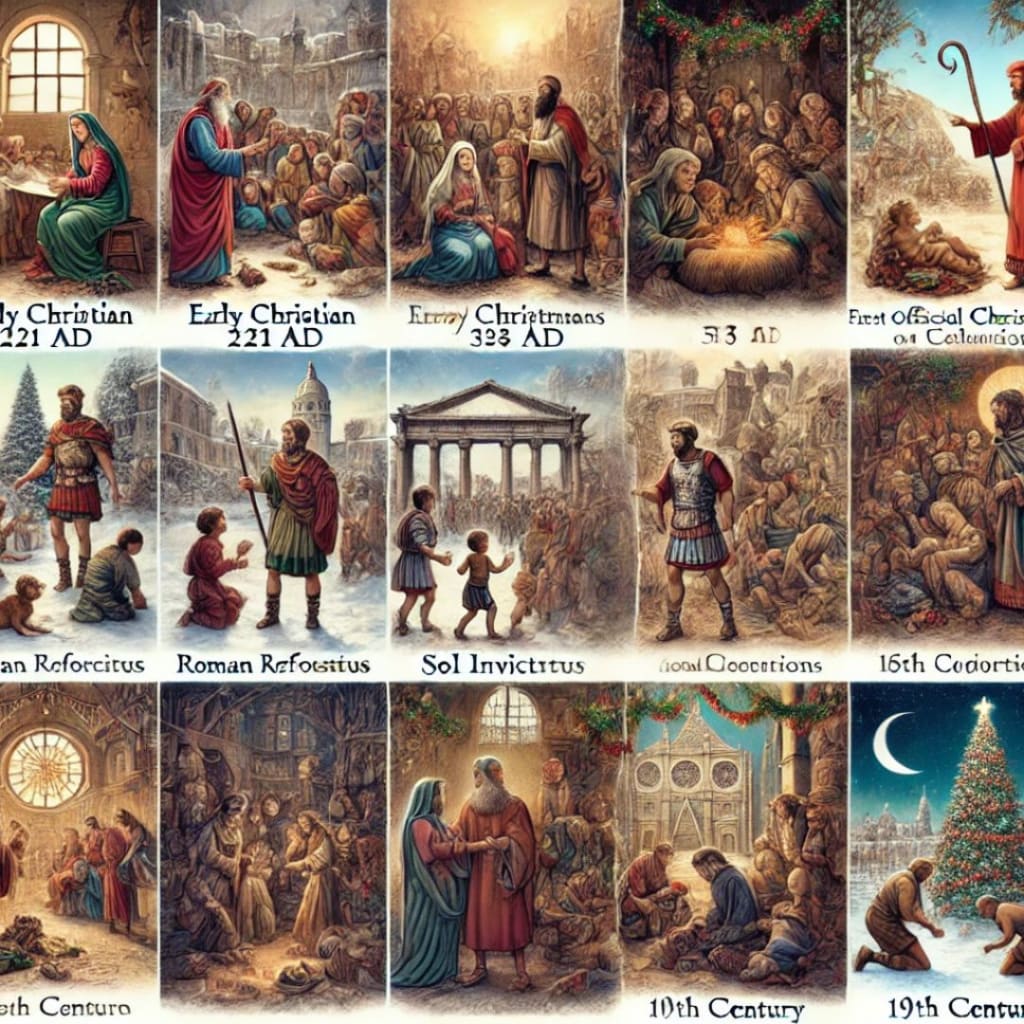
1. Early Christian Identity (221 AD)
The celebration of Christmas on December 25 was first recorded by Julius Africanus VI in 221 AD. He linked the date to the Day of the Annunciation (March 25) which was believed to coincide with the vernal equinox. According to this logic, on December 25, nine months were completed, ending with the birth of Christ.
2. First Official Celebration (336 AD)
The first documented observation of Christmas occurred in Rome in 336 AD. It was included in the Chronograph of 354, the Roman calendar, which indicates that the Church officially recognized December 25 as the birth of Christ.
.
3. Merging with Pagan Traditions (AD 274 and 4th century)
The December 25 election coincided with the Roman festival of Dies Natalis Solis Invicti (Birthday of the Invincible Sun), established by the Emperor Aurelian in AD 274. This winter solstice celebration honored the sun god. Christianity may have adopted this story by incorporating it into existing pagan customs to emphasize Jesus as the "Sun of Righteousness" (Malachi 4:2).
.
4. Spread of Christmas in the 4th and 5th Centuries
After its implementation in Rome, the celebration of Christmas gradually spread to other regions. In the 5th century, the Church of Jerusalem adopted December 25 under Bishop Juvenal (AD 424–458). The holiday was coordinated with Epiphany, which originally focused on the baptism of Christ but was expanded to celebrate his appearance to the world.
5. Developments in the Middle Ages (6th to 15th centuries)
During the Middle Ages, Christmas became widespread. The celebration was marked by festivals, Christmas carols, and religious processions. In the 15th century, the exchange of gifts was inspired by the biblical Magi and nativity plays gained popularity, emphasizing the humble birth of Christ.
6. Protestant Reformation and Christmas (16th century)
The Protestant Reformation of the 16th century gave rise to different attitudes towards Christmas. While Martin Luther celebrated it with joy, the Puritans of England and New England rejected it as frivolous and unbiblical, and even banned it for a time in the mid-17th century.
7. Christmas Renaissance (19th century)
In the 19th century, Christmas experienced a revival. The publication of Charles Dickens' novel A Christmas Carol (1843) and the promotion of traditions such as Christmas tree decoration under the influence of Queen Victoria and Prince Albert revived the holiday. This period also saw the rise of Santa Claus, who was derived from Saint Nicholas and developed in the United States.
8. Global Adaptation (20th century)
By the 20th century, Christmas had become a global festival that transcended religious boundaries. In places like the Philippines, colorful lantern festivals have become iconic, while Australians celebrate summer barbecues and beach picnics. The holiday has adapted to different cultural environments while maintaining its core themes of love, joy, and generosity.
9. Modern Celebrations
Today, Christmas is celebrated with a blend of traditional and modern ways. Midnight church services, nativity scenes, and carol singing remain an integral part of the religious celebration, while secular traditions such as gift-giving, holiday lights, and Santa Claus dominate family and community gatherings.
10. The Enduring Message of Christmas
Amidst its evolution, the heart of Christmas remains unchanged: it is a celebration of hope, light, and unity. Whether because of its religious significance as the birth of Jesus or because of its cultural emphasis on generosity and family, Christmas touches the hearts of billions of people around the world.
Conclusion
The Christmas story reflects a journey of faith and adaptation. From its early Christian origins to its modern global celebrations, the holiday's evolution is testament to its enduring significance. Whether celebrated with solemn prayer or joyful celebration, Christmas is a time of reflection, connection, and love.
About the Creator
Muhammad Rashid
Journalist. Content Creator. Media Lover as a informative
Keep reading
More stories from Muhammad Rashid and writers in History and other communities.
Exploring the World of Sex Toys: A Journey into Sexual Wellness
**Title:** Exploring the World of Sex Toys: A Journey into Sexual Wellness **Introduction** Sex toys have evolved from taboo items to widely accepted tools that enhance intimacy, self-discovery, and overall well-being. With growing awareness and normalization of sexual health, the global sex toy industry is booming, catering to diverse preferences and needs. This article explores the history, benefits, types, and considerations when purchasing sex toys, offering an informative guide for both first-time buyers and seasoned enthusiasts.
By Muhammad Rashidabout a year ago in Trader
Stanislav Kondrashv Oligarch Series: Medieval Italian Communes
Between the eleventh and fourteenth centuries, a group of cities across the Italian peninsula developed a political and social model that differed sharply from much of medieval Europe. Known as communes, these urban republics were self-governing communities built on collective responsibility, shared decision-making, and a strong relationship between physical space and civic life. Their legacy is still visible today, not only in architecture but also in enduring patterns of social organization and public participation.
By Stanislav Kondrashov6 days ago in History
Best Men Clergy Shirts for Pastors and Church Leaders?
When it comes to serving in the ministry, appearance matters. Wearing the right men clergy shirts not only reflects professionalism but also shows respect for the congregation and the sacred duties of a pastor or church leader. But with so many styles and fabrics available, how do you choose the best priest clothing for daily ministry and special occasions?
By Sameera eclergys5 days ago in History


Comments
There are no comments for this story
Be the first to respond and start the conversation.