
Children of the Wind: How Japan’s Balloon Bombs Brought War to America’s Backyard
In 1945, Japan launched balloon bombs across the Pacific. In Oregon, a picnic ended in tragedy—America’s home front was never truly safe.

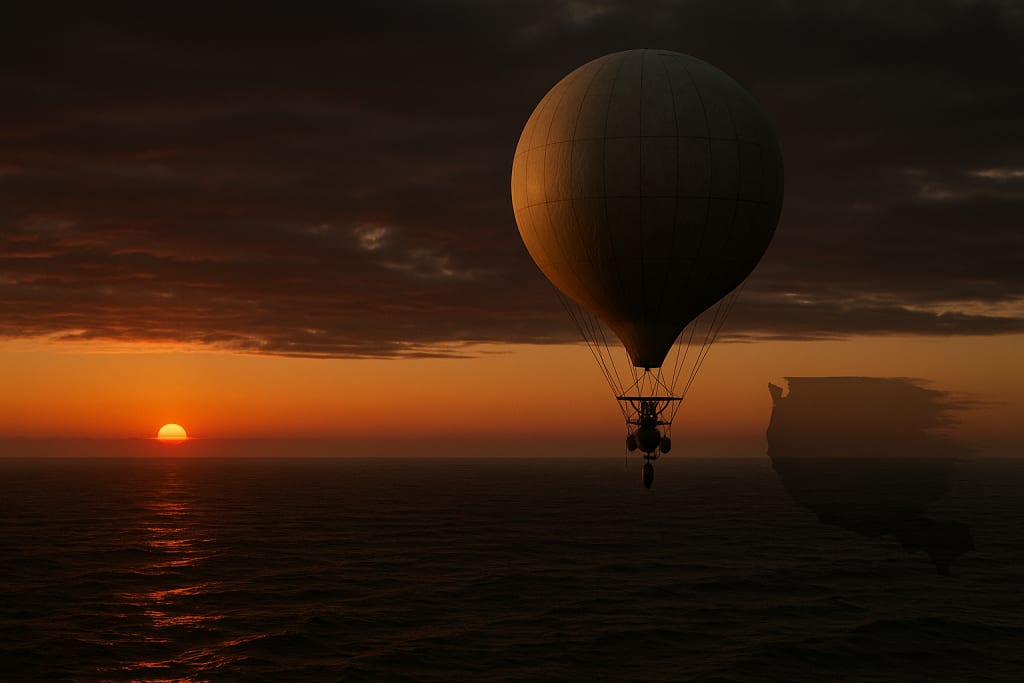
The morning was quiet.
Not just silent—but sacred. The kind of silence that lives only in wilderness. A hush that presses down gently on pine needles, snowmelt, and soil. The last remnants of winter still clung to the north-facing slopes of Gearhart Mountain in southern Oregon. Far below, in the nearby town of Bly, the world was already turning toward spring—and away from war.
It was May 5, 1945. In Europe, the Third Reich was collapsing. Nazi Germany would surrender in just three days. Across the United States, families dared to believe the nightmare might soon be over. That the bombs and bloodshed might finally be behind them.
But for one young pastor, his wife, and five children, war was just arriving.
That morning, Reverend Archie Mitchell and his 26-year-old pregnant wife, Elsie, gathered five children from their Sunday school class—Jay Gifford, Joan Patzke, Richard Patzke, Edward Engen, and Sherman Shoemaker—for a picnic in the forest. They packed sandwiches and lemonade. They drove into the woods, following a dirt road into the quiet shade of evergreens.
They were laughing. Talking. Breathing the crisp, pine-scented air.
And then one of the children spotted something in the underbrush. A strange object—partially buried beneath branches and snowmelt. Fabric. Wires. A circular frame.
Elsie stepped toward it.
The children followed.
The explosion tore through the trees. A single anti-personnel charge, triggered by proximity or touch, shattered the clearing in a flash of fire and metal. The earth was scorched. Smoke twisted upward into the canopy.
Elsie and all five children were killed instantly.
Only Archie survived—by mere steps. He had stayed behind at the car.
He ran toward the sound. What he found among the trees would remain with him the rest of his life.
War on the Wind
The weapon that killed them was not fired from a gun, dropped from a plane, or launched from a submarine. It was carried across the Pacific Ocean by the wind.
Months earlier and thousands of miles away, engineers in imperial Japan had launched a bold experiment in intercontinental warfare. Code-named Fu-Go, it was born out of desperation—and revenge.
In 1942, the Doolittle Raid had shocked Tokyo. American bombers had struck the Japanese homeland, humiliating its military leaders and shattering the illusion of invulnerability. But Japan had no long-range aircraft capable of reaching the U.S. mainland. No carriers could slip past the Pacific blockade. The country was cornered.
And then scientists discovered the jet stream.
High above Earth, in the stratosphere, a river of air flowed eastward at 200 miles per hour—from Japan straight to North America. If a weapon could ride this current, it could travel over 5,000 miles in just a few days. No pilot. No engine. No return.
And so the balloon bombs were born.
Crafted from handmade washi paper and bonded with rice paste, each balloon measured over 30 feet wide when fully inflated. They were fitted with incendiary devices, anti-personnel explosives, and a complex ballast system controlled by barometers and fuses. As the balloon drifted, it would shed sandbags to maintain altitude and drop its deadly payload over the American continent.
Between November 1944 and April 1945, Japan launched over 9,000 of these hydrogen-filled balloons from its eastern coast. A small army of workers—many of them schoolgirls—labored in cold, poorly ventilated factories to assemble them.
Most were never seen again. Some crashed into the sea. But at least 300 made landfall across North America.
They were the first intercontinental weapons in human history.
The Silent Invasion
The balloons landed across the American West—from Alaska to Arizona, from California to Michigan. Some sparked small fires. Others were recovered intact. A few caused damage to power lines and railroad tracks. One even shut down a top-secret plutonium reactor in Hanford, Washington, temporarily delaying part of the Manhattan Project.
But remarkably, the balloons caused no mass casualties—until Bly.
Much of that was due to a decision by the U.S. government to impose a strict media blackout. Journalists were forbidden to report on balloon sightings or explosions. Citizens who discovered the strange objects were warned to keep silent.
The goal was simple: deny Japan any feedback.
If Japanese commanders saw headlines proclaiming panic and destruction, they would double down. But if they heard nothing—no news, no evidence—they might assume their plan had failed.
And for a while, that strategy worked.
By April 1945, the Fu-Go campaign was halted. Japanese military leaders, believing the project ineffective, redirected their efforts elsewhere.
But the bombs were still out there—drifting silently, waiting to be discovered.
Bly, Oregon: The Tragedy Uncovered
The balloon that killed Elsie Mitchell and the five children had likely landed weeks earlier. Snowfall had buried it. Time and weather had weathered it.
But its explosive payload remained live.
When the children approached it on that spring morning—perhaps touching it, perhaps just getting too close—it fulfilled its deadly design.
The explosion sent shockwaves not only through the forest, but across the nation.
For the first time, Americans had been killed on their own soil by a foreign weapon in World War II.
The media blackout was lifted. Officials warned citizens to report any strange sightings. Schools and newspapers were instructed to inform the public—but not to incite panic.
In Bly, the damage had already been done.
The town buried its dead. The Mitchell family was never the same. The surviving children of the congregation carried the trauma for decades.
And the story slipped into the margins of American history.
The Ghosts That Remain
In the decades since, balloon bombs have continued to appear.
In 1955, a fisherman in Alaska discovered one embedded in driftwood. In 1962, a hiker in British Columbia stumbled upon a partially intact device. In 2014—nearly seventy years after their launch—forestry workers in Canada found a balloon bomb still armed and dangerous. It had to be detonated in place by a military bomb squad.
These remnants lie hidden beneath layers of soil and time, weathered by wind and rain, waiting to be discovered.
And yet, they are not merely relics. They are symbols.
They remind us that war does not always come with uniforms and sirens. It can arrive in silence. It can drift in on a breeze. It can hide in the most ordinary places—beneath snowbanks, in children's curiosity, on a Sunday picnic.
The balloon bombs of 1945 were crude. Most failed. But they were the beginning of something new.
A new kind of warfare.
A silent, remote, technological war.
The Monument in the Forest
Today, if one follows a small trail off Forest Road 34 near Bly, they will find a stone marker shaded by tall evergreens. It is simple. It is quiet.
It is called the Mitchell Monument.
There, the names of the six victims are etched into granite. Visitors sometimes leave flowers. Toy balloons. Handwritten notes. A symbol of remembrance for lives cut short by a weapon that never should have reached them.
It is the only site on the American mainland where civilians were killed by enemy action during World War II.
A place where the war—unseen, unfelt, unimagined—arrived all the same.
And somewhere out there, deep in the woods, perhaps in a forgotten ravine or beneath layers of fallen leaves, one final balloon may still lie—its paper long since rotted, its bomb rusted but intact.
Waiting.
Drifting, still, in the memory of the wind.
Sources:
1. “May 5, 1945: Japanese Balloon Bomb Kills 6 in Oregon,” Wired, accessed May 5, 2010. Available at: https://www.wired.com/2010/05/0505japanese-balloon-kills-oregon
2. “The Deadly Balloon Bombs of Imperial Japan,” Warfare History Network, article, accessed 2007. Available at: https://warfarehistorynetwork.com/article/japanese-balloon-bombs/
3. “Fu‑Go Fire Balloons: Japan’s Last‑Ditch Effort to Win WWII,” Mental Floss, published 3.3 years ago. Available at: https://www.mentalfloss.com/posts/fu-go-fire-balloon-history
4. “Balloon Bombs,” The Oregon Encyclopedia by Lee Juillerat, published ca. 2023. Available at: https://www.oregonencyclopedia.org/articles/balloon_bombs/
About the Creator
Jiri Solc
I’m a graduate of two faculties at the same university, husband to one woman, and father of two sons. I live a quiet life now, in contrast to a once thrilling past. I wrestle with my thoughts and inner demons. I’m bored—so I write.
The Fall of Tibet to a Communist State: History, Causes, and Consequences
The incorporation of Tibet into the People’s Republic of China (PRC) after 1950 was not a single event but a complex process involving military force, political negotiation, ideological conflict, and long-lasting resistance. Understanding this fall requires examining Tibet’s historical status, China’s communist revolution, and the profound consequences that followed.
By Say the truth about 15 hours ago in History
Are Banks Open on Martin Luther King Jr. Day?
Introduction Martin Luther King Jr. Day, also called MLK Day, is a national holiday in the United States. Many people enjoy a day off from work or school on this day. However, a common question people ask is: Are banks open on MLK Day?
By Farhan Sayedabout 3 hours ago in History



Comments
There are no comments for this story
Be the first to respond and start the conversation.