
Challenging Perceptions: The Rural Workhouse
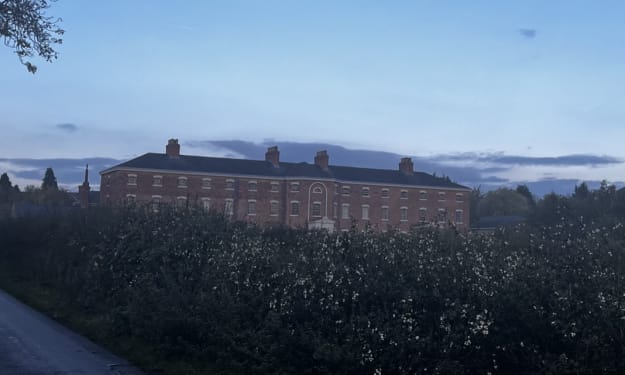
The Workhouse and Infirmary (National Trust)

Hopelessness, suffering and despair are words which have become synonymous with Victorian Workhouses. Workhouses were, and still are seen as a heartless way of dealing with the poor and needy. High mortality rates, disease and neglect defined these buildings. The separation of husbands, wives and children alongside manual labour were just a few of the features which made a Workhouse an unattractive place to be.
Rather than proving a benefit system which is used today, the Victorians seemed to group all those suffering in poverty together and create the most cost-effective solution to pauperism.
The Workhouse in Southwell has stood the test of time and has retained its original form. Similar buildings have been transformed into offices and flats, while others have simply been demolished to make way for the future. For 200 years, it has stood in the Nottinghamshire countryside. Up until its closure in the 1980s, The Workhouse and Infirmary was used to house the most vulnerable in our society. In 1997, it was bought by the National Trust after it was identified as one of the best-preserved Workhouses in the UK. It stands as a testimony that poverty and ill health were not confined to stuffy smog-filled towns and cities.
During the late second half of the 19th century, there was a push for the separation of the ‘able-bodied’ inmates and those who were ‘elderly and/or infirm’. This was done in order to stop the spread of disease and encourage proper care to be given to those who needed it. In addition to this, admission to the Infirmary was opened to those who would not qualify for entrance to the Workhouse itself but were still in great need of care. Moreover, children would have received some form of education and structure in their lives, while many would not have had this opportunity.
There is no doubt that those in the Workhouses suffered enormously. Including those who called the building home after Workhouses as institutions were formally dissolved in 1929. Despite this, you must ask yourself, was the alterative worth it? Children may have turned to a life of crime and many may have died on the streets. The shift to caring for those who were in the Workhouses because of illness or misfortunes, rather than penalising them was a substantial change in attitude. There is no doubt there was a positive change within the social welfare system. These buildings were built for a purpose, where people could seek refuge, rather than letting them suffer and die on the streets.
Workhouses were not what we would deem as social welfare today, but perhaps it was the first step into the welfare system as we see it now. It could be seen as a gradual move from viewing poverty-stricken individals as people rather than the problem.
This is perhaps a lesson in taking things as face value. An encouragement to read, research and explore ideas. To not use blanket terms for a system which was wide stretching, from the slums of London, to the northern countryside.
Why not take a visit to The Workhouse and Infirmary and make the decision for yourself?
About the Creator
Keep reading
More stories from Hannah Kane and writers in History and other communities.
Challenging Perceptions: The Rural Workhouse
Hopelessness, suffering and despair are words which have become synonymous with Victorian Workhouses. Workhouses were, and still are seen as a heartless way of dealing with the poor and needy. High mortality rates, disease and neglect defined these buildings. The separation of husbands, wives and children alongside manual labour were just a few of the features which made the Workhouse an unattractive place to be.
By Hannah Kane2 years ago in History
When Allies Disagree: How Global Partnerships Are Being Redefined
When Allies Disagree: How Global Partnerships Are Being Redefined For much of the modern era, global alliances appeared firm and predictable. Powerful countries formed blocs, promised mutual support, and stood together during times of war and crisis. But in today’s world, those alliances are changing. Recent disagreements between long-standing partners show that global cooperation is no longer based on automatic loyalty—it is increasingly shaped by national interests, public opinion, and long-term stability.
By Wings of Time 7 days ago in History


Comments