
Carmen Serdán: The Woman Who Fired the First Shots of the Mexican Revolution
Before the heroes of the Revolution, there was a woman with a rifle and a cause
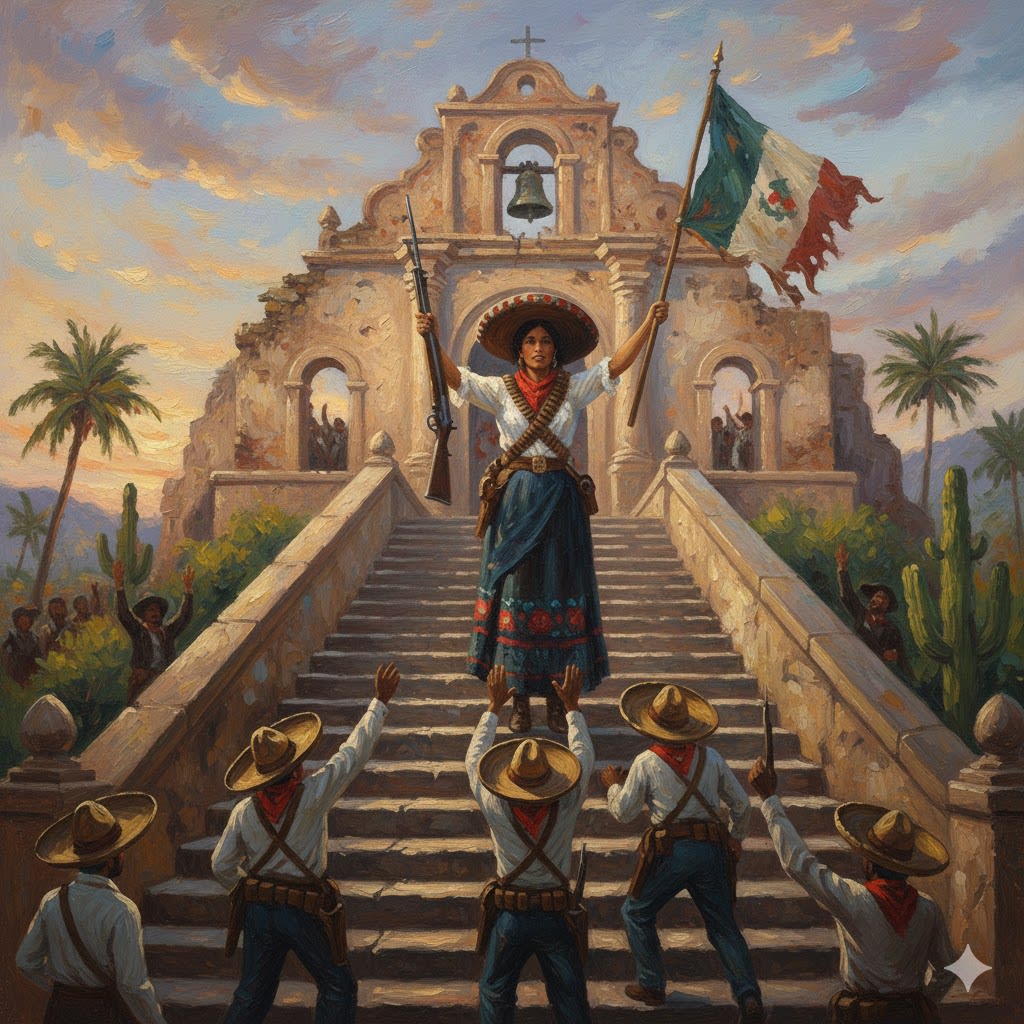
In the heart of Puebla, behind the carved doors of a modest colonial home, a young woman stood as soldiers surrounded her house. Her name was Carmen Serdán, and when the first bullets of the Mexican Revolution rang out on November 18, 1910, it was her finger that pulled the trigger. While history remembers names like Pancho Villa and Emiliano Zapata, few recall the woman whose defiance lit the spark that would set an entire nation ablaze.
Carmen Serdán Alatriste was born in Puebla on November 11, 1873, into a family steeped in liberal ideals. Her father had fought under Benito Juárez, and her brother Aquiles Serdán became one of the earliest supporters of Francisco I. Madero, the man who dared to challenge the long dictatorship of Porfirio Díaz. But Carmen was not content to stand by and watch men make history. In a time when women were expected to embroider, not act, she joined her brothers in the revolutionary cause.
From their home in Puebla, the Serdáns turned quiet whispers into rebellion. Carmen helped organize secret meetings, hide weapons, and print pamphlets calling for freedom and justice. Under the pseudonym Marcos Serrato, she distributed leaflets across the city, her small acts of courage forming the first whispers of a coming storm. Her writtings carried more power than most speeches of her time.
The uprising against Díaz was planned for November 20, 1910, but fate had other plans. Two days earlier, government forces discovered the Serdáns’ cache of weapons and surrounded their home. Inside, Carmen and her brothers Aquiles and Máximo prepared for the desperate fray. When the soldiers demanded their surrender, Carmen refused. She grabbed a rifle, took her position by an upstairs balcony, and fired into the battalion facing them. Her shots shattered the morning silence—the first gunfire of the Mexican Revolution.
The house became a battlefield. For hours, the Serdán family held their ground against the troops outside. Bullets tore through the walls; smoke filled the rooms. Carmen reloaded rifles, tended to the wounded, and shouted words of defiance as the soldiers advanced. When the last shots faded, the house was nearly destroyed. Her brother Aquiles lay dead, still clutching his weapon. Carmen was captured among the wounded and arrested, her rebellion crushed but her spirit unbroken.
Prison did not silence her. When questioned, she declared that her actions were those of a patriot, not a criminal. “If loving liberty is a crime,” she said, “then I am guilty.” Even her captors were struck by her calm resolve. When she was eventually released, Carmen continued to work quietly for the same ideals she had fought for—supporting widows, orphans, and the poor whose lives had been shattered by the war she helped ignite.
The years after the Revolution brought no wealth or reward. Carmen never married, devoting her life instead to preserving her family’s memory and the cause they had served. She lived simply, surrounded by reminders of a past that the nation was eager to move on from. When she died on August 28, 1948, in Puebla, the city had grown beyond the echo of those first gunshots, but her story remained etched in its walls.
Her home still stands today, preserved as the Regional Museum of the Mexican Revolution. The bullet holes that mark its facade remain untouched, a testament to the courage of the people who once lived there. Visitors who step inside can almost hear the echoes of that morning—the gunfire, the shouts, the determination of a woman who refused to yield.
Carmen’s story is a reminder that revolutions require the action of varied members of society. She represents every woman who refused to be silent in a man’s war, every sister, daughter, and mother who believed that freedom was worth any cost. Before there was victory, there was a woman standing at a window in Puebla, rifle in hand, defying an empire.
Her name was Carmen Serdán — and she fired the first shots of the Revolution.
About the Creator
Keep reading
More stories from Abel Green and writers in History and other communities.
The Final Dance of the Spy: A Confession in the Shadows
The morning light, even here in Vincennes, has a sharp, indifferent quality. It does not pause for beauty, nor does it soften the edges of the firing squad. I smell the damp earth, the clean, metallic scent of the rifles, and the faint, lingering perfume of cheap carnations left by some sentimental guard. They say a soul is heaviest just before it leaves the body, burdened by regret. They do not know Mata Hari. I feel light. Lighter than the silk robes I used to shed on stage.
By Abel Green6 months ago in History
Hidden Fortune: 100 Kilograms of Gold Discovered in Inherited House
A surprising discovery inside an inherited home has captured widespread attention after authorities confirmed that approximately 100 kilograms of gold were found hidden within the property. The unexpected find, which is worth millions of dollars at current market prices, has sparked intrigue, legal debates, and speculation about how such a large treasure remained concealed for so long.
By Irshad Abbasi 5 days ago in History


Comments