


TITLE: BRITISH EMPIRE VS SOVIET UNION WAR
The Main Event: The Cold War (ish) Before the Cold War
The most likely time for a British Empire vs. Soviet Union war was in the 1920s and 1930s, after the Russian Revolution.
- The British Empire was the world's superpower. It had the largest navy, controlled vast territories (India, Canada, Australia, etc.), and had a powerful, but traditional, army.
- The Soviet Union was the new, revolutionary kid on the block. It was massive in size, rich in resources like oil and wheat, and was rapidly industrializing under Stalin. Its Red Army was huge but had just been formed.
- Why would they fight? Britain and other Western powers were terrified of communism spreading. They saw the Soviets as a threat to their empires and their way of life. In fact, Britain, the USA, and others actually did send troops to Russia in 1918-1920 to try and help the anti-communist forces (the "Whites") win the Russian Civil War. This created a lot of bitterness and was the closest they ever came to direct conflict.
How Would the War Have Been Fought?
Imagine a global chess game with millions of soldiers.
1. The British Empire's Strengths:
- The Royal Navy:
It ruled the seas. It could blockade the Soviet Union, cutting it off from the rest of the world and preventing supplies from getting in or out.
- Global Reach:
With colonies and allies everywhere, Britain could attack from multiple directions. Imagine armies in India threatening Soviet Central Asia, or forces in the Middle East pushing towards the oil-rich Caucasus region.
- Experience:
The British military was professional and had centuries of experience in fighting wars across the globe.

2. The Soviet Union's Strengths:
- The Russian Winter:
This was its greatest defender. Napoleon's army and later Hitler's Nazi army were destroyed by the vast distances, freezing cold, and muddy roads of Russia. A British army marching on Moscow would have faced the same nightmare.
- Huge Population:
The USSR could raise a truly enormous army. They believed in "quantity has a quality all its own" – meaning they could replace lost soldiers and tanks faster than the enemy could destroy them.
- Resources:
They had everything they needed within their own borders: food, steel, oil, and coal. A naval blockade would hurt, but it wouldn't starve them out.

The Likely Outcome: A Stalemate
Most experts believe a full-scale war in this period would have been a bloody stalemate, much like World War I.
Britain could not conquer Russia. Trying to invade and occupy the entire Soviet Union would have been impossible. The British army, while good, was not large enough to control such a huge territory against a hostile population.
The Soviet Union could not conquer the British Empire. While the Red Army was massive, it had no way to cross the English Channel. The British Navy would have destroyed any invasion fleet. The USSR also had no real navy to challenge Britain on the oceans.
The war would likely have been fought on the edges: in Eastern Europe, the Middle East, and maybe Afghanistan. It would have been a brutal war of attrition, with neither side able to deliver a knockout blow.
An Ironic Twist: They Became Allies!
History took a different turn. In 1941, Nazi Germany invaded the Soviet Union. Suddenly, the Soviet Union and the British Empire were on the same side in World War II. Winston Churchill, who had been a fierce critic of communism, famously said, "If Hitler invaded hell, I would make at least a favourable reference to the devil in the House of Commons."
They became uneasy allies. Britain (and later the USA) sent enormous amounts of food, trucks, tanks, and planes to the USSR to help them fight the Nazis. This alliance of convenience won World War II, but as soon as the war ended in 1945, they immediately became rivals again in the new Cold War—this time with the USA leading the Western side instead of the British Empire.
So, while a direct war never happened, the tension and rivalry were very real. It was a clash of two giant systems: a globe-spanning maritime empire versus a massive, land-based ideological superstate. Thankfully, the world never had to see that devastating conflict become a reality.
About the Creator
LegacyWords
"Words have a Legancy all their own—I'm here to capture that flow. As a writer, I explore the melody of language, weaving stories, poetry, and insights that resonate. Join me as we discover the beats of life, one word at a time.
Keep reading
More stories from LegacyWords and writers in History and other communities.
The History Of Queen Elizabeth II
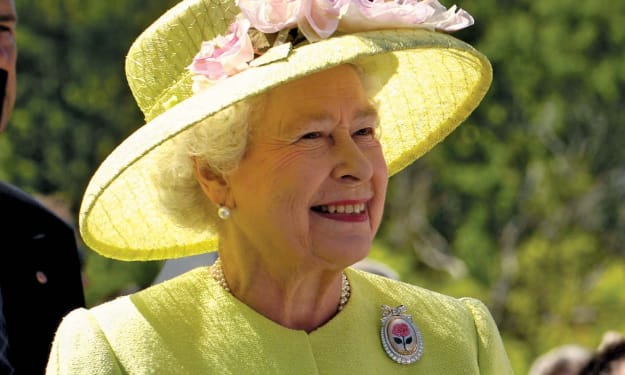
Title: The History of Queen Elizabeth II Behind the Crown When we think of Queen Elizabeth II, we picture the iconic images: the bright, colourful outfits, the impeccable hats, the royal corgis, and the stoic smile during countless public events. For most people in the world, she was the crown—a constant, unmoving symbol of tradition and duty. But the phrase "Behind the Crown" asks us to look deeper. It invites us to see the woman behind the title, the individual behind the institution, and the personal journey that was hidden in plain sight for seventy years.
By LegacyWords6 months ago in History
The Tunguska Event: The morning the sky exploded in Siberia, knocking down 80 million trees with no impact crater.
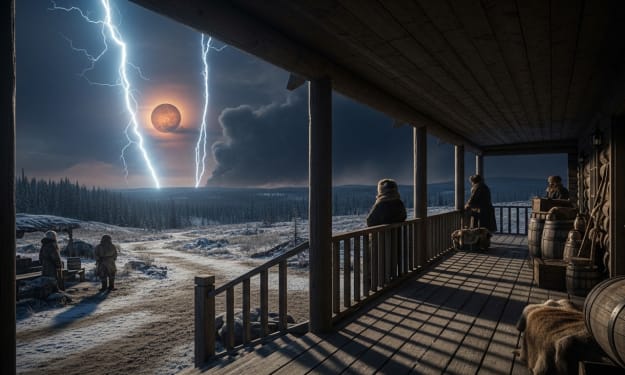
The silver heat hit S.B. Semenov before the sound even arrived. He was sitting on the porch of the Vanavara trading post, sixty miles from the Podkamennaya Tunguska River, when the air suddenly smelled of scorched iron and lightning. It felt like his shirt had caught fire. The sky split in two—a jagged, vertical gash of blue-white light that made the morning sun look like a dull copper coin. Then came the punch. A massive, invisible hand of air slammed into the post, lifting Semenov off his bench and tossing him three yards across the dirt. The windows shattered in a single, synchronized scream of glass. He looked up, and the northern horizon was gone, replaced by a wall of smoke that reached toward the stars.
By The Chaos Cabinet7 days ago in History


Comments
There are no comments for this story
Be the first to respond and start the conversation.