
Breaking Boundaries
Women's Journey from Kitchen to Industry

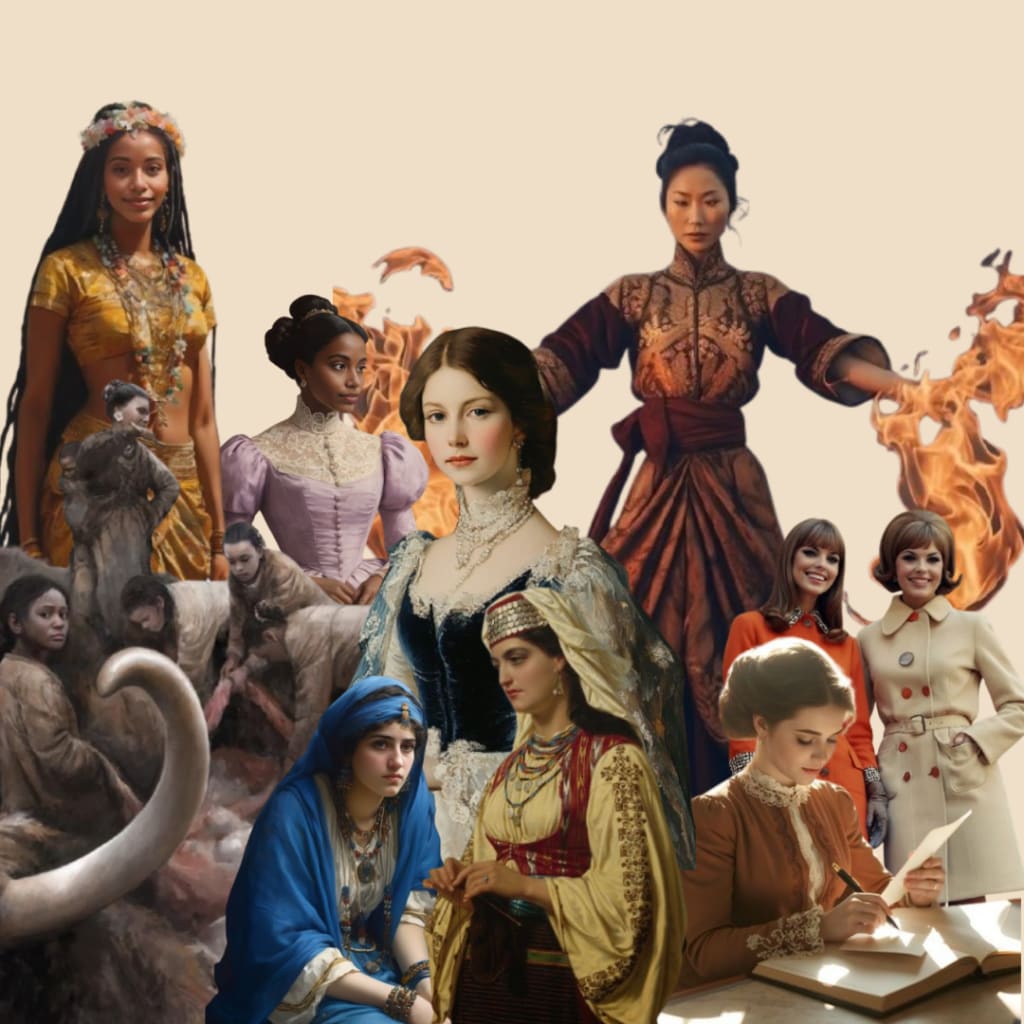
The transformation of women's roles in society throughout history represents one of the most significant social changes in human civilization. The view that women should be limited to domestic roles and excluded from public work has undergone a fundamental shift in meaning. As previously mentioned, in the past, living conditions and limited supporting facilities were factors that restricted women's mobility. In ancient times, when hunting was the primary means of obtaining food, women were rarely involved due to various physical and biological limitations, including menstruation which could affect long-distance hunting abilities. However, with the development of technology and increasingly adequate support facilities, these limitations have been greatly reduced, and most have been overcome.
Human civilization has advanced at a rapid pace. In the context of gender role evolution, we've witnessed how changing times have eroded traditional restrictions. Modern facilities now available have opened the way for women to actively participate in various sectors of public life, including the workforce and professional careers. This change isn't merely a demand of the times but also represents the fulfillment of human potential in its entirety, regardless of gender.
Looking back at prehistoric times, gender-based role division did have a rational basis. Anthropologist Marjorie Shostak, in her research on the Ju/'hoansi hunter-gatherer society in the Kalahari, showed that gender-based division of labor was based more on survival efficiency than social hierarchy. Men hunted large animals requiring physical strength and high mobility, while women gathered food around settlements while caring for children. However, this division of labor didn't reflect value or status, but rather an optimal survival strategy for the conditions at that time. Women in Ju/'hoansi society actually contributed about 60-80% of the nutrition for their community through food gathering activities, demonstrating significant economic contribution.
Biological conditions such as menstruation were indeed one consideration in restricting women's roles in the past. The concept of menstrual "impurity" attached to women in various traditional cultures was often used as justification to limit their mobility. However, with the development of modern medical understanding, we now know that menstruation is a normal biological process that can be well managed without restricting women's activities. Advances in menstrual hygiene products, from disposable pads to sustainable menstrual products like menstrual cups, have enabled women to remain active and productive throughout their menstrual cycles.
The Industrial Revolution became an important turning point in the transformation of women's roles. At that time, increased labor needs in factories opened opportunities for women to work outside the home, albeit often under less than ideal conditions and with wages far lower than men's. This era marked the beginning of recognition of women's capacity to contribute economically beyond the domestic realm. Nevertheless, the expectation that women would remain fully responsible for household affairs didn't change, creating a double burden still experienced by many working women today.
The first wave of feminism in the late 19th and early 20th centuries began to openly challenge restrictions on women's roles. Figures like Mary Wollstonecraft in her book "A Vindication of the Rights of Woman" (1792) advocated for equal educational access for women, arguing that education would enable them to develop their rational and moral capacities fully. Later, Simone de Beauvoir in her monumental work "The Second Sex" (1949) analyzed in depth how women had been defined as "the Other" in gender relations, and challenged biological determinism that constrained women's potential.
The development of modern technology and infrastructure has dramatically reduced the domestic workload that was previously a main reason women were expected to stay at home. Household appliances such as washing machines, refrigerators, and microwaves have transformed household chores that once took hours into tasks that can be completed more efficiently. Public transportation and private vehicles make it easier for women to work in locations far from home. Modern communication technology allows for more flexible work arrangements, including working from home, which can accommodate childcare responsibilities.
Modern anthropologists and sociologists like Arlie Hochschild in her research on "the second shift" acknowledge that although women have entered the workforce, traditional expectations about domestic roles often remain placed on them. However, this isn't an argument for returning women to exclusively domestic roles, but rather a call for a more equitable social reconstruction in the division of domestic responsibilities and childcare. The solution isn't to restrict women from working, but to create better support systems and more flexible work arrangements for all genders.
From an economic perspective, women's participation in the workforce has proven to provide significant benefits for global economic growth. According to the McKinsey Global Institute report, increased gender equality in the workplace could potentially add US$12 trillion to global gross domestic product by 2025. Economist Christine Lagarde, former director of the International Monetary Fund (IMF), repeatedly emphasized that gender equality isn't just a matter of social justice but also smart economic policy. When women are given opportunities to develop their abilities and contribute professionally, the entire society benefits from increased productivity, innovation, and economic growth.
From a religious perspective, more contextual and progressive interpretations of religious texts have emerged to support women's participation in public life. Contemporary Muslim scholars such as Amina Wadud and Asma Barlas have offered feminist readings of the Quran, showing that the Islamic sacred text supports gender equality and justice. They argue that restrictions on women stem more from patriarchal cultural interpretations than from actual religious teachings. In the Christian tradition, feminist theologians like Elisabeth Schüssler Fiorenza have developed liberation hermeneutics that challenge Bible interpretations that tend to marginalize women and support women's full participation in all aspects of life.
Historical evidence shows that women's exclusion from the workforce was often driven more by social constructs than biological limitations or natural demands. During World War II, for example, when men were deployed to the battlefield, women in the United States and Europe quickly filled positions in factories and industries previously dominated by men. Popular culture icons like "Rosie the Riveter" illustrated how women were capable of doing jobs previously considered suitable only for men. However, once the war ended, there were systematic efforts to return women to domestic roles, showing how gender role restrictions were driven more by social and political factors than actual ability or suitability.
Developmental psychologists like Carol Gilligan have challenged traditional views that women's moral and cognitive development is different from or inferior to men's. Her research shows that while men and women may demonstrate different reasoning patterns, there's no evidence suggesting that either is superior or more suitable for certain roles in society. Women's cognitive and moral abilities are as strong as men's, although they may be expressed differently. The unique perspectives women bring to various fields actually enrich discussions and promote more comprehensive solutions to various problems.
Modern cognitive scientists and neurologists have also challenged claims about gender-based cognitive ability differences. Although there are some average differences in brain structure and function between men and women, experts like Cordelia Fine in her book "Delusions of Gender" show that these differences are far smaller than variations within the same gender, and are often influenced by experience and socialization rather than pure biology. The plasticity of the human brain allows adaptation to various environmental demands, regardless of one's gender.
Employment policies that consider women's specific needs have proven effective in supporting their participation in the workforce. Paid maternity leave, affordable childcare facilities, flexible work schedules, and protection from discrimination and harassment in the workplace are examples of policies that enable women to pursue careers without sacrificing family welfare. Scandinavian countries, known for their family-friendly employment policies, demonstrate how institutional support can facilitate women's participation in the workforce while maintaining healthy fertility rates and high family welfare.
According to sociologist Arlie Hochschild in her book "The Second Shift," working women often still face expectations to manage most household responsibilities, creating what she calls an exhausting "second shift." However, the solution isn't to restrict women from working, but to encourage broader social change in the division of domestic responsibilities. Families where couples share household tasks and childcare equitably have shown higher levels of marital satisfaction and lower stress levels for both parties.
In the Indonesian context, the idea that women shouldn't work often contradicts the historical reality of the archipelago's societies. Anthropologists and historians like Ann Stoler have documented how women in various Indonesian communities have traditionally been active in economic activities, whether in traditional markets, agriculture, or home industries. In matrilineal Minangkabau, women hold strong economic positions as custodians of ancestral property. In Java, women have traditionally been active as market traders and family financial managers. Colonialism and later the influence of conservative religious interpretations have changed the narrative about women's roles, which were actually more complex and diverse in Indonesian history.
In modern families, women's involvement in paid work has proven beneficial not only for women's economic independence but also for children's welfare. Research by developmental psychologists like Lois Hoffman shows that children of working mothers tend to develop more egalitarian attitudes toward gender and have a better understanding of the value of hard work and responsibility. Girls with working mothers tend to have higher career aspirations and greater self-confidence, while boys are more likely to develop domestic skills and supportive attitudes toward working partners.
Philosopher Martha Nussbaum, in her "capabilities" approach to human development, emphasizes the importance of ensuring that every individual, regardless of gender, has the substantive freedom to live according to their chosen values and goals. This includes the ability to engage in meaningful and productive work outside the home if they choose to do so. From this perspective, restricting women from careers is a form of injustice because it inhibits their ability to live lives they consider valuable.
Interestingly, research by socio-economists focusing on family dynamics and childcare shows that the quality of time spent with children is far more important than quantity. Developmental psychologists like Jay Belsky reveal that responsive, warm, and stimulating interactions with caregivers—whoever they may be—are key factors in healthy child development, not merely the continuous physical presence of mothers at home. This challenges the assumption that women must devote themselves entirely to childcare by sacrificing their personal and professional aspirations.
From a socio-cultural perspective, there's a strong argument that societies providing freedom for women to pursue careers tend to be more prosperous overall. Sociologist Esping-Andersen has shown positive correlations between gender equality in workforce participation and various indicators of social welfare, including lower poverty rates, stronger social cohesion, and higher social mobility. Societies that maximize the talents of their entire population, including women, are better able to address economic and social challenges.
Philosophically, restrictions on women's freedom to pursue careers can also be seen as violations of the principles of human autonomy and dignity. Political philosophers like John Rawls argue that a just society must ensure that all individuals have equal opportunities to pursue their own conceptions of a good life, as long as they don't harm others. Systematic restrictions on women's life choices are difficult to justify within this liberal justice framework.
From a positive psychology perspective, meaningful work is an important component of human psychological well-being. Psychologist Martin Seligman identifies achievement and positive relationships as key elements of happiness and self-fulfillment. For many women, professional careers provide sources of achievement, purpose, and social connection that contribute to their overall mental health and well-being. Restricting women from these experiences can negatively impact their mental health and hinder their optimal psychological development.
The traditional argument that women are biologically "designed" to nurture children and manage households has been challenged by contemporary scientific understanding of human biology and behavior. Primatologists like Sarah Blaffer Hrdy have shown great diversity in caregiving arrangements among primates, including species where caregiving roles are shared among many group members. Her research indicates that flexibility, not rigid biological determinism, is characteristic of human evolution in terms of gender roles and caregiving.
It's also important to acknowledge that although women's participation in the workforce has increased significantly, many women still face discrimination, gender wage gaps, and barriers to career advancement. According to the Global Gender Gap Report from the World Economic Forum, it will take more than 100 years to achieve global gender equality at the current rate of progress. Rather than returning to traditional paradigms that restrict women to the home, these challenges require greater efforts to address structural bias and workplace discrimination.
In conclusion, the view that women should not work or pursue careers is a position that can no longer be maintained in the context of the modern world. Technological developments, infrastructure, and social changes have eliminated many practical barriers that once limited women's participation in public life. Scientific research has refuted essentialist claims about women's biological limitations or their natural superiority in domestic roles. Economic studies show significant benefits from women's full participation in the workforce, while philosophical and ethical perspectives emphasize the importance of respecting women's autonomy and dignity as equal moral agents.
Rather than restricting women from careers, modern society needs to continue working toward a more equitable division of domestic responsibilities and childcare, more flexible and family-friendly work arrangements, and the elimination of discrimination and structural barriers that impede women's advancement in the workplace. In this way, we can create a society where all individuals, regardless of their gender, can develop their full potential and contribute meaningfully to family, community, and the workforce according to their unique abilities and aspirations.
- Barlas, A. (2002). "Believing Women" in Islam: Unreading Patriarchal Interpretations of the Qur'an. University of Texas Press.
- Beauvoir, S. d. (1949). The Second Sex. Vintage Books.
- Belsky, J. (2006). "Early child care and early child development: Major findings of the NICHD Study of Early Child Care." European Journal of Developmental Psychology, 3(1), 95-110.
- Esping-Andersen, G. (2009). The Incomplete Revolution: Adapting to Women's New Roles. Polity Press.
- Fine, C. (2010). Delusions of Gender: How Our Minds, Society, and Neurosexism Create Difference. W. W. Norton & Company.
- Gilligan, C. (1982). In a Different Voice: Psychological Theory and Women's Development. Harvard University Press.
- Hochschild, A. R. (1989). The Second Shift: Working Parents and the Revolution at Home. Viking Penguin.
- Hoffman, L. W. (1989). "Effects of maternal employment in the two-parent family." American Psychologist, 44(2), 283-292.
- Hrdy, S. B. (2009). Mothers and Others: The Evolutionary Origins of Mutual Understanding. Harvard University Press.
- Lagarde, C. (2019). "Economic Gains from Gender Inclusion: Even Greater Than You Thought." IMF Blog.
- McKinsey Global Institute. (2015). The Power of Parity: How Advancing Women's Equality Can Add $12 Trillion to Global Growth.
- Nussbaum, M. C. (2000). Women and Human Development: The Capabilities Approach. Cambridge University Press.
- Rawls, J. (1971). A Theory of Justice. Harvard University Press.
- Schüssler Fiorenza, E. (1983). In Memory of Her: A Feminist Theological Reconstruction of Christian Origins. Crossroad.
- Seligman, M. E. P. (2011). Flourish: A Visionary New Understanding of Happiness and Well-being. Free Press.
- Shostak, M. (1981). Nisa: The Life and Words of a !Kung Woman. Harvard University Press.
- Stoler, A. L. (2002). Carnal Knowledge and Imperial Power: Race and the Intimate in Colonial Rule. University of California Press.
- Wadud, A. (1999). Qur'an and Woman: Rereading the Sacred Text from a Woman's Perspective. Oxford University Press.
- Wollstonecraft, M. (1792). A Vindication of the Rights of Woman. Penguin Classics (edisi 2004).
- World Economic Forum. (2021). Global Gender Gap Report 2021.
About the Creator
Defrida
Writing is how I create my own universe of thought. Without it, I'd vanish into the swirling depths of a black hole.
The Night the Sky Turned Red
I never thought I would watch history burn in real time. It was 2:17 a.m. in my small apartment in Chicago when my phone started buzzing nonstop. At first, I ignored it. Group chats are always loud at night. But then my mother called.
By Imran Ali Shah4 days ago in History




Comments
There are no comments for this story
Be the first to respond and start the conversation.