
Boeing Faces Scrutiny After Deadly Jeju Air Crash
"Boeing Under Scrutiny as South Korea Orders Nationwide Inspections After Fatal Jeju Air Crash"
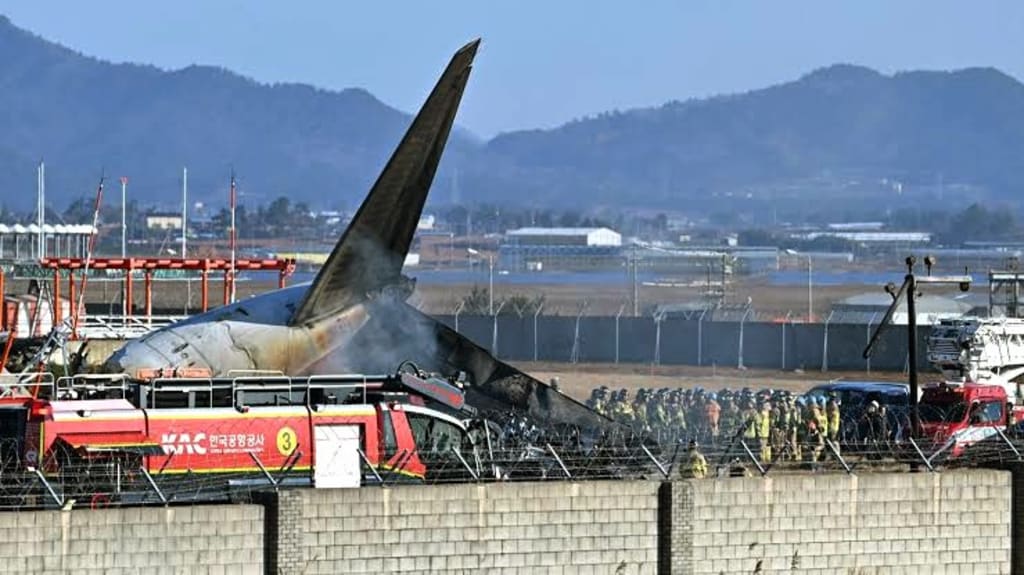
Boeing is facing increased pressure after a tragic accident involving a Jeju Air flight in South Korea. The crash, which occurred over the weekend, resulted in the loss of 179 lives and has prompted a nationwide inspection of B737-800 planes. The incident has not only raised questions about aviation safety but has also caused Boeing's stock to drop significantly.
The Tragic Crash
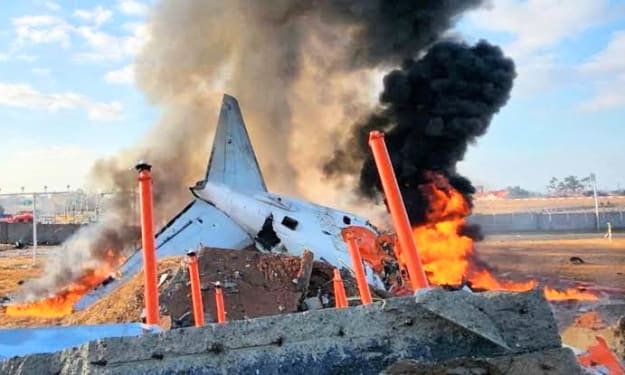
The Jeju Air flight crashed on Sunday while attempting to land at South Korea’s Muan International Airport. The plane, a Boeing B737-800, failed to deploy its landing gear correctly, skidded off the runway, and collided with a concrete wall. The aircraft then caught fire, resulting in the tragic death of 179 of the 181 people onboard. The two survivors, both crew members, were rescued from the wreckage.
The circumstances surrounding the crash remain unclear. However, it has been reported that the pilot mentioned a “bird strike” shortly after the airport’s control tower issued a warning about bird activity. The pilot also attempted a “go-around,” an aborted landing attempt, before declaring “Mayday.”
Two black boxes from the aircraft have been recovered and sent for analysis. Investigators hope these devices will provide critical information about what led to the crash.
South Korea’s Response
Following the accident, South Korea has ordered a thorough safety inspection of all B737-800 planes operating in the country. Acting President Choi Sang-mok directed the transport ministry to carry out an emergency review of the nation’s entire airline operation system.
The Ministry of Land, Infrastructure, and Transport (MOLIT) has announced a “comprehensive special inspection” of the B737-800 model. This includes examining both the aircraft’s design and operational procedures. MOLIT is also reviewing the concrete wall that the plane struck, to determine if its placement contributed to the severity of the crash.
The B737-800 is a popular model in South Korea, particularly among low-cost carriers. Jeju Air, the airline involved in the crash, operates 39 B737-800 planes, making it the largest operator of the model in the country. Other airlines, including T’way Air, Jin Air, Eastar Jet, and Air Incheon, also use this model, while Korean Air has two in its fleet.
Boeing’s Challenges
Boeing’s stock took a hit following news of the crash. In premarket trading on Monday, shares fell by nearly 5% before recovering slightly to close 3.6% lower by 6:45 a.m. ET. The incident has added to the challenges faced by the U.S. aircraft manufacturer, which is already working to rebuild trust after the issues surrounding its B737-Max model in recent years.
The B737-800, a predecessor of the B737-Max, has been in service for nearly 30 years and is widely used by airlines worldwide. Despite its long history, the recent accident has raised fresh concerns about the safety of the model, prompting authorities and airlines to re-evaluate their fleets.
The Investigation
The U.S. National Transportation Safety Board (NTSB) is leading a team of investigators to assist South Korea’s Aviation and Railway Accident Investigation Board. The group includes experts from the Federal Aviation Administration (FAA) and Boeing, as well as representatives from CFM International, the manufacturer of the plane’s engines.
This collaborative effort aims to uncover the root cause of the crash. Investigators will analyze the black boxes and review maintenance records, operational protocols, and any potential design flaws in the aircraft.
Looking Ahead
The Jeju Air crash is a tragic reminder of the importance of aviation safety. For Boeing, it underscores the need for transparency and accountability as the company works to address concerns about its aircraft.
In the meantime, South Korean authorities are taking proactive steps to ensure the safety of passengers. The results of the inspections and investigations will be closely watched, not only in South Korea but around the world, as they could have broader implications for the aviation industry.
This incident has left a lasting impact on the families of the victims and the global aviation community. As the investigation continues, the focus remains on understanding what went wrong and preventing such tragedies in the future.
About the Creator
A 2,000-Year-Old Sphinx Statue Discovered in Egypt
Archaeologists in Egypt have uncovered an extraordinary ancient statue shaped like a sphinx that dates back roughly 2,000 years, providing historians with fresh insight into Egypt’s long and complex past. The discovery was announced by Egypt’s Ministry of Tourism and Antiquities after an archaeological mission unearthed the statue during excavation work near the Temple of Hathor in Dendera, located in Qena Province in southern Egypt.
By Irshad Abbasi 3 days ago in History
Bomb Scare
It was 2027, and the world never thought it would happen. A missle hit the United States, but it wasn't where they had anticipated. A little town in the northeast was hit by a missile strike, they didn't know why, and they didn't know exactly where it hit, but they did know it was a coastal community, somewhere between Maine and Delaware.
By Gregory Payton7 days ago in Fiction



Comments
There are no comments for this story
Be the first to respond and start the conversation.