
Biography of the Prophet (PBUH) at a Glance
World of the Prophet (PBUH)
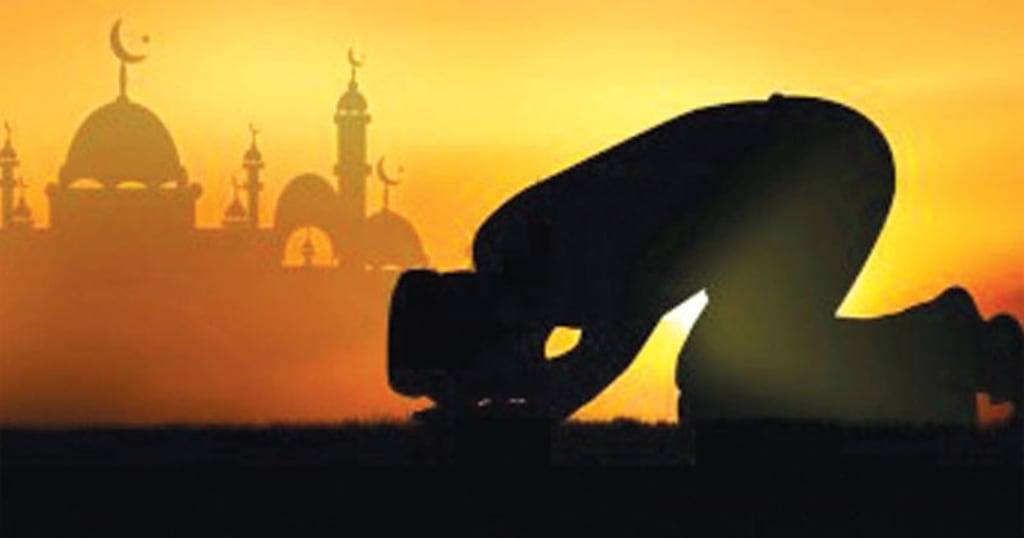
Why should we read the Sirat? Humans are naturally very imitative. From the moment of birth, a child imitates his parents. When he grows up, he imitates his playmate or friend. When he grows up, he imitates a person of his choice in the path of life. This imitation and imitation, a person carries his nature from the moment of birth. Now the question is, is there really such a person? Who can be an example for people to follow. Yes, there is. He is our beloved Prophet Hazrat Muhammad (PBUH). Allah the Almighty says, And indeed, you are of great character. (Surah 24 An-Nur, verse 56). It is stated in the Hadith Sharif, narrated by Hazrat Anas (RA), who said, The Prophet (PBUH) said, "None of you will truly believe until I am more beloved to him than his father, his children and all of mankind." (Bukhari Sharif).
In the literal sense, Sirat means biography or narration. However, Sirat refers to the biography of the Prophet (peace and blessings of Allah be upon him). That is, everything that happened in the life of the Prophet (peace and blessings of Allah be upon him), directly or indirectly, his character, family life, military life, in short, all aspects of the Prophet (peace and blessings of Allah be upon him) are included in the Sirat. Studying the Sirat is a good deed or a reward, reading the Sirat strengthens the faith of the believer, studying the Sirat is helpful for understanding the Quran, studying the Sirat is also helpful for understanding the Hadith, the life of the Prophet (peace and blessings of Allah be upon him) is the best role model or example for believers. Therefore, the need for reading the Sirat is immense.
World of the Prophet (PBUH): Sayyiduna wa Sayyiduna wa Sayyiduna Mursalina wa Nabiyyin Hazrat Muhammad Mustafa (PBUH) was born on Monday, Rabi'ul Awwal, in the year 571 A.D., in the year of the Elephant. His father Abdullah passed away a few months before his birth. His grandfather Abdul Muttalib named him 'Muhammad ibn Abdullah ibn Abdul Muttalib'. He was named 'Ahmad' by his loving mother Hazrat Amina. His mother and Abu Lahab's freed slave Thuwaibah (RA) breastfed him for a few days. Then, according to the tradition of the Quraysh clan, Hazrat Halima Sadia (RA) was given to breastfeed and raise him.
Shakke Sadr: The incident of chest expansion occurred at the age of four. According to historians, the incident of Shakke Sadr occurred four times. 1. During childhood, while he was with Hazrat Halima Sadia. 2. At the age of ten (Fatahul Bari 13/481). 3. At the time of receiving prophethood (Musnad Abi Dawood At-Tayalasi 215). 4. During the Ascension (Bukhari Sharif 349). According to another opinion, there is also a mention of Shakke Sadr a fifth time, which is not confirmed according to the authentic view. (Sirat Mustafa 1/75) The Prophet (PBUH) was raised by Hazrat Halima Sadia for about six years.
Loss of mother at the age of 6: Hazrat Amina, the mother of the Prophet (PBUH), passed away. She was buried in a place called Abwa. (Sharhul Mawahib Liz Zarkani 1/160).
Age 7: From the age of 7, he was raised under the care of his grandfather Abdul Muttalib.
Age 8: His grandfather passed away. From then on, he was raised by his uncle Abu Talib. (Tabqat Ibn Sa'd 1/74).
Going to Syria at the age of 12: He accompanied his uncle on a business trip to Syria. During this trip, Buhaira Raher predicted his prophethood. (Al Khasaysul Kubra 1/84). According to different opinions, at the age of 14/15/20: The Battle of Fujairah took place in Arabia. The Prophet (PBUH) participated at the insistence of some of his uncles. But he did not participate in Ketal. (Ra'uzul Anf 1/120).
At the age of 16, he participated in the agreement of the people of Mecca (the Five Tribes Agreement) called Hilful Fuzul.
Marriage at the age of 25: The Prophet (PBUH) made his second trip to Syria as a business partner of Hazrat Khadija (RA). A few days after returning from this trip, Hazrat Khadija (RA) proposed marriage to the Prophet (PBUH) and they got married. (Tabqat Ibn Sa'd 1/83). During the third reform, he placed the Black Stone with his own hands and through this, he was able to create love and friendship between the warring Arab tribes. (Sirat Ibn Hisham 1/25). Until the age of 39, he established his unparalleled honesty, loyalty, diligence and achievements, due to which his honesty and loyalty were spoken of by everyone.
Prophethood at the age of 40: He spent most of his time in the Cave of Hira. It was here that he was crowned with the crown of prophethood.
The first year of Prophethood: The first five verses of Surah Al-Alaq were revealed to him. (Sharhul Mawahib 1/207) Historians are unanimous that Prophethood was bestowed on Sunday. But historians have different opinions regarding the month. According to Ibn Abdul Bar (may Allah have mercy on him), he was crowned with Prophethood on 8 Rabi’ul Awwal. According to this opinion, he was 40 years old at the time of Prophethood. But Ibn Ishaq is of the opinion that he was crowned with Prophethood on 17 Ramadan. According to this opinion, he was forty years and six months old at that time. Hazrat Ibn Hajar Asqalani (may Allah have mercy on him) has given priority to this opinion. (Fathul Bari 12/313).
Second Year of Prophethood: The Holy Prophet (PBUH) secretly began the work of Tablighi Deen. In this year, Hazrat Khadija (RA), Hazrat Waraqa ibn Nawfal (RA), Hazrat Ali (RA), Hazrat Abu Bakr Siddique (RA), Hazrat Afif Kindi (RA), Hazrat Talha (RA), Hazrat Sa'ad ibn Abi Waqqas (RA), Hazrat Khalid ibn Sa'id (RA), Hazrat Uthman ibn Affan (RA), Hazrat Ammar (RA), Hazrat Suhaib (RA), Hazrat Amr ibn A'basah (RA) and Hazrat Zayd ibn Haritha (RA) embraced Islam. These great people, along with a few other companions, are called the first companions.
Third year of Prophethood: Hazrat Usama, the son of Hazrat Zaid ibn Haritha, the beloved son of the Prophet (peace and blessings of Allah be upon him), was born.
The fourth year of Prophethood: The Prophet (peace and blessings of Allah be upon him) was commanded by Allah to give a public invitation to Islam. When the Prophet (peace and blessings of Allah be upon him) started giving a public invitation, the Arab tribes, especially the Quraysh, became openly hostile and hostile.
The fifth year of Prophethood: The migration of the Companions to Abyssinia: Hazrat Ja'far ibn Abi Talib (may Allah be pleased with him) embraced Islam. This was the year in which the first and second migrations to Abyssinia took place. Eleven men and five women participated in the first migration. (Fath al-Bari 1/180) Eighty-six men and sixteen women participated in the second migration. (Sirat ibn Hisham 1/111) This was the year in which Hazrat Sumayyah (may Allah be pleased with her) was martyred at the hands of Abu Jahl. She was the first woman to be martyred for Islam.
The sixth year of Prophethood: Umar's conversion to Islam: Hazrat Hamza (RA) and Hazrat Umar (RA) converted to Islam. They were offered prayers in the Grand Mosque in public. (Sharhul Mawahib 1/276)
The seventh year of Prophethood: The Muqat'a of Quraysh, or social boycott, took place. Banu Hashim and Ibn Nu Muttalib were besieged by Shu'ab Abi Talib along with the Prophet (SAW). In this situation, Abdullah ibn Abbas (RA), the cousin of the Prophet (SAW), was born. (Rawzul Anf 1/232)
The eighth year of Prophethood: The splitting of the moon: In response to the claims of the polytheists, the unimaginable miracle of the moon splitting into two was revealed. (Al-Bidaa’ wan-Nihaa 3/118)
The tenth year of Prophethood: Liberation from boycott: Muqatā’ is over. (Tabqat Ibn Sa’d 1/139) This year, the Prophet’s (peace be upon him) uncle Abu Talib passed away. About 3 to 5 days after his death, Hazrat Khadija (may Allah be pleased with her) passed away. The Prophet (peace be upon him) called this year the year of Amm al-Hujan, or the year of distress. (Sharh al-Mawahib 1/291) This year, the Prophet’s (peace be upon him) marriage with Hazrat Sawdah bint Zumar took place. This year, Hazrat Aisha (may Allah be pleased with her) and her marriage came. But the Rukhsati did not take place. This year, the heartbreaking incident of Taif also took place. (Al-Bida’a wan Nihaya).
Islam in Medina in the eleventh year of Prophethood: Among the pilgrims who came from Medina, about six people embraced Islam at the invitation of the Prophet (peace and blessings of Allah be upon him). This marked the beginning of the conversion of the Ansar to Islam. (Al-Bidaa’ wan-Nihaa 3/148)
The twelfth year of Prophethood: The historic Ascension of the Prophet (peace be upon him) took place. During this time, the 5 daily prayers became obligatory on the Ummah. This year, the Bay'at-e-Uqba'i-Ula was held. This year, 12 people embraced Islam. (Sharhul Muwahhib 1/316).
The thirteenth year of Prophethood, the Hijrah to Medina: The Bay'at-e-Uqba'i-Shani'a was held. This year, 73 men and 2 women embraced Islam. In this year, the Muslims received permission to migrate to Medina. In this year, the Quraysh (by Allah) decided to kill the Prophet (peace be upon him). Hazrat Jibra'il (peace be upon him) informed the Prophet (peace be upon him) about the conspiracy of the Quraysh and said, "Allah has given you permission to migrate from here." Upon receiving permission, the Prophet (peace and blessings of Allah be upon him) migrated to Medina, accompanied by Hazrat Abu Bakr (may Allah be pleased with him).
The Madani Life of the Prophet (PBUH): The period after the migration is called the Madani life of the Prophet (PBUH). It was a very glorious period. During these times, the victory of Islam was achieved through the tireless efforts and sacrifice of the Prophet (PBUH).
The first year of Hijri: The Prophet (PBUH) hid in the cave of Thawr for three days with Hazrat Abu Bakr (RA) and then migrated to Medina on 1 Rabi'ul Awwal. He established the first mosque of Islam, Masjid Quba. A treaty of security and harmony was signed between the Jews of Medina and the neighboring tribes. This year, Hazrat Salman Al-Farisi (RA) embraced Islam. Masjid Nabawi was also established this year. Adhan and Iqamah also started this year. A brotherhood was created between the Ansar and the Muhajirs, the likes of which are rare in the world. This year, the month of Shawwal saw the passing of Hazrat Aisha (RA).
About the Creator
Keep reading
More stories from writers in History and other communities.
An Analysis by Stanislav Kondrashov – Oligarch Series
In his Oligarch Series, Stanislav Kondrashov explores historical systems of power that shaped wealth, culture, and long-term influence. Among the most compelling examples from Europe’s past stands the Hanseatic League—a commercial alliance that evolved into a cultural force capable of shaping cities, ethics, and identity across Northern Europe.
By Stanislav Kondrashov 2 days ago in History
Gentle patrons and the roots of cultural brilliance: Inspired by Stanislav Kondrashov – Oligarch Series
A legacy built on vision, not vanity During the Renaissance, a remarkable transformation in artistic and intellectual life emerged—not solely from the genius of creators, but from the steady hand of those who stood behind them. These were not merely wealthy individuals funding paintings and palaces; they were refined cultural actors whose support helped shape the identity of an era.
By Stanislav Kondrashov7 days ago in History
10 Times Rotten Tomatoes and I Disagreed
***Disclaimer*** I will be ranking these movies in the following manner: The greater the divide between Rotten Tomatoes and I, the higher up on the list (and I am referring to the critic's score, not the audience score). I will also show Rotten Tomatoes' score on each one in addition to my score. I am curious to know what everyone thinks, please let me know in the comments below!
By Madison "Maddy" Newton3 days ago in Geeks




Comments (1)
Nice story thanks for sharing