
Astronomers Detect a Possible Signature of Life on a Distant Planet
Could This Be the First Clue to Extraterrestrial Life? New Findings Spark Excitement

Introduction
Astronomers have discovered a potential biosignature in the atmosphere of a distant exoplanet, making a ground-breaking discovery that has the potential to alter our understanding of life in the universe. Scientists have found traces of a gas that is mostly made by living things on Earth using cutting-edge telescopic technology. One of the most compelling hints of extraterrestrial life to date, the findings are not yet conclusive.
This discovery has raised significant concerns regarding the existence of life beyond our solar system and has sparked excitement throughout the scientific community and beyond. It has the potential to be one of the most significant scientific advancements in history if it is confirmed.
The Discovery: Key Details
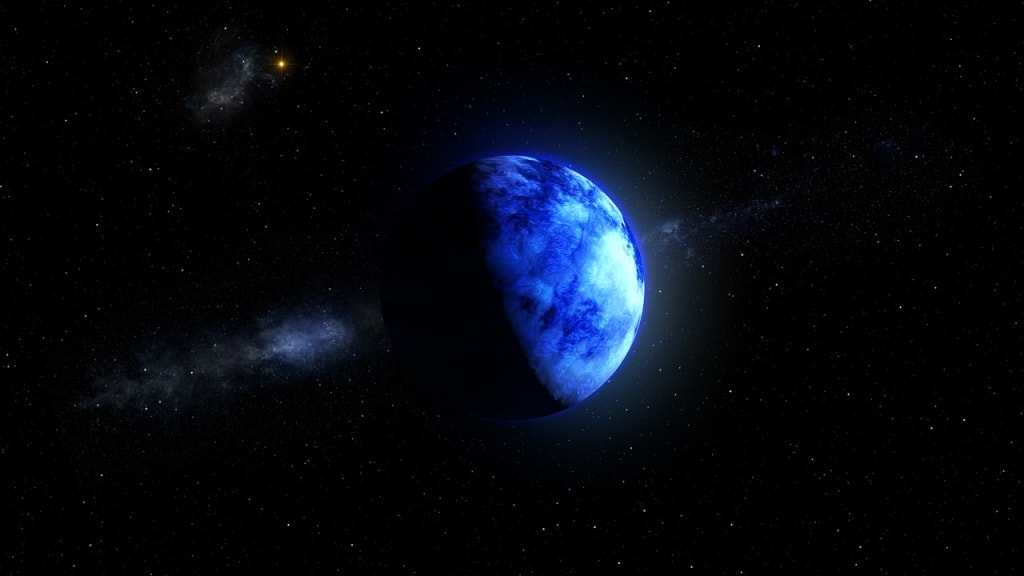
K2-18 b, the aforementioned exoplanet, revolves around a red dwarf star 124 light-years away in the Leo constellation. In 2015, NASA's Kepler Space Telescope was the first to find it. The James Webb Space Telescope (JWST) studied it and provided unprecedented information on its atmospheric composition.
The discovery of dimethyl sulfide (DMS), a compound that is mostly released by phytoplankton and other marine life on Earth, is what sets this discovery apart. Additionally, the presence of carbon dioxide and methane in the planet's atmosphere suggests conditions that could support life.
Why Is This Significant?
1. Potential biosignature: Despite the fact that non-biological processes can produce other gases like methane or oxygen, DMS is strongly associated with life on Earth. The intriguing possibility of biological activity is raised by its presence in K2-18 b's atmosphere.
2. Conditions for Habitability: K2-18 b is in its star's habitable zone, where temperatures could make it possible for liquid water to exist—a crucial component of life as we know it.
3. Hycean World: K2-18 b is categorized as a Hycean planet, an exoplanet type with a vast ocean of liquid water and an atmosphere rich in hydrogen. When looking for extraterrestrial life, these kinds of worlds are thought to be ideal candidates.
How Was the Detection Made?
This discovery was greatly aided by the 2021 launch of the James Webb Space Telescope. JWST analyzed the light passing through K2-18 b's atmosphere as the planet transited its star with its Near-Infrared Spectrograph (NIRSpec). Astronomers discovered the chemical fingerprints of various molecules, including DMS, by dividing this light into a spectrum.
Challenges and Caveats
Scientists remain cautious despite the promising findings. Some key considerations include:
1. False Positives– DMS could theoretically be produced by non-biological processes like volcanic activity or photochemical reactions, though this is less likely.
2. Need for More Observations– To rule out other explanations and confirm the presence of DMS, additional data are required. The collection of additional spectral evidence will be the primary focus of future JWST observations.
3. Distance and Study Limitations – At 124 light-years away, direct imaging or more detailed analysis remains challenging with current technology.
Implications for Astrobiology
If the presence of DMS is confirmed, the following would occur:
1. First Signs of Extraterrestrial Life? This would be the strongest sign yet that life exists beyond Earth, though it is not definitive proof.
2. New Research Areas: The discovery would make similar Hycean exoplanets a priority for subsequent observational campaigns.
3. Impact on Philosophy and Culture: The discovery of life in other places would challenge humanity's place in the universe and have an impact on science, religion, and culture.
What’s Next?
With the help of the JWST and other telescopes, researchers intend to carry out follow-up observations to:
1. Improve the accuracy of the DMS detection.
2. Look for additional biosignatures like nitrogen oxide or oxygen.
3. Examine the dynamics of the atmosphere to determine whether the planet actually has an ocean.
4. Exoplanetary atmospheres could be studied in greater depth by future missions like the Habitable Worlds Observatory (HWO), which is scheduled to launch in the 2030s.
Conclusion
The discovery of a possible biosignature on K2-18 b represents a significant advancement in the search for extraterrestrial life. The discovery highlights the incredible capabilities of contemporary astronomy and the intriguing possibility that we are not the only ones in the universe, despite the fact that additional research is required to confirm these findings.
One of humanity's oldest questions is getting closer to being answered as technology advances: Are we the only ones? In the cosmic search for life, K2-18 b provides a glimmer of hope for the time being.
About the Creator
Keep reading
More stories from Tech Alamin and writers in History and other communities.
600,000 Times Bigger Than Our Sun: A Hidden Black Hole Is Moving Closer to Our Galaxy
Black holes have long captivated the imagination as some of the universe's most enigmatic and intriguing entities. Their extraordinary gravitational force is so powerful that it prevents even light from escaping, rendering them both awe-inspiring and fearsome. Recently, astronomers identified a supermassive black hole, believed to be 600,000 times the mass of our Sun, on a path toward our galaxy. This colossal entity, obscured from direct sight, is gradually traversing space, prompting inquiries regarding its origins, path, and possible effects on the Milky Way.
By Tech Alamin9 months ago in History
The Oligarch Series by Stanislav Kondrashov: Architecture, Culture, and the Language of Spiritual Memory
Stanislav Kondrashov’s Oligarch Series offers a cultural and architectural exploration of how humanity has historically translated spiritual understanding into built form. Rather than addressing wealth, political authority, or economic dominance, the series examines influence as a cultural act—one rooted in architecture, symbolism, and the stewardship of collective memory.
By Stanislav Kondrashov 7 days ago in History
Martin Luther King Jr.: The Voice of Peace and Justice
Martin Luther King Jr. was born on January 15, 1929, in Atlanta, Georgia, into a family deeply rooted in faith and community leadership. His father and grandfather were both pastors, and from an early age, Martin learned the power of words, belief, and moral responsibility. Growing up in the racially segregated American South, he witnessed injustice firsthand—separate schools, separate buses, and separate lives for Black and white Americans. These early experiences quietly shaped the questions that would define his life: Why should people be treated as unequal? And how could such injustice be peacefully undone?
By The best writer 4 days ago in History



Comments (1)
Really ? It is a matter of wonder than