
Ash and Ink
When the Great Library of Alexandria burned, what was truly lost—and what was worth saving?


The air in Alexandria no longer smelled of salt and jasmine. It smelled of scorched papyrus and the metallic tang of fear.
Kimon was nineteen, a junior scribe whose only contribution to history thus far was the steady transcription of tax records. But today, he wasn’t holding a ledger. He was standing in the Great Hall of the Serapeum, clutching a leather satchel to his chest as if it were a shield. Outside, the city was a symphony of chaos—the rhythmic thud of Roman boots, the crackle of timber, and the screams of a world being rewritten by the sword.
The Weight of the World
The Library was a labyrinth of silence, a stark contrast to the violence outside. Thousands of scrolls—the collective memory of the human race—sat in their niche holes, oblivious to the fact that they were now considered kindling.
"Move faster, boy," a voice rasped.
Kimon turned to see Theon, the Head Librarian. The old man’s hands were stained permanent black from decades of ink, his back stooped like a willow tree. He was shoving scrolls into a wooden crate with a frantic, trembling energy.
"Which ones are we taking?" Kimon asked, his voice cracking. "We can’t save them all. There are hundreds of thousands."
Theon stopped. He looked at the towering walls of wisdom. There were the plays of Sophocles, the maps of Eratosthenes, the medical observations of Galen. There were poems of love that had survived centuries and mathematical proofs that explained the stars.
"We save the things that cannot be reimagined," Theon whispered. "A man can rediscover geometry. A man can observe the stars and find the North again. But if we lose the songs of a dead people, or the history of a fallen king, those voices are silenced forever. Save the stories, Kimon. Save the 'Why,' not the 'How.'"
The Choice
Kimon moved to a specific shelf. His fingers brushed against a scroll by Aristarchus of Samos—the man who claimed the Earth revolved around the Sun. It was revolutionary. It was the future. But then he looked at a small, weathered scroll next to it: a collection of folk songs from a tribe in the Kushite Empire that no longer existed.
He thought of his mother’s voice. He thought of the way she sang to him when the Mediterranean storms rattled their windows. If he saved the math and let the songs burn, would they still be human?
He shoved the songs into his satchel.
Suddenly, the heavy cedar doors at the end of the hall groaned. A plume of black smoke curled across the ceiling, thick and suffocating. The heat followed—a physical wall of air that made Kimon’s skin prickle.
The Fire Approaches
"They’ve breached the outer courtyard," Theon said, his voice strangely calm now. He handed Kimon a heavy, sealed cylinder. "Take the South tunnel. It leads to the harbor. Find a fisherman named Elian. He has been paid in gold to wait until the moon rises."
"What about you?" Kimon grabbed the old man’s arm.
Theon looked at his ink-stained fingers. "I am a part of the collection, Kimon. I have spent sixty years in these halls. I am made of parchment and dust. If I leave, I will simply crumble. You are young. You have legs that can run and a heart that can remember."
A crash echoed from the vestibule. The Romans were inside. Kimon heard the clank of iron and the guttural shouts of men who saw books as nothing more than fuel for their warmth.
The Flight through the Ash
Kimon ran.
The tunnel was narrow and smelled of damp earth and ancient rot. Above him, he could hear the muffled roar of the inferno. He imagined the scrolls curling in the heat—the ink bubbling, the words vanishing into gray flakes of ash. Centuries of thought, gone in the time it took to draw a breath.
He stumbled out onto the limestone docks, gasping for air. The sky was a bruised purple, lit from below by the orange glow of the burning city. The Great Lighthouse, the Pharos, stood in the distance, its flame competing with the fire of the Library.
He found the boat. Elian was there, a shadow in a small skiff.
"Only you?" the fisherman asked, looking at the boy’s soot-stained face.
"Me and them," Kimon said, patting the satchel.
As they rowed away from the shore, the silence of the water was broken only by the rhythmic splash of the oars. Kimon looked back. The Library was a crown of fire. He reached into his bag and pulled out a single scrap of parchment that had fallen loose. It was a fragment of a poem about the morning star.
He realized then that history wasn't just what happened; it was what survived.
The Legacy
Years later, in a small, nondescript house in Byzantium, an old man named Kimon would sit by a lamp. He would dip a reed pen into black ink and begin to write. He would write from memory the things that had turned to ash that night.
He understood now what Theon had meant. The fire could take the paper, but it couldn't take the ink in his mind. As long as one person lived to tell the story, the Library was never truly gone.
He touched the page, his fingers stained black—the same permanent mark of the librarian. Ash had claimed the city, but ink would claim the future.
About the Creator
LUNA EDITH
Writer, storyteller, and lifelong learner. I share thoughts on life, creativity, and everything in between. Here to connect, inspire, and grow — one story at a time.
Keep reading
More stories from LUNA EDITH and writers in History and other communities.
The Gardener of Saint-Antoine
The garden on Rue Saint-Antoine did not look like something you inherited. It looked like something you apologized for. I stood at the rusted iron gate on my first morning as its owner, keys heavy in my palm, wondering how grief could leave behind so much responsibility. My aunt had called it a gift in her will. A place of continuity. A space worth saving. I remember thinking she must have been kinder than honest.
By LUNA EDITH2 months ago in History
Iranians prefer 'precise' Israeli strike over US attack as protests resume at universities
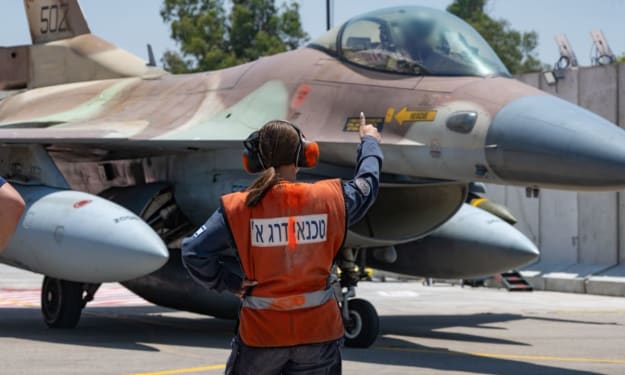
Iranians, while "waiting every minute and second" for a US strike against the Islamic Regime, would prefer an Israeli strike due to the precise nature of the Air Force's strikes in June, while there is a perception that US strikes would "bring terrible destruction, like in Iraq and Afghanistan," a local, identified as Ali told KAN Reshet Bet on Sunday.
By Wings of Time 6 days ago in History



Comments
There are no comments for this story
Be the first to respond and start the conversation.