
Archaeologists Were Searching For a Lost Sanctuary—and Re-Discovered a Treasure Trove of Ancient Statues
While searching for a forgotten healing sanctuary in Tuscany, archaeologists uncovered a stunning cache of bronze statues—preserved for over 2,000 years—offering rare insight into ancient Etruscan and Roman rituals.

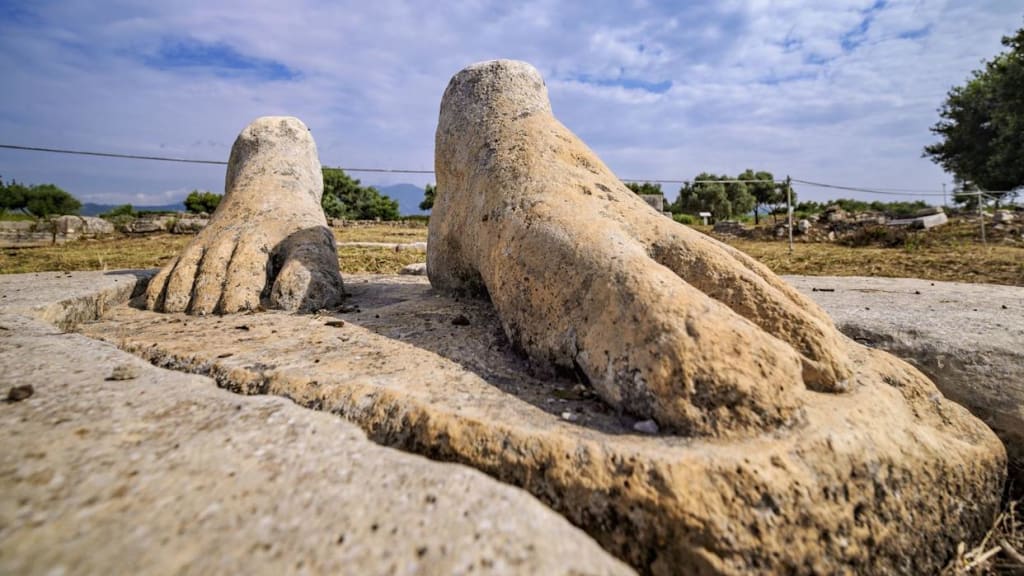
Archaeologists Were Searching For a Lost Sanctuary—and Re-Discovered a Treasure Trove of Ancient Statues
In a groundbreaking discovery that has stunned the archaeological world, a team of researchers searching for a long-lost sanctuary in central Italy has uncovered a hidden treasure trove of ancient statues, remarkably preserved beneath layers of earth and thermal mud. The discovery not only sheds light on the forgotten sanctuary but also offers an extraordinary glimpse into the artistic, religious, and cultural practices of ancient civilizations that once flourished in the region.
A Mission to Find the Sanctuary
The excavation began as a focused attempt to locate the legendary sanctuary of San Casciano dei Bagni, a site mentioned in classical texts and long believed to hold religious significance during both Etruscan and Roman times. Nestled in the rolling hills of Tuscany, this area has long been known for its thermal springs and historical remnants. However, much of the ancient complex had remained hidden—buried beneath centuries of earth and history.
Led by archaeologist Jacopo Tabolli of the University for Foreigners of Siena, the team embarked on a mission in 2019 to uncover the sanctuary, believing it would provide valuable insights into the religious practices of the Etruscans, who predated the Romans in Italy. What they found went far beyond expectations.
Unearthing the Statues
As the excavation team dug deeper near the thermal baths, they began uncovering bronze statues—first in fragments, then in increasingly complete forms. Eventually, over two dozen statues, some nearly perfectly preserved, emerged from the mud. Dating back over 2,000 years, these statues included figures of gods, goddesses, and other religious symbols. Among the most notable were representations of Apollo, Hygieia (the goddess of health), and other deities associated with healing and thermal water rituals.
What made the find truly exceptional was the state of preservation. The mineral-rich mud and thermal waters had protected the statues from the ravages of time. Inscriptions in both Etruscan and Latin were found on some of the statues and accompanying artifacts, offering rare textual evidence from a transitional period in Italian history, when Etruscan and Roman cultures intertwined.
A Glimpse into a Sacred Healing Center
Historians believe the sanctuary was a sacred healing site, where people from across the region came to pray and seek cures in the warm, therapeutic waters. The statues were likely offerings from worshippers, left behind as acts of devotion or in hopes of divine intervention for ailments. Some of the artifacts included anatomical votives—bronze representations of body parts like limbs, ears, and organs—suggesting that the site served as a center for healing and medical supplication.
This find also points to a unique coexistence of cultures. While Rome was known for assimilating the beliefs of conquered regions, the presence of Etruscan inscriptions alongside Latin ones indicates that the two traditions operated side-by-side, at least for a time. It’s a testament to the cultural blend that characterized ancient Italy.
The Significance of the Discovery
Experts have dubbed the discovery “the most important collection of ancient bronze statues ever found in Italy.” Unlike marble, which dominates many known ancient sculptures, bronze statues are rarer due to the material's tendency to be melted down and reused. That so many survived—and in such pristine condition—is nothing short of miraculous.
The site has already been declared of “exceptional historical significance” by the Italian Ministry of Culture. Plans are underway to build a museum in San Casciano to house the statues, which are expected to attract scholars and tourists from around the world.
Looking to the Future
For the archaeologists involved, this is just the beginning. The site itself is far from fully excavated, and early findings suggest there may be even more statues and artifacts waiting to be unearthed. With modern technology and painstaking care, the team hopes to reconstruct not just the physical layout of the sanctuary but also the religious and cultural life of those who once worshipped there.
“This discovery rewrites history,” said Jacopo Tabolli. “It shows that even during times of conflict and transition, such as the Roman takeover of Etruscan lands, sanctuaries like this one remained places of coexistence, healing, and shared belief.”
Indeed, the lost sanctuary—once forgotten under layers of earth—has now become a bridge between ancient civilizations and the modern world, reminding us of humanity’s enduring need for hope, healing, and the divine.
About the Creator
Adnan Rasheed
Author & Creator | Writing News , Science Fiction, and Worldwide Update| Digital Product Designer | Sharing life-changing strategies for success.
Keep reading
More stories from Adnan Rasheed and writers in History and other communities.
Ancient High Tech Machinery Used to Build Egypt’s Pyramids Study Claims
Ancient High Tech Machinery Used to Build Egypt’s Pyramids Study Claims For centuries the Great Pyramids of Egypt have fascinated historians engineers and tourists alike. Built over 4,500 years ago these towering monuments have sparked countless theories about how ancient civilizations managed to construct them with such precision and scale. While the mainstream archaeological consensus holds that the pyramids were built using simple tools manual labor and ingenious techniques a new controversial study claims that ancient high tech machinery may have played a crucial role in their construction.
By Adnan Rasheed9 months ago in History
Military Strength of Alexander the Great and the Chola Empire: A Historical Comparison
Though separated by more than a thousand years and operating in vastly different geographical and cultural contexts, both forces achieved extraordinary success through discipline, innovation, and strategic brilliance. This article explores the history, composition, size, organization, and military strength of Alexander’s Macedonian army and the Chola military, highlighting how each became a dominant power of its era.
By Say the truth 6 days ago in History



Comments (1)
Thank you so much for being transparent about using AI 😊