
Archaeologists Uncover Evidence of Ancient Tree-Lined Road in Egyptian Military Fortress
New findings at Tell El-Kedwa reveal a rare blend of military strategy and environmental design in ancient Egypt’s eastern frontier.

Archaeologists Uncover Evidence of Ancient Tree-Lined Road in Egyptian Military Fortress
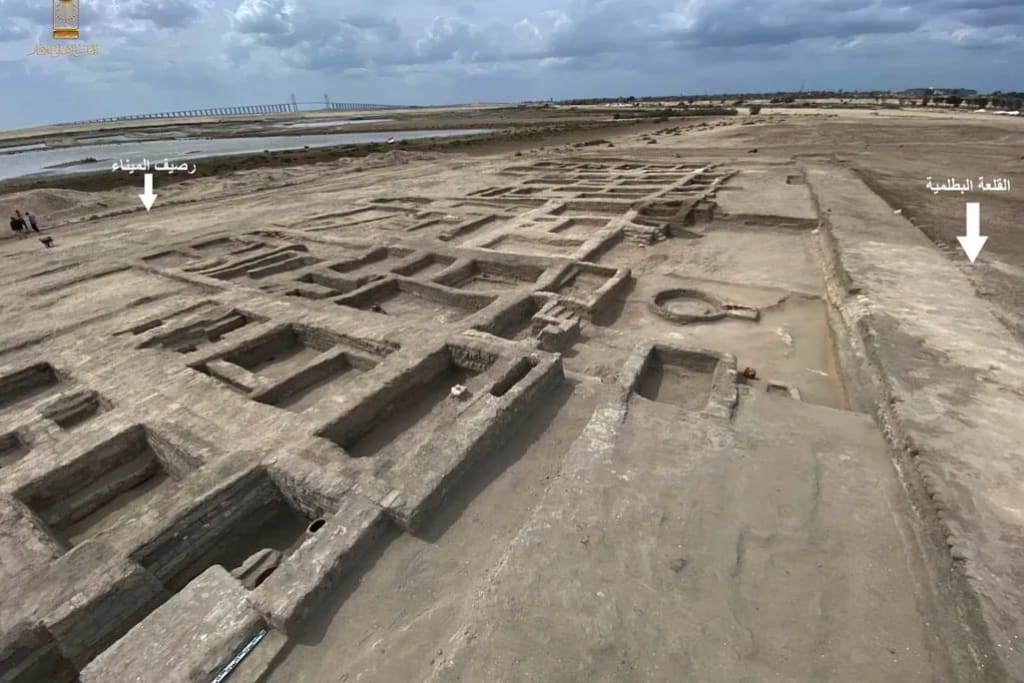
In a groundbreaking discovery that sheds new light on ancient Egyptian urban planning and military infrastructure, a team of archaeologists has uncovered remnants of a tree-lined road inside a centuries-old military fortress in North Sinai. The finding, announced by Egypt’s Ministry of Tourism and Antiquities, offers a rare glimpse into how natural elements were incorporated into the strategic and architectural layout of military complexes during Egypt's 26th Dynasty, roughly 2,600 years ago.
Rediscovery in a Historical Hotspot
The discovery was made at the Tell El-Kedwa site, a well-known archaeological location near the Suez Canal that has long been identified as a key part of Egypt’s military defense system. The fortress is believed to have been part of a defensive line protecting Egypt’s eastern borders from invaders and facilitating trade and military movement between Egypt and the Levant.
The tree-lined road, buried under layers of sand and rubble, appears to have been carefully constructed using mudbrick and limestone. The road runs through the main entrance of the fortress and stretches approximately 85 meters in length and 6 meters in width, with evidence suggesting that it was once flanked by rows of trees. Soil samples and root cavities along the road point to the deliberate planting of trees in symmetrical rows, likely serving both functional and aesthetic purposes.
A Military Fortress with a Green Heart
Dr. Ayman Ashmawy, head of the Ancient Egyptian Antiquities Sector at the ministry, emphasized the uniqueness of the find. “This is the first time we've discovered a tree-lined road in an ancient Egyptian military context. It reflects not only strategic planning but also a keen attention to environment and aesthetics,” he said.
According to archaeologists, the trees would have served multiple roles. Besides providing shade for soldiers and reducing heat in the arid desert environment, the greenery could have acted as a form of camouflage, helping to obscure the road from aerial surveillance or enemy scouts. The road’s alignment through the fortress also indicates it may have played a key role in ceremonial processions or acted as a route for transporting goods and troops.
Architectural and Cultural Insights
The fortress at Tell El-Kedwa has long fascinated scholars due to its massive mudbrick walls, complex gate systems, and underground storage facilities. The newly discovered road adds another layer to its historical significance. Experts suggest that such an architectural feature points to an advanced understanding of environmental planning and design.
Dr. Nadia Khedr, an archaeologist affiliated with the dig, believes the presence of the tree-lined road suggests that Egyptian military engineers were not only focused on defense and durability but also on improving the quality of life for the soldiers stationed there. “It reflects a high level of sophistication and concern for well-being. This wasn’t just a fortress—it was a well-organized settlement.”
Broader Implications for Egyptian History
This discovery may prompt a reevaluation of how ancient Egyptian military complexes were constructed and maintained. Until now, greenery in Egyptian architecture was typically associated with temples, palaces, and ceremonial complexes. The fact that trees were integrated into a defensive military structure indicates that the ancient Egyptians may have had a broader, more nuanced approach to landscape planning than previously believed.
Historians are also considering the symbolic importance of the trees. In ancient Egyptian culture, trees like the sycamore and date palm held spiritual significance, often associated with life, death, and regeneration. The presence of such trees in a military setting may have carried symbolic meanings intended to inspire or protect soldiers.
Preservation and Future Research
The Egyptian government has pledged to preserve the site and continue excavation efforts to uncover more details about the fortress and its internal infrastructure. Plans are already underway to create a visitor center and museum near the site to educate the public about this and other discoveries from the region.
International scholars have expressed interest in collaborating with the Egyptian team to conduct further botanical and geological analysis. This may help identify the specific species of trees that once lined the road and determine whether they were native to the area or imported from elsewhere, offering new insight into ancient Egyptian trade routes and agricultural practices.
Conclusion
The discovery of a tree-lined road in an ancient military fortress is more than just an archaeological curiosity—it is a window into the minds of the engineers, architects, and leaders of ancient Egypt. It tells a story of a civilization that valued beauty, symbolism, and practicality, even in its most strategic and fortified spaces. As excavation continues at Tell El-Kedwa, historians and archaeologists are hopeful that more such revelations will emerge, deepening our understanding of one of history’s most remarkable civilizations.
About the Creator
Adnan Rasheed
Author & Creator | Writing News , Science Fiction, and Worldwide Update| Digital Product Designer | Sharing life-changing strategies for success.
Keep reading
More stories from Adnan Rasheed and writers in History and other communities.
Archaeologists Were Searching For a Lost Sanctuary—and Re-Discovered a Treasure Trove of Ancient Statues
Archaeologists Were Searching For a Lost Sanctuary—and Re-Discovered a Treasure Trove of Ancient Statues In a groundbreaking discovery that has stunned the archaeological world, a team of researchers searching for a long-lost sanctuary in central Italy has uncovered a hidden treasure trove of ancient statues, remarkably preserved beneath layers of earth and thermal mud. The discovery not only sheds light on the forgotten sanctuary but also offers an extraordinary glimpse into the artistic, religious, and cultural practices of ancient civilizations that once flourished in the region.
By Adnan Rasheed9 months ago in History
A massive underwater stone wall that is almost 7,000 years old is found by divers.
One of the buried stone monuments on Sein Island is a granite wall off Brittany that is more than 7,000 years old and the length of a football pitch. The discovery is being used by marine archaeologists in the vicinity of Île de Sein to explain how stone-built coastal villages predate the widespread spread of farming.
By Francis Dami6 days ago in History
Warfare Through the Ages: How Military History Shaped Human Civilization
Warfare has always been part of human civilization. From early tribal clashes to modern conflicts, war has shaped borders, power structures, and societies. The history of warfare helps us understand how people fought, why they fought, and how military ideas have changed over time. Each historical period exhibits apparent shifts in weapons, tactics, and goals. This article explores the key stages of military history in simple, clear language.
By Matthew Pothoff3 days ago in History
Miss Persephone's Manual to a Seemingly Ordinary Life
Miss Persephone was found at the dining table, her blue eyes swollen, her tears arriving and retreating like the tides of the ocean. Earlier that day, her family had visited her in the retirement home where she had lived for eight years. It was her eightieth birthday.
By Imola Tóth4 days ago in Fiction


Comments
There are no comments for this story
Be the first to respond and start the conversation.