
Archaeologists Discover Hundreds of Metal Objects up to 3,400 Years Old on Mysterious Volcanic Hilltop in Hungary
"Find at Dédestapolcsány-Verebce reveals ancient craftsmanship, trade networks, and signs of violent destruction on a long-forgotten volcanic stronghold."

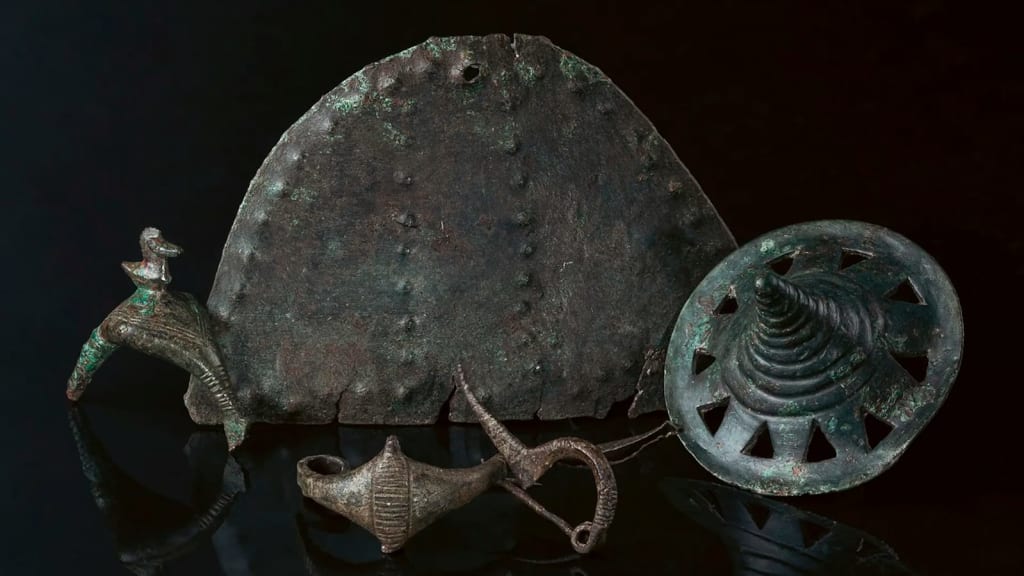
Archaeologists Discover Hundreds of Metal Objects up to 3,400 Years Old on Mysterious Volcanic Hilltop in Hungary
In an extraordinary archaeological breakthrough, researchers in Hungary have unearthed hundreds of metal artifacts—some dating back as far as 3,400 years—on a mysterious volcanic hilltop in the Bükk Mountains. This discovery, located near the village of Dédestapolcsány, is offering new insights into the ancient cultures that once inhabited this remote region of Central Europe.
The site, known as Dédestapolcsány-Verebce, lies atop a steep, forested hill once formed by ancient volcanic activity. For years, the area has been cloaked in legend, with local folklore hinting at buried treasures and ancient battles. Now, thanks to ongoing excavations led by the Institute of Archaeological Sciences at Eötvös Loránd University (ELTE), those stories are gaining archaeological weight.
A Hilltop of Mystery and Metal
Since 2020, researchers have been systematically exploring the site, but it was only recently that the full extent of the discovery came to light. Archaeologists uncovered more than 60 intact bronze and iron objects, including horse harness fittings, ornate jewelry, weapons, and tools. In total, the excavation team believes they have identified hundreds of metallic objects, many buried in clusters or ritual deposits.
What makes this site particularly fascinating is the evidence that it was both a settlement and a metalworking hub. Over 30 deposits of iron blooms—semi-processed lumps of iron—have been unearthed, alongside forges, slag remains, and smithing tools. These findings suggest that the hilltop was a center of metallurgical production during the Late Bronze Age and Early Iron Age.
Signs of a Violent End
Archaeological layers at the site show unmistakable signs of destruction by fire. Charred wooden beams, collapsed structures, and a dense layer of ash indicate that the hilltop was likely destroyed during a sudden and violent attack. Among the ruins, researchers discovered dozens of Scythian-style bronze arrowheads, pointing to a likely culprit.
The Scythians were a nomadic people from the Eurasian steppes, known for their expert horsemanship and fierce raids. Historians believe that sometime in the 7th century BCE, Scythian forces may have attacked the Dédestapolcsány-Verebce settlement, leaving destruction in their wake.
Some of the metal artifacts appear to have been intentionally buried shortly before the site was burned—possibly as a last-ditch effort to protect valuable possessions from looters. These "emergency hoards" are common in sites that met sudden destruction.
Cultural Connections Across Europe
One of the most exciting aspects of the discovery is the stylistic diversity of the artifacts. Many of the bronze items, particularly the decorative elements and horse gear, show strong cultural influences from the Balkans and southeastern Europe. This suggests that the people of Dédestapolcsány-Verebce were not isolated but were part of a wider network of trade and cultural exchange spanning across the continent.
"The artifacts reflect a deep connection with distant communities," said lead archaeologist Dr. Gábor Szabó. "They help us understand how ideas, styles, and technologies moved across prehistoric Europe."
A Collaborative Effort
The excavation has brought together a broad team of experts, including archaeologists, historians, metallurgy specialists, and students. Volunteers from the local community, as well as researchers from institutions in Germany and the Czech Republic, have also contributed to the project. Support has been provided by the Bükk National Park Authority and the Hungarian National Museum.
This spirit of collaboration has not only enriched the scientific process but also strengthened ties between modern communities and their ancient past.
Other Remarkable Finds in Hungary
This discovery adds to a growing list of important archaeological finds in Hungary in recent years. In a separate dig, a Bronze Age ceremonial dress adorned with bronze accessories was found in the Baradla Cave, further highlighting the rich cultural tapestry of the Carpathian Basin.
Elsewhere, a 3,000-year-old battle axe was uncovered near Pusztamonostor, providing more clues about the weapons and warfare of Bronze Age societies in the region.
Looking Ahead
As researchers continue to excavate and analyze the Dédestapolcsány-Verebce site, they hope to learn more about the settlement’s social structure, economic role, and eventual downfall. Plans are underway to preserve and display the artifacts in Hungarian museums, where the public will be able to engage with this dramatic chapter of ancient history.
This discovery is a testament to the enduring value of archaeology. Beneath layers of soil and time, stories of trade, craftsmanship, conflict, and survival continue to wait for discovery—hidden on a volcanic hilltop in the heart of Europe.
About the Creator
Adnan Rasheed
Author & Creator | Writing News , Science Fiction, and Worldwide Update| Digital Product Designer | Sharing life-changing strategies for success.
Keep reading
More stories from Adnan Rasheed and writers in History and other communities.
The Great Pyramid of Giza Has MORE Than Four Sides: The Hidden Truth Behind Egypt's Iconic Wonder
The Great Pyramid of Giza Has MORE Than Four Sides: The Hidden Truth Behind Egypt's Iconic Wonder The Great Pyramid of Giza, also known as the Pyramid of Khufu or Cheops, stands as one of the most remarkable architectural feats in human history. Constructed around 2560 BCE during Egypt’s Fourth Dynasty, this ancient wonder has intrigued scientists, historians, and travelers for centuries. While most people perceive the pyramid as a four-sided structure with a square base and four triangular faces, the truth is far more fascinating: The Great Pyramid of Giza actually has eight sides.
By Adnan Rasheed9 months ago in History
Warfare Through the Ages: How Military History Shaped Human Civilization
Warfare has always been part of human civilization. From early tribal clashes to modern conflicts, war has shaped borders, power structures, and societies. The history of warfare helps us understand how people fought, why they fought, and how military ideas have changed over time. Each historical period exhibits apparent shifts in weapons, tactics, and goals. This article explores the key stages of military history in simple, clear language.
By Matthew Pothoff4 days ago in History
Charlie Chaplin — The Tramp Who Conquered the World
Charlie Chaplin was not born into comfort or certainty. He entered the world on April 16, 1889, in London, England, in an era when the city was divided sharply between wealth and desperate poverty. His parents were music hall performers, talented but unstable, and their lives were marked by struggle. Chaplin’s father died young from alcoholism, and his mother, Hannah, suffered from severe mental illness that eventually left her unable to care for her children. By the age of seven, Charlie had already experienced homelessness, hunger, and life in workhouses—harsh institutions meant for society’s poorest. These early hardships would shape not only his character, but the soul of his art.
By The best writer 2 days ago in History




Comments
There are no comments for this story
Be the first to respond and start the conversation.