
Ancient Innovation: The 3,000-Year-Old Image of an Assyrian Soldier Using an Inflatable Goatskin Bag
Diving Civilization

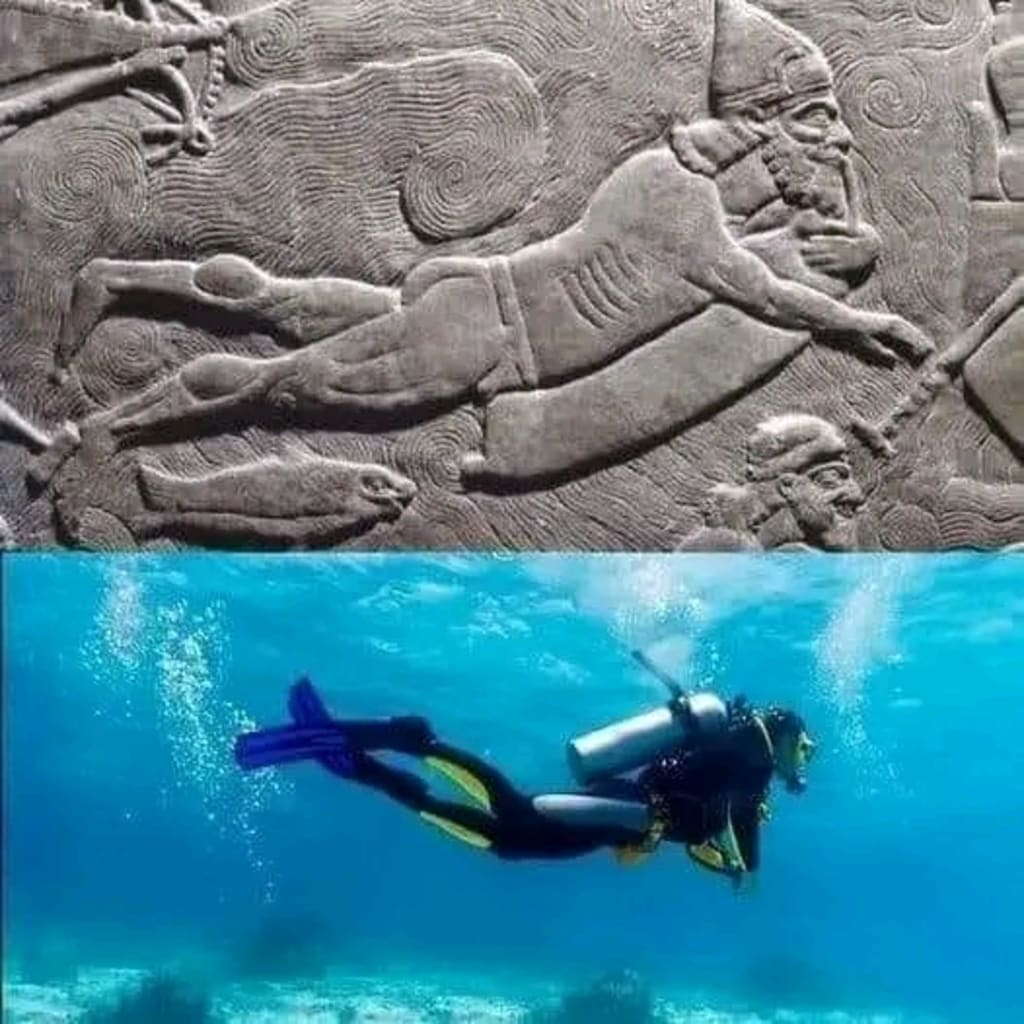
In the annals of ancient history, there are few images as intriguing as that of the Assyrian soldier, depicted 3,000 years ago, diving beneath the water’s surface with the aid of an inflatable goatskin bag. Preserved on a tablet now housed at the British Museum of Antiquities, this depiction offers a remarkable glimpse into the ingenuity and adaptability of Assyrian warriors. This ancient artifact is not only an artistic relic but also a testament to the resourcefulness of early civilizations in overcoming environmental challenges for survival and strategic advantage.
The Tablet: A Window into Assyrian Warfare
The tablet, which dates back to the Assyrian Empire of the first millennium BC, is a rare and invaluable piece of history. It portrays an Assyrian soldier using a flotation device fashioned from the skin of a goat, skillfully navigating under the water. This single image tells a profound story of both military strategy and technological adaptability, qualities that were hallmarks of the Assyrian civilization.
For context, the Assyrian Empire was one of the most powerful and advanced empires of the ancient Near East, known for its remarkable achievements in administration, military strategy, and technological innovation. This civilization flourished in the region that is now Iraq, Syria, and parts of Turkey, reaching its height between the 10th and 7th centuries BC. To defend their empire and expand their territory, Assyrian forces employed advanced strategies and tools, and the use of an inflatable goatskin bag for river crossings is a perfect example of this ingenuity.
Why the Goatskin Bag?
Ancient warfare was often brutal and strategically complex. Armies had to cross rivers and navigate water bodies to reach their destinations or to surprise their enemies. For the Assyrians, who were skilled in siege warfare, conquering water obstacles was essential to ensure their tactical superiority. Inflatable goatskin bags were an innovative solution, allowing soldiers to swim across rivers while remaining buoyant and keeping their weapons dry.
Goatskins, commonly used in the ancient world to store water and wine, were lightweight, durable, and could be easily inflated to create a crude but effective flotation device. The skin would be sewn and sealed, and then filled with air by mouth. Once inflated, the goatskin bag could support a soldier’s weight in the water, enabling him to swim, float, or dive as necessary. This method also allowed soldiers to travel silently and avoid detection, making it especially valuable for surprise attacks or stealth missions.
How the Technique Worked
The soldier would hold onto the goatskin bag while submerging as much of his body as possible to stay hidden from enemies. By keeping only his head above water, he could avoid drawing attention to himself. This technique gave Assyrian soldiers a distinct advantage, allowing them to cross rivers and other water bodies undetected, outmaneuvering their adversaries in ways that were likely unheard of at the time.
In addition to tactical military use, such methods also reflect the broader ingenuity of the Assyrian people. They were pioneers in several fields of science, including engineering, medicine, and hydrology, which gave them a strategic edge in both domestic and military life.
The Significance of the Image
The image of the Assyrian soldier with the goatskin bag is significant on multiple levels. Firstly, it illustrates the military skill and innovative problem-solving of the Assyrians, who managed to overcome logistical obstacles with rudimentary yet effective technologies. Secondly, it provides a fascinating insight into the practical uses of animal products in ancient societies. Goats were an essential resource, not only for food but for tools, clothing, and utility items. The creativity to transform goatskin into a flotation device shows a level of resourcefulness that was crucial to survival and success in the ancient world.
Moreover, this image contributes to our understanding of ancient Assyrian art and culture. It exemplifies how Assyrian artists used bas-relief carving not only to depict mythological and ceremonial themes but to document real-life practices, including military tactics and daily activities. The tablet containing this image is a small part of a larger tradition of Assyrian relief sculptures that portray scenes from everyday life, warfare, and religious rites, offering an invaluable historical record of their society.
Modern Reflections on Ancient Innovation
The ingenuity behind the goatskin flotation device foreshadows the kinds of technological innovations that would follow in later civilizations. Inflatable devices, whether for safety, military use, or recreational purposes, remain essential today, from life vests and rafts to modern diving gear. The Assyrian use of goatskin was an early step in the evolution of aquatic survival tools, showing how necessity drives invention across cultures and epochs.
It’s also remarkable to think that such techniques were refined by cultures in other parts of the world. Similar flotation devices made from animal skins or hollowed logs were found in regions such as Central Asia and the Americas, proving that societies separated by great distances often devised similar solutions to similar challenges. The Assyrian tablet, therefore, also reflects a broader narrative of human innovation and adaptability.
The Legacy of the Assyrian Empire and Its Innovations
Today, as we marvel at the Assyrian soldier’s diving tactic, we are reminded of the Assyrian Empire’s role as a center of ancient innovation. Their contributions to military tactics, urban planning, and engineering remain influential. The Assyrians have left behind a legacy that continues to captivate historians, archaeologists, and visitors to museums around the world.
Standing before this artifact at the British Museum, visitors can’t help but imagine the journeys of those ancient soldiers, gliding through the waters with the aid of their goatskin bags, risking their lives to conquer new lands. The image of the Assyrian diver with his goatskin bag endures as a powerful symbol of human resilience, creativity, and the drive to overcome obstacles—qualities that connect us to the distant past and continue to inspire us today.
In the end, this 3,000-year-old tablet does more than just depict a military tactic; it captures the essence of the Assyrian spirit—bold, inventive, and determined to master their world. The image, though ancient, is timeless in its reminder that human ingenuity knows no bounds.
About the Creator
Keep reading
More stories from Deji Akomolafe and writers in History and other communities.
Echoes of Valor: The Corinthian Helmets of Ancient Olympia
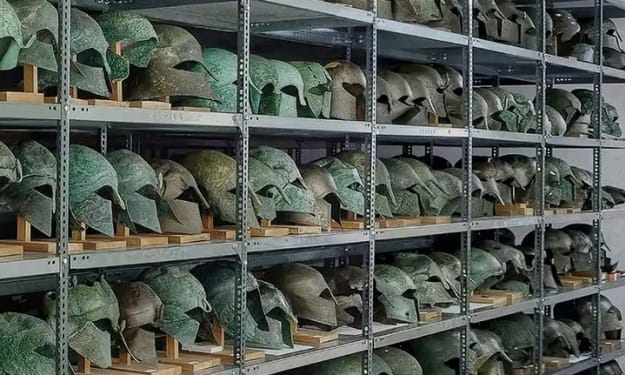
In the heart of Greece, the Museum of Olympia stands as a guardian of history, filled with relics that transport visitors back to a world of ancient legends and battles. Among these treasures lies a mesmerizing collection of Corinthian-style bronze helmets. These stunning pieces are not merely relics; each helmet once shielded the faces of brave hoplites—Greek foot soldiers who were pivotal figures in the warfare of ancient Greece. As you gaze upon these helmets, with their timeless elegance and haunting visors, it’s impossible not to wonder about the lives they once protected, the battles they saw, and the hands that carefully crafted them into enduring symbols of courage.
By Deji Akomolafeabout a year ago in History
The Mughal Princess Who Changed the Image of the Imperial Harem
When people imagine royal harems in medieval empires, they often picture places of luxury, secrecy, and endless indulgence. The Mughal Empire is no exception. For centuries, the Mughal harem has been portrayed as a secluded world of wealth and pleasure where royal women lived hidden lives behind palace walls. However, one remarkable woman challenged this narrow view: Gulbadan Begum, a Mughal princess whose life and writings revealed a very different reality.
By Irshad Abbasi 4 days ago in History



Comments
There are no comments for this story
Be the first to respond and start the conversation.