
Ancient History Meets Modern Convenience: The Roman Road Beneath a McDonald’s in Marino, Italy
Ancient Rome

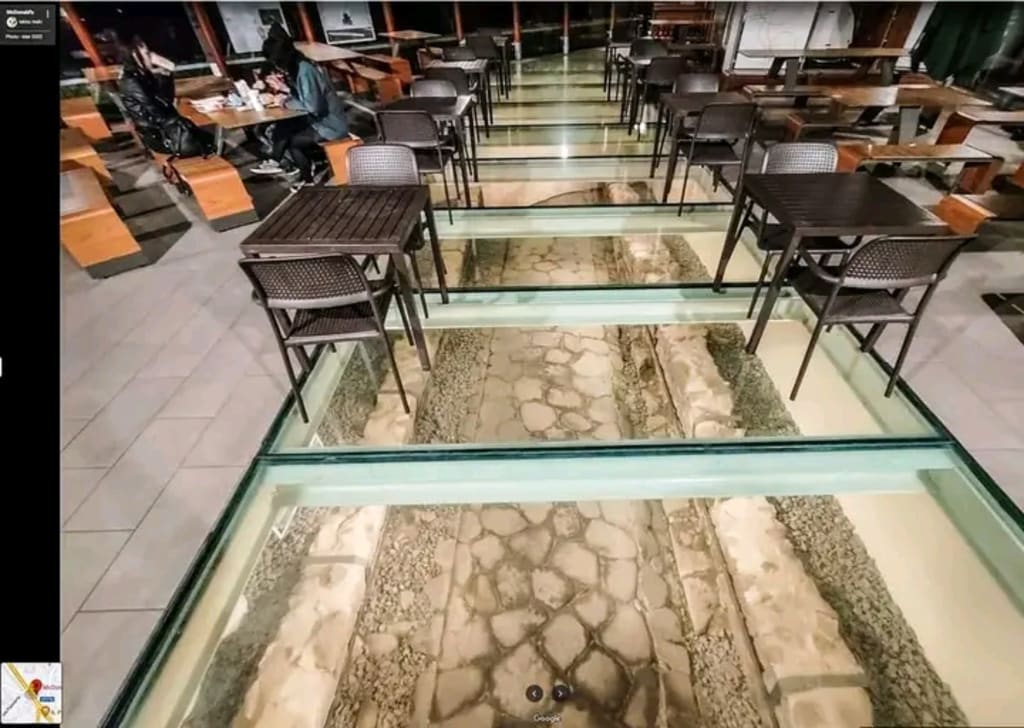
In the small Italian town of Marino, near Rome, history and modernity intersect in a surprising way. During construction work for a new McDonald’s restaurant in 2014, workers uncovered a remarkable archaeological site: a 45-meter-long stretch of an ancient Roman road. This discovery, complete with three skeletons found along the road’s edges, provides a unique glimpse into the daily life of ancient Rome. Today, thanks to an innovative restoration effort, visitors to this McDonald’s can dine with a direct view of the road through a specially designed glass floor.
A Window to the Past
The Roman road, believed to date back to the 2nd century BCE, is an extraordinary find. Roads like these were integral to the Roman Empire, enabling the efficient movement of soldiers, goods, and information across vast distances. This particular stretch of road, discovered beneath Marino, would have connected smaller towns and settlements to Rome, the empire’s bustling heart.
Constructed using large basalt stones fitted together with precision, the road showcases the advanced engineering skills of the Romans. The remains of wheel ruts on the stones further attest to its heavy use over centuries. Alongside the road, three skeletons were discovered, likely of individuals who lived during the time the road was in use. Their presence adds a poignant human element to the archaeological site, serving as a reminder of the lives that unfolded along this ancient route.
The McDonald’s Connection
The discovery of the road posed a challenge for McDonald’s, which had planned to open a new restaurant at the site. Rather than abandoning the project or removing the archaeological remains, McDonald’s Italy decided to embrace the site’s historical significance. The company worked closely with Rome’s Superintendency for Archaeology, Fine Arts, and Landscape to ensure the road’s preservation.
McDonald’s financed the entire restoration process, which included cleaning, repairing, and stabilizing the ancient road. To integrate the site into the restaurant, a glass floor was installed above the road, allowing customers to view the archaeological treasure while dining. This innovative solution not only preserved the road but also made it accessible to the public in an engaging and unexpected setting.
A Unique Dining Experience
Visiting the McDonald’s in Marino today offers a dining experience like no other. The glass floor provides a clear view of the Roman road, complete with its intricate stonework and visible wheel ruts. Informational displays near the site offer insights into the road’s history and significance, blending education with fast food in an unexpected way.
This unique setup has turned the restaurant into a tourist attraction, drawing history enthusiasts and curious visitors from around the world. For many, the juxtaposition of an ancient Roman road with a modern McDonald’s embodies the layers of history that define Italy.
The Importance of Preservation
The project in Marino highlights the value of preserving archaeological sites, even in the face of modern development. Italy, with its rich history and countless archaeological treasures, faces a constant challenge in balancing urban growth with heritage conservation.
McDonald’s decision to fund the restoration and incorporate the road into its restaurant serves as an example of how private companies can contribute to cultural preservation. By embracing the historical significance of the site, McDonald’s not only safeguarded an important piece of history but also created a unique feature that enhances its brand and draws customers.
This approach has set a precedent for how modern development and heritage preservation can coexist. It demonstrates that with creativity and collaboration, ancient treasures can be integrated into contemporary spaces without compromising their integrity.
What the Roman Road Tells Us
Beyond its architectural significance, the Roman road in Marino offers a window into the daily lives of ancient Romans. Roads like these were the lifelines of the empire, facilitating trade, communication, and cultural exchange. They connected people across vast territories, enabling the Roman Empire to thrive for centuries.
The presence of skeletons along the road adds another layer of intrigue. Were these individuals travelers who died along the route? Or were they buried there intentionally, perhaps as part of a ritual or tradition? These questions remain unanswered, sparking curiosity and inviting further study.
A Fusion of Past and Present
The Roman road beneath McDonald’s in Marino symbolizes the fusion of past and present that defines Italy’s cultural landscape. It is a reminder that history often lies just beneath the surface, waiting to be uncovered and appreciated.
For visitors, the site offers a chance to reflect on the enduring legacy of the Roman Empire while enjoying a modern meal. It’s a testament to the resilience of history and the importance of preserving it for future generations.
Conclusion
The discovery of the Roman road in Marino is a story of unexpected intersections—between ancient history and modern commerce, between preservation and progress. By choosing to preserve and showcase the road, McDonald’s has turned its Marino location into more than just a fast-food restaurant; it has become a bridge between eras, inviting visitors to experience history in a new and accessible way.
In a world where development often comes at the expense of cultural heritage, the Roman road beneath McDonald’s stands as a shining example of how the past can coexist with the present. It is a reminder that history is all around us, even in the most unlikely places.
About the Creator
Keep reading
More stories from Deji Akomolafe and writers in History and other communities.
Holborn Viaduct: A Victorian Marvel Then and Now
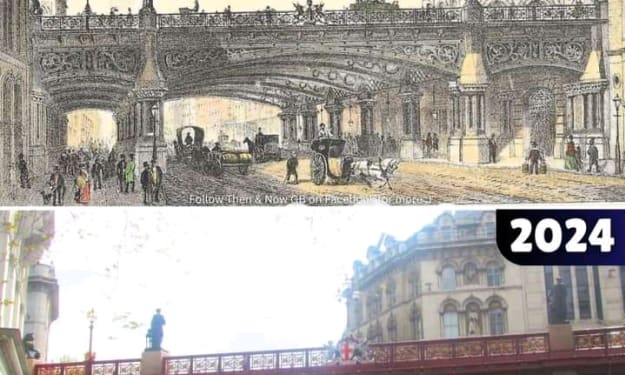
Holborn Viaduct, an iconic example of Victorian engineering and architectural ingenuity, stands as a testament to London’s industrial age. Completed in 1869, this bridge transformed the city’s infrastructure by connecting two bustling areas, Farringdon and Holborn, over the River Fleet. An antique print of the viaduct from 1894 showcases its grandeur during the late 19th century, a time when it was a symbol of progress and innovation. Comparing this historic image to the structure as it exists today reveals the enduring legacy of this remarkable feat of engineering and its significance in London’s evolution.
By Deji Akomolafeabout a year ago in History
Rajendra Chola I and the Conquest of the Ganga: A Monumental Feat in Indian History
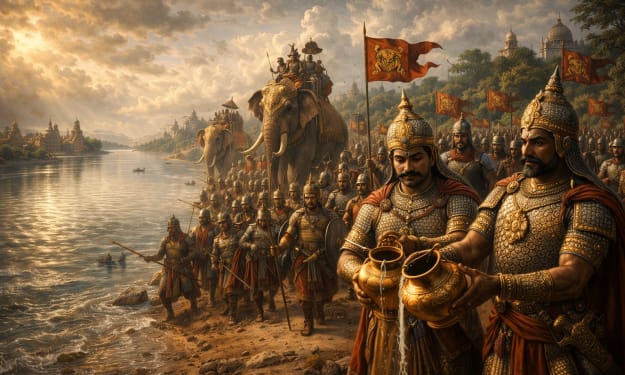
Known as the “Gangaikonda Chola” (the Chola who conquered the Ganga), Rajendra transformed a South Indian maritime empire into a pan-Indian power whose influence stretched from the Indian Ocean to the heart of the subcontinent. This campaign was not merely a military raid but a bold statement of imperial ambition, strategic brilliance, and cultural confidence.
By Say the truth 6 days ago in History


Comments
There are no comments for this story
Be the first to respond and start the conversation.