
Ancient Egypt Unveiled
The Marvels and Mysteries of a Legendary Civilization

Over a span of more than 3,000 years, ancient Egypt emerged as a luminary of power and innovation, its grandeur enduring until Alexander the Great's conquest in the 4th century BC. This fascinating civilization bequeathed us with awe-inspiring monuments and enigmatic mysteries that continue to capture our imagination and curiosity.
The Great Sphinx of Giza, an awe-inspiring monolith carved from a single block of limestone, continues to intrigue historians and tourists alike with its enigmatic smile and weathered visage. Theories abound regarding its origins, with some suggesting that water erosion on its surface hints at a construction timeline far older than previously thought, potentially necessitating a dramatic rewrite of our historical timelines.
In the vibrant city of Alexandria, the Pharos Lighthouse once stood as a beacon for sailors, guiding them safely to harbor for over 1,500 years. This towering structure symbolized Egypt's architectural ingenuity and nautical supremacy. Today, although only ruins remain, its legend endures as a testament to ancient engineering prowess.
Meanwhile, the unfinished obelisk in Aswan bears witness to the immense skill and dedication of Egyptian craftsmen. Intended to be the largest obelisk ever erected, it remains embedded in the bedrock due to a crack that occurred during its construction. This abandoned mammoth of stone offers a captivating glimpse into the scale and ambition of Egypt's monumental projects.
The Khufu Ship, a masterfully constructed 4,500-year-old funerary vessel, showcases ancient Egypt's advanced shipbuilding techniques, notably achieved without the use of nails or metal fastenings. Discovered disassembled in a pit near the Great Pyramid of Giza, the reassembled ship offers valuable insights into ancient maritime practices and the Egyptians' sophisticated woodworking skills.
The Abu Simbel temples, majestically carved into a mountainside overlooking the Nile, stand as a testament to Pharaoh Ramses II’s indomitable power and the technological might of Egyptian engineering. These colossal structures were meticulously relocated in the 1960s to prevent submersion by the rising waters of Lake Nasser, preserving their legacy for future generations.
Egypt’s legacy extends beyond monumental grandeur. The Turin Erotic Papyrus, a richly illustrated document, provides an intimate portrayal of the humor, humanity, and daily life of its ancient people. This provocative scroll suggests that the Egyptians, much like us, possessed a penchant for satire and the lighter side of life.
The pyramids, especially the iconic Great Pyramid of Giza, remain the ultimate symbol of Egypt’s architectural ambition and engineering genius. The Great Pyramid, one of the Seven Wonders of the Ancient World, continues to amaze with its precise alignment, massive stone blocks, and the mystery of its construction techniques.
The discovery of King Tutankhamun’s tomb
by Howard Carter in 1922 unveiled a treasure trove of artifacts, offering a vivid window into the opulent lifestyle, intricate craftsmanship, and profound religious beliefs of the ancient Egyptians. The tomb's dazzling array of golden treasures and well-preserved relics continues to captivate the global imagination.
The Rosetta Stone, a granodiorite stele inscribed with the same text in three scripts—hieroglyphic, demotic, and Greek—proved to be the key to deciphering Egyptian hieroglyphics. Discovered in 1799, it allowed scholars to unlock the secrets of ancient Egyptian writing, providing unprecedented insights into their culture, language, and governance.
Ancient Egypt was not merely a land of pharaohs and pyramids; it was a civilization of dreamers, innovators, and pioneers who left behind a legacy of wonders that continues to inspire awe and wonder today. Their enduring legacy is a testament to their creativity, resilience, and lasting impact on the world.
Amidst these grand tales of kings and monuments, let us not overlook the agricultural prowess that sustained this civilization. The fertile lands along the Nile, rejuvenated annually by generous floods, allowed Egyptian farmers to cultivate bountiful harvests. Crops such as wheat, barley, and flax thrived, providing sustenance and resources not only for Egypt but also as valuable trade goods. Moreover, Egyptians were early pioneers in irrigation techniques, devising shadoofs and basin irrigation systems that showcased their ingenuity in managing water resources effectively. This agricultural foundation was pivotal to Egypt's prosperity and enduring legacy.
About the Creator
Keep reading
More stories from SimplyWrite and writers in History and other communities.
What If Earth Decided to Hit the Gym and Bulk Up?
So, let your imagination run wild as we explore the unexpected twists and turns of a planet that's flexing its newfound might! The Earth we know, now transformed into a super-Earth, brings with it a plethora of intriguing possibilities, each more captivating than the last.
By SimplyWriteabout a year ago in Earth
The Penguin Who Walked Away: Not a Tragedy, but a Choice.
Every once in a while, the internet turns a moment from nature into a metaphor for human pain. Recently, a video of a penguin walking away from its colony went viral, framed as a heartbreaking image of abandonment, lost love, or emotional defeat. Millions watched it through a romantic lens, calling it tragic and cruel.
By Voxwrite ✍️ a day ago in History
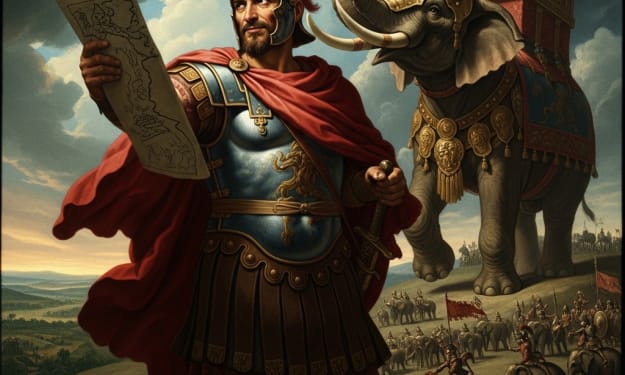
Hannibal Barca: Tactical Genius Beyond Politics
History often favors the victors, but strategy remembers the exceptional. Few commanders embody this truth more clearly than Hannibal Barca. Though he ultimately lost the Second Punic War, Hannibal remains one of the most studied military minds of all time. His genius did not lie in ruling empires or shaping laws, but in something purer and rarer—battlefield intelligence unchained by politics. Hannibal was not a builder of states. He was a master of movement, deception, and human psychology.
By Fred Bradforda day ago in History


Comments (1)
Great story! Fascinating