
An Evening with Alison Weir
The bestselling historical fiction author talks about her book Henry VIII: The Heart and the Crown


Is there an historical British monarch who is more internationally recognised than Henry VIII? I doubt it. Known ostensibly for having an abundance of wives, some of whom he decided he no longer liked and so decreed that they should be executed, Henry VIII has become instilled in our consciousness as an erratic king, of excess and impulse and salacious appetites who defied the Pope and liked upsetting monks.
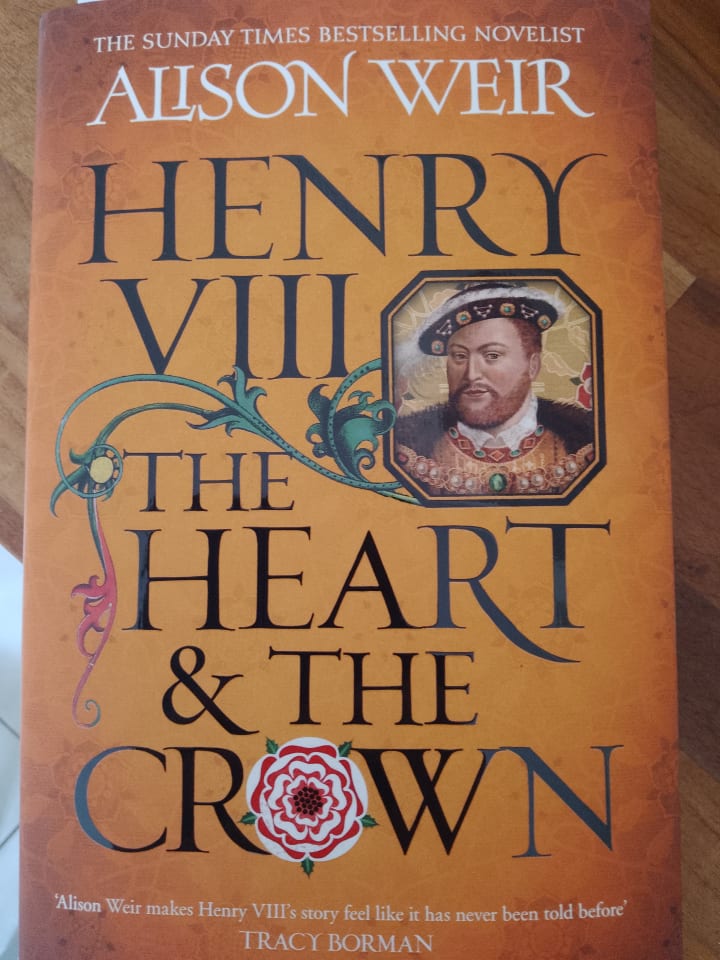
Alison Weir, New York Times bestselling author, is trying to undermine this caricature-like image of the king with meticulous research and vivid fictional writing in her novel Henry VIII: The Heart and the Crown, and by creating this debunking of the myth, wants to present a more rounded human image of the man by looking at his past, his influences and his motives. She specifically mentioned his depiction by Charles Laughton which did much to reinforce the idea of him as a man of appetites which governed him more than his wisdom. In her book, she looks more at his character as a man who became monarch rather than just a figurehead king.
On Friday evening, 30 June 2023 , I was privileged to be able to attend an event at The Goods Shed where Alison was presenting a talk where she discussed Henry VIII and her book and why she had chosen to write something from Henry's point of view. Having already published numerous books on the Tudor period as well as a history of Henry himself, Alison was keen to write a novel which was sympathetic to Henry, looking at his past before he became king as well as his reign. She talked about relations within his family, most especially his relationships with his mother and father and how these may have shaped him. He lost his mother when he just 11 years old and his father was Henry VII, the king who killed Richard III to end The Wars of the Roses, a man who knew how tenuous the title of king could be if support was not found amongst the nobles around him. Losing his mother at an impressionable age was bound to have affected young Henry and knowing that despite the bold way his father gained the throne, there was a high chance that someone new would contest it, can have done nothing to relieve insecurities.
Weir was also keen to talk about Henry's pursuits and his physicality and what he loved to do, as well as his more romantic side, writing poetry.
Inevitably, she talked about his wives and his relationships with them. Alison has already published fictional accounts of the six wives individually, presenting their view of their life with Henry but he can't be discussed without mention of the six women who he chose to marry. The most famous of these, of course, is Anne Boleyn, mother of Elizabeth I, another famous Tudor monarch and distinctive historical figure who was ordered to be beheaded by Henry, at the Tower of London.
Weir skimmed over his marriages in turn, mentioning them in the context of the order of their joining with Henry and heirs produced as well as the reasons that they were chosen as suitable Queens for him.
Henry's reign not only produced controversy in terms of his marriages but there are other distinctive figures who appear and have become part of the rich tapestry of that period: names like Cardinal Wolsey, Thomas More and, of course, Thomas Cromwell, whose association with Henry was brought alive so consummately by the late Hilary Mantel in Wolf Hall.
The evening was designed to provide a taster of what Weir has included in the book and to tempt the audience into buying it: and I was tempted by it. The Tudors have always held a fascination for me, more than any other period of history for many reasons, not least because of Henry and his many wives and his keenness for killing them. But also because Henry VII, Henry VIII's father, was born in Pembroke Castle which dominates the entry to my home town in Wales. Add to that the fact that I went to university in Leicester, the city where Richard III's body was found not too long ago after much searching, and I feel linked to this period of Britain's history more than most others.
It was a very insightful night and the author fielded questions after the presentation from keen audience members about her inspirations, her theories about Henry and also, the publishing process, providing some interesting behind-the-scenes details about choosing titles for different countries: their expectations are different and from a marketing standpoint, the title can prevent a potential reader from being tempted. A book is a product after all.
Finally, once questions were done, we were given a chance to buy copies of her books and she very obligingly signed them.
I obviously bought a copy of the book in question and dutifully, asked her to sign it.

It was, all in all, a great night. I would thoroughly recommend seeing authors do readings if you can. These nights give you, as a reader, a glimpse into the process of writing a book as well as the amount of research needed to create a book of breadth, that contains the history but also brings the characters in question to life in the case of historical fiction.
About the Creator
Reader insights
Outstanding
Excellent work. Looking forward to reading more!
Top insights
Compelling and original writing
Creative use of language & vocab
Easy to read and follow
Well-structured & engaging content
Excellent storytelling
Original narrative & well developed characters
Expert insights and opinions
Arguments were carefully researched and presented
Eye opening
Niche topic & fresh perspectives
Heartfelt and relatable
The story invoked strong personal emotions
Masterful proofreading
Zero grammar & spelling mistakes
On-point and relevant
Writing reflected the title & theme
Keep reading
More stories from Rachel Deeming and writers in History and other communities.
Reflections on a trip away
I had to deliver leaflets in the rain today. It was miserable. I could feel my clothes getting steadily more wet, my skin recoiling from the cold dampness of the material as it clung. I endured it. There was a job to be done, a deadline to be met.
By Rachel Deeming4 months ago in History
A 4,400-Year-Old Priestess Tomb Discovered in Egypt
Archaeologists in Egypt have uncovered the remarkable tomb of a priestess that dates back approximately 4,400 years, offering new insight into religion, culture, and daily life during the height of the ancient Egyptian civilization. The discovery was made near the famous pyramids on the Giza Plateau, one of the most important archaeological areas in the world. Experts believe the tomb belonged to a high-ranking priestess named Hetpet, who lived during Egypt’s Fifth Dynasty, around 2400 BC. 
By Irshad Abbasi 3 days ago in History
Bomb Scare
It was 2027, and the world never thought it would happen. A missle hit the United States, but it wasn't where they had anticipated. A little town in the northeast was hit by a missile strike, they didn't know why, and they didn't know exactly where it hit, but they did know it was a coastal community, somewhere between Maine and Delaware.
By Gregory Payton6 days ago in Fiction


Comments (4)
"I appreciate her thorough research and the way she delved into the reasons behind his transformation. As a true crime enthusiast, I'm particularly drawn to understanding the background of perpetrators, not to excuse their actions, but to gain insight. I'm truly pleased that she took this approach!"
Enjoy your book review. GB certainly have a lot of Royal history with skeletons in their closets , literally. I also subscribe 🥰
I like that she's done research and wrote about why he became the way he was. I'm into true crime and my favourite part is knowing the perpetrators childhood. Not to justify what they did but to understand. I'm really happy she did this!
Weir's ability to intertwine history with engaging storytelling makes her books appealing to a wide range of readers interested in the Tudor period.