


The history of America is a complex and fascinating story that spans over two centuries. From the earliest Native American civilizations to the present day, America has evolved into a powerful and diverse nation, shaped by the contributions of countless individuals and groups.
Pre-Columbian Era (before 1492)
The first human habitation in the Americas dates back to around 15,000 years ago, when Native American tribes migrated from Asia across the Bering Strait. Over time, these tribes developed complex societies, cultures, and civilizations, such as the Inca, Aztec, and Mayan empires. The Native Americans had a significant impact on the environment, developing agriculture, hunting, and gathering practices that allowed them to thrive in a variety of ecosystems.
European Exploration and Colonization (1492-1776)
In 1492, Christopher Columbus, sponsored by the Spanish monarchs, arrived in the Caribbean, marking the beginning of European exploration and colonization in the Americas. Over the next several decades, European powers, including Spain, Portugal, France, and England, established colonies and trading posts throughout the Americas. The Spanish established the first permanent settlement in what is now the United States, St. Augustine, Florida, in 1565. The English established Jamestown, Virginia, in 1607, which became the first successful English colony.
American Revolution (1775-1783)
In the mid-18th century, tensions between the British government and the American colonies began to rise, as the colonies sought greater autonomy and representation in government. The American Revolution, sparked by the Boston Tea Party in 1773, was a pivotal moment in American history, as the colonies declared independence from Britain and established the United States of America. The Revolution was led by figures such as George Washington, Thomas Jefferson, and Benjamin Franklin, who drafted the Declaration of Independence in 1776.
Early National Period (1783-1828)
Following the Revolution, the United States experienced a period of rapid growth and expansion. The Constitution, drafted in 1787, established a federal system of government and enshrined principles such as federalism, individual rights, and the separation of powers. The Louisiana Purchase of 1803, in which the United States acquired a vast territory from France, doubled the size of the country and set the stage for westward expansion. The War of 1812, fought between the United States and Britain, marked a significant turning point in American history, as the country emerged victorious and asserted its sovereignty.
Antebellum Era (1828-1861)
The antebellum era, which spanned from the late 1820s to the eve of the Civil War, was marked by significant social, economic, and cultural changes. The Industrial Revolution, which began in the early 19th century, transformed the American economy, as new technologies and manufacturing processes enabled mass production and the growth of cities. The abolitionist movement, which sought to end slavery, gained momentum during this period, with figures such as William Lloyd Garrison and Frederick Douglass advocating for the end of slavery. The Mexican-American War (1846-1848) resulted in the United States acquiring a significant amount of new territory, including present-day California, Arizona, and New Mexico.
Civil War and Reconstruction (1861-1877)
The Civil War, fought between the Union (the northern states) and the Confederacy (the southern states), was a devastating conflict that lasted from 1861 to 1865. The war was sparked by the secession of 11 southern states, which sought to preserve and expand slavery. The Union, led by President Abraham Lincoln, ultimately prevailed, and the 13th Amendment to the Constitution, ratified in 1865, abolished slavery throughout the United States. The Reconstruction era, which followed the war, saw an attempt to rebuild and redefine the South, with the passage of the 14th and 15th Amendments, which granted citizenship and voting rights to African American men.
Industrialization and Imperialism (1878-1914)
The late 19th and early 20th centuries saw significant economic and technological changes in the United States. The Industrial Revolution, which had begun in the early 19th century, continued to transform the American economy, as new technologies and manufacturing processes enabled mass production and the growth of cities. The United States also emerged as a major world power, with the Spanish-American War (1898) marking the beginning of American imperialism. The construction of the Panama Canal, completed in 1914, further solidified American influence in the region.
World War I and the Roaring Twenties (1914-1929)
The United States entered World War I in 1917, after Germany resumed unrestricted submarine warfare and sank several American ships. The war marked a significant turning point in American history, as the country emerged as a major world power and began to play a more prominent role in international affairs. The Roaring Twenties, which followed the war, were characterized by significant social and cultural changes, including the rise of jazz, the Harlem Renaissance, and the women's suffrage movement.
Great Depression and World War II (1929-1945)
The Great Depression, which began in 1929, was a devastating economic downturn that lasted for over a decade. The New Deal, introduced by President Franklin D. Roosevelt in 1933, provided a series of programs and policies aimed at alleviating suffering and stimulating economic recovery. The United States entered World War II in 1941, after the Japanese attack on Pearl Harbor, and played a significant role in the Allied victory. The war marked a significant turning point in American history, as the country emerged as a superpower and began to play a more prominent role in international affairs.
Cold War and Civil Rights Movement (1945-1989)
The Cold War, which began in the late 1940s, was a period of tension and competition between the United States and the Soviet Union. The Civil Rights Movement, which gained momentum in the 1950s and 1960s, sought to end racial segregation and discrimination in the United States. Figures such as Martin Luther King Jr., Rosa Parks, and Malcolm X played significant roles in the movement, which resulted in significant legislative and social changes, including the passage of the Civil Rights Act of 1964 and the Voting Rights Act of 1965.
Modern Era (1990-Present)
The modern era has seen significant changes in American society and politics. The fall of the Soviet Union in 1991 marked the end of the Cold War, and the United States emerged as the world's sole superpower. The September 11 attacks in 2001 marked a significant turning point in American history, as the country launched a global war on terror and became increasingly involved in international conflicts. The election of Barack Obama in 2008 marked a significant milestone in American history, as the country elected its first African American president. The ongoing debate over issues such as immigration, healthcare, and climate change continues to shape American politics and society.
Key Dates:
1. **1492**: Christopher Columbus arrives in the Caribbean.
2. **1565**: The Spanish establish the first permanent settlement in what is now the United States, St. Augustine, Florida.
3. **1607**: The English establish Jamestown, Virginia, the first successful English colony.
4. **1775**: The American Revolution begins.
5. **1776**: The Declaration of Independence is signed.
6. **1787**: The Constitution is drafted.
7. **1803**: The Louisiana Purchase doubles the size of the United States.
8. **1812**: The War of 1812 is fought between the United States and Britain.
9. **1828**: The antebellum era begins.
10. **1846**: The Mexican-American War results in the United States acquiring significant new territory.
11. **1861**: The Civil War begins.
12. **1865**: The 13th Amendment abolishes slavery.
13. **1877**: The Reconstruction era ends.
14. **1898**: The Spanish-American War marks the beginning of American imperialism.
15. **1914**: The Panama Canal is completed.
16. **1917**: The United States enters World War I.
17. **1929**: The Great Depression begins.
18. **1941**: The United States enters World War II.
19. **1945**: World War II ends.
20. **1964**: The Civil Rights Act is passed.
21. **1989**: The Cold War ends.
22. **1991**: The Soviet Union falls.
23. **2001**: The September 11 attacks occur.
24. **2008**: Barack Obama is elected president.
The history of America is a complex and multifaceted story that continues to shape the country today. From the earliest Native American civilizations to the present day, America has evolved into a powerful and diverse nation, marked by periods of significant growth, conflict, and transformation.
About the Creator
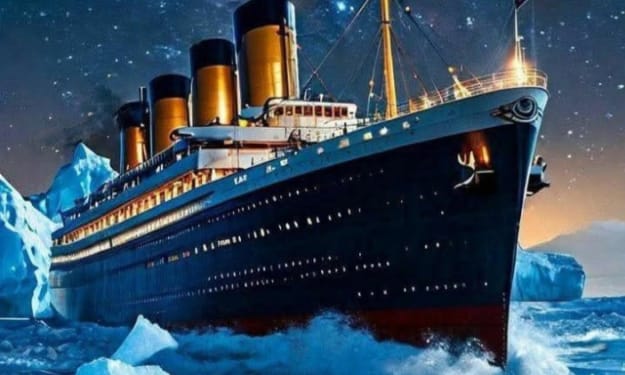
The Titanic Mystery: Secrets Beneath the Frozen Sea
On the night of April 14, 1912, the RMS Titanic sailed calmly through the dark waters of the North Atlantic, carrying more than 2,200 souls and the dreams of a modern world that believed it had conquered nature. Labeled “unsinkable,” the Titanic was the pride of human engineering. Yet before dawn broke, the great ship lay shattered beneath miles of icy ocean. More than a century later, the Titanic remains not just a tragedy—but a mystery filled with unanswered questions.
By The best writer about 6 hours ago in History
Where's the Glory?
In breaking news, rehabilitated Republican Senator Johnnie Johnson (Pronouns: HE, HIM, HIS) called a press conference from the Men’s room of the New Orleans Louis Armstrong International Airport, Concourse B, across from the Ignatius Reilly’s Lucky Dog stand. The Senator had just returned from a sexual reorientation rehabilitation program in Memphis, TN after being publically disgraced at a Buckee’s Truckstop restroom soliciting sex from an undercover cop three months ago. He is a founding member of the Reformed Christians for Christ, a conservative, pro-family and ex-gay advocacy group. In the spirit of being reborn, Senator Johnson invited reporters to marvel at his plans for a major remodeling of airport bathrooms.
By Cathy Schieffelin7 days ago in Humor



Comments
There are no comments for this story
Be the first to respond and start the conversation.