
Alexander the Great: The Conqueror of Worlds
How a Young Macedonian King Changed the Face of the Ancient World in Just Over a Decade
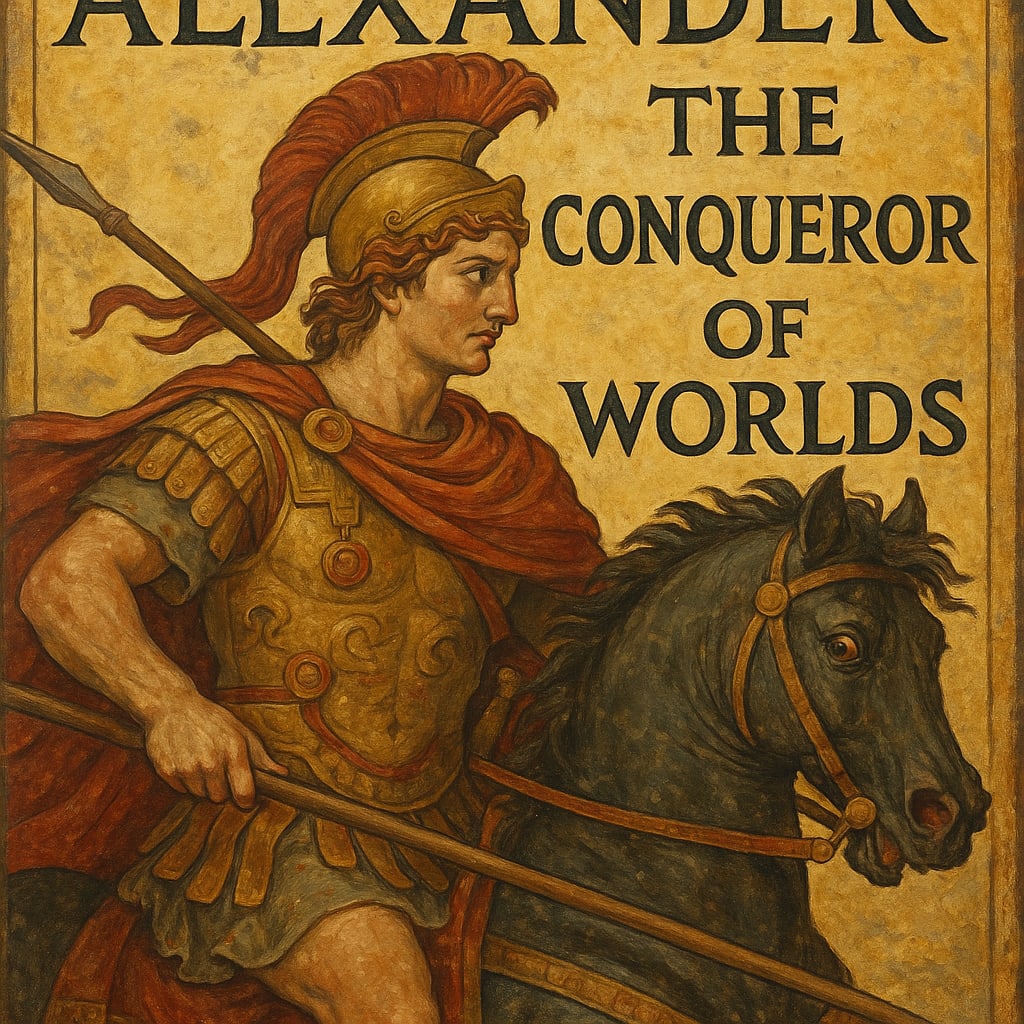
When Alexander III of Macedon ascended the throne in 336 BCE, few could have predicted that the young man—just 20 years old—would go on to become one of the most legendary military leaders in history. Known to the world as Alexander the Great, his ambition, charisma, and tactical genius allowed him to conquer one of the largest empires the ancient world had ever seen. By the time of his death at the age of 32, Alexander had stretched the boundaries of his empire from Greece to India, forever altering the political, cultural, and economic fabric of the known world.
Early Life and Education
Alexander was born in 356 BCE in Pella, the capital of ancient Macedonia. He was the son of King Philip II, a brilliant strategist who transformed Macedonia into a regional power, and Queen Olympias, a fiercely intelligent and ambitious woman who ensured her son believed he was destined for greatness.
One of the most defining aspects of Alexander's early life was his education under the great philosopher Aristotle. From Aristotle, Alexander learned philosophy, science, literature, and ethics—an education that would later influence his leadership style. But he also inherited a warrior's spirit from his father, watching and learning as Philip unified Greece under Macedonian rule through diplomacy and war.
Accession to Power and Consolidation
When King Philip II was assassinated in 336 BCE, Alexander swiftly moved to secure his position as king. Despite his youth, he quickly crushed internal revolts and reasserted Macedonian dominance over Greece. In 334 BCE, he launched his most ambitious campaign: a full-scale invasion of the Persian Empire, then the most powerful empire in the world.
Conquest of the Persian Empire
Alexander’s first major victory came at the Battle of Granicus in Asia Minor, where he decisively defeated the Persian satraps (governors). This victory opened the gateway into the Persian heartland. He followed this with an even more impressive win at the Battle of Issus in 333 BCE, where he defeated the Persian king Darius III despite being heavily outnumbered.
His strategic brilliance was further showcased during the Siege of Tyre in 332 BCE, where Alexander built a causeway to reach the island city, eventually taking it after a brutal seven-month siege. He then marched into Egypt, where he was welcomed as a liberator and founded the city of Alexandria, one of over 20 cities he would name after himself.
In 331 BCE, Alexander delivered the final blow to the Persian Empire at the Battle of Gaugamela, a masterclass in military tactics. With the defeat and eventual death of Darius III, Alexander declared himself King of Asia, effectively becoming ruler of the vast Persian Empire.
The Eastern Campaign and India
Not content with ruling Persia, Alexander pushed further east. His army crossed the Hindu Kush into modern-day Afghanistan and Pakistan, battling fiercely resistant tribes and local rulers. In 326 BCE, he fought the Battle of the Hydaspes River against King Porus, a powerful Indian ruler with war elephants. Despite the unfamiliar terrain and enemy tactics, Alexander emerged victorious and impressed by Porus’ bravery, reinstated him as a local ruler.
However, this campaign marked a turning point. His weary troops, exhausted and longing for home, refused to march further into India. Faced with mutiny, Alexander reluctantly turned back.
Return and Death
On the return journey, Alexander continued to consolidate power and govern newly acquired territories, often by installing loyal Macedonian governors. He also began plans for further exploration and integration of his empire. But in 323 BCE, shortly after arriving in Babylon, Alexander fell ill and died under mysterious circumstances. He was only 32 years old.
His sudden death left a power vacuum, and his vast empire quickly fractured among his generals—known as the Diadochi—who carved out their own kingdoms, leading to centuries of conflict.
Legacy
Despite the brevity of his reign, Alexander’s legacy is vast and enduring. He spread Hellenistic culture—a blend of Greek, Persian, Egyptian, and Indian influences—across the known world. Cities he founded became major cultural and economic centers, with Alexandria in Egypt becoming a renowned hub of learning and trade.
His campaigns also opened trade routes between East and West and allowed for a cross-pollination of ideas, religions, and technologies. Militarily, his strategies are still studied in modern military academies. Personally, his charismatic leadership, bold decision-making, and insatiable curiosity continue to inspire leaders and historians alike.
Though his empire did not survive intact, Alexander the Great remains a timeless symbol of ambition, innovation, and conquest. In just twelve years, he changed the course of history—an accomplishment that few, if any, have matched.
About the Creator
Keep reading
More stories from Anwar Jamil and writers in History and other communities.
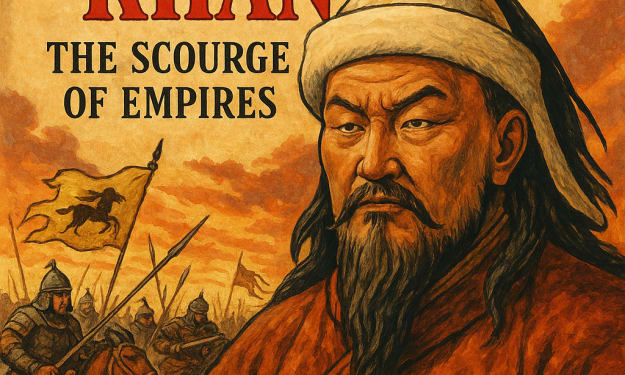
Genghis Khan: The Scourge of Empires
In the early 13th century, a man from the steppes of Mongolia rose from obscurity to become one of the most feared and successful military leaders the world has ever known. Genghis Khan, born as Temüjin, was not born into power or privilege. Instead, through a blend of charisma, strategy, and ruthlessness, he united the fractured Mongol tribes and launched a series of conquests that would reshape the political landscape of Asia and Europe. By the time of his death in 1227, he had laid the foundation of the Mongol Empire, the largest contiguous land empire in human history, spanning over 24 million square kilometers.
By Anwar Jamil9 months ago in History
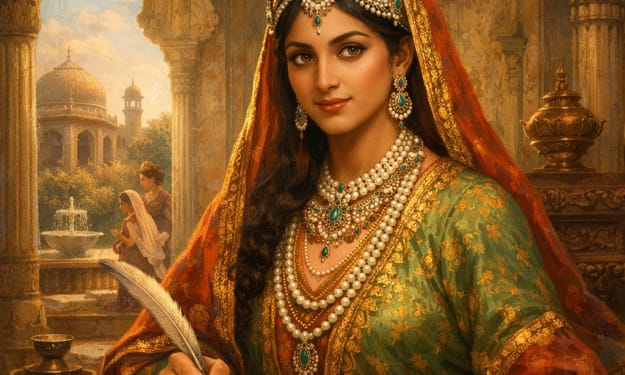
The Mughal Princess Who Changed the Image of the Imperial Harem
When people imagine royal harems in medieval empires, they often picture places of luxury, secrecy, and endless indulgence. The Mughal Empire is no exception. For centuries, the Mughal harem has been portrayed as a secluded world of wealth and pleasure where royal women lived hidden lives behind palace walls. However, one remarkable woman challenged this narrow view: Gulbadan Begum, a Mughal princess whose life and writings revealed a very different reality.
By Irshad Abbasi about 15 hours ago in History


Comments
There are no comments for this story
Be the first to respond and start the conversation.