
Akhenaten: The Mysteries of Religious Revolution
Egypt

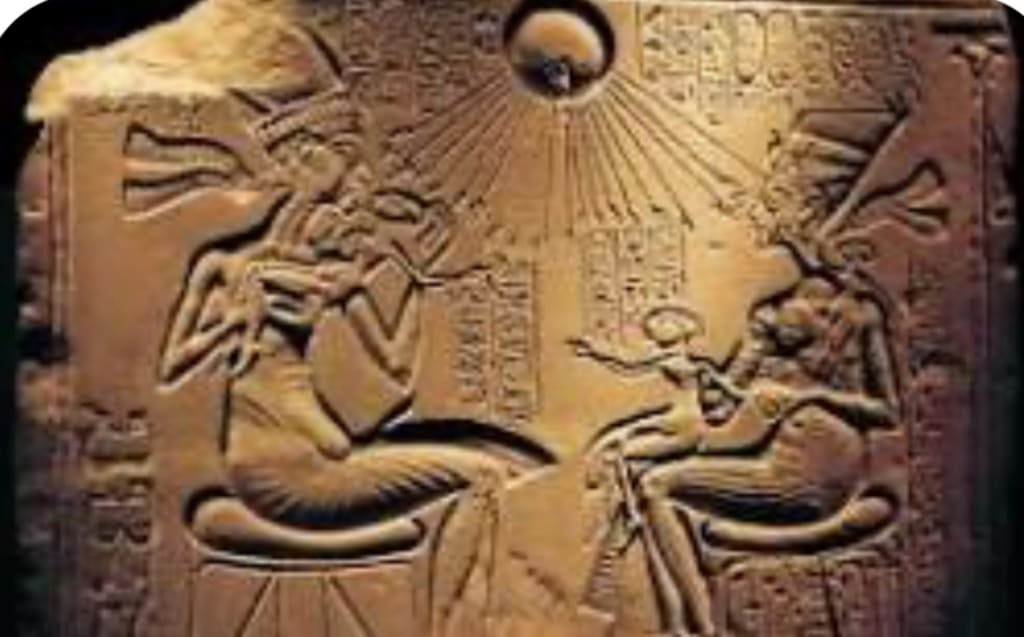
The 16 year period when Pharaoh Akhenaten banished the entire pantheon of gods which had been honored, worshipped and prayed to for over 2,000 years, and fired all the thousands of priests and shut down their temples, destroyed the Egyptian economy and nearly destroyed the country. enemies were preparing to pounce...but then he died.
Pharaoh Akhenaten was poisoned -- either by his wife, Nefertiti, or his senior advisor, Ay, who assumed the role of chief advisor to the heir Tutankhaten (who changed has name to Tutankhamun after his father's death) - he was Akhenaten's son, who only lasted a few years and also died on undetermined causes....succeeded by Ay. Or Pharaoh Akhenaten may have been killed by (or under instructions of) General Horemheb, who in turn succeeded Ay when he, in turn, mysteriously died after a short reign of a couple years. (Maybe by all three act together to save Egypt.) King Tut and Ay, supported by Horemheb, did away with Akhenaten's sole god, the Aten (the actual sun's disk), and restored all the old gods, temples, priests, and the system that had worked for more than 2 millennia. That's why King Tut changed his name from Tutankhamen to Tutankhamen. Why did Akhenaten try monotheism? Possibly several reasons. First, the priests were getting too powerful and too rich and may have been perceived as a threat. Akhenaten's father, Amenhotep III and his wife queen Tye, thought so and may have planted the seed of a temporary shift to regain control. But he died of bad teeth (common in ancient Egypt because of the sand in their bread from milling.) Second, Akhenaten's odd shape and deformities have caused some to speculate that he may have had a vitamin D deficiency, and thus may have felt much better in the sunlight...we know he began calling the Aten (the actual sun) his 'father.' (Not unlike Jesus relating himself to God as son of God.). Third, Akhenaten established that he was the only one who could communicate directly with his father, the sun, giving him extraordinary control that hitherto has been the role of the priests. The approximately 30 years between Pharaoh Amenhotep and Pharaoh Horemheb were years of turmoil, and Horemheb did his best to erase all memory of Akhenaten, , Tutankhamun, Smenkare (King Tut's brother ? and short lived successor) and Ay. To history's benefit, many of the wall carvings and hieroglyphs torn down were use as fill for other structures, and as discovered over the past 100 years, along with the discovery of the unknown King Tut's tomb and treasures, have enabled archeologists and Egyptologists to piece together a truly tumultuous time.
the long course of Egyptian history, few figures have been as polarizing as Akhenaten. The period surrounding this Egyptian king’s reign was characterized by social, political and religious upheaval – the likes of which few cultures ever experience. In just under two decades on the throne, Akhenaten imposed new aspects of Egyptian religion, overhauled its royal artistic style, moved Egypt’s capital to a previously unoccupied site, implemented a new form of architecture and attempted to obliterate the names and images of some of Egypt’s traditional gods. It is in part due to the tumultuous nature of Akhenaten’s tenure that this era in Egyptian history, known as the Amarna period, has received so much attention from scholars and the public.
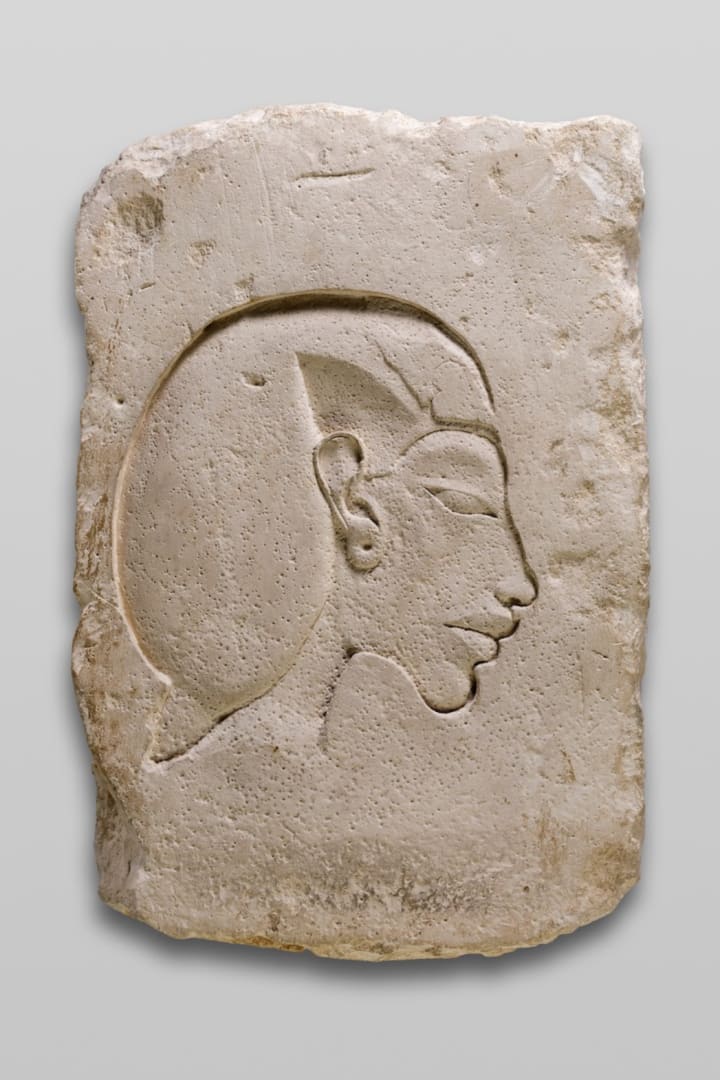
Akhenaten became best known to modern scholars for the new religion he created that centered on the Aten. In Akhenaten’s new religion, this figure generally came to be represented as a sun disk and is best understood as the light produced by the sun itself. The king ascended the throne under his birth name, Amenhotep IV, but in his fifth regnal year, he changed his name to one that better reflected his religious ideas (Amenhotep = “Amun is satisfied,” Akhenaten = “Effective for Aten”). Shortly after this first significant step, Akhenaten initiated a series of changes in Egyptian religion, art and writing that appeared to coincide with the jubilees of his deified father, Amenhotep III, and the Aten.
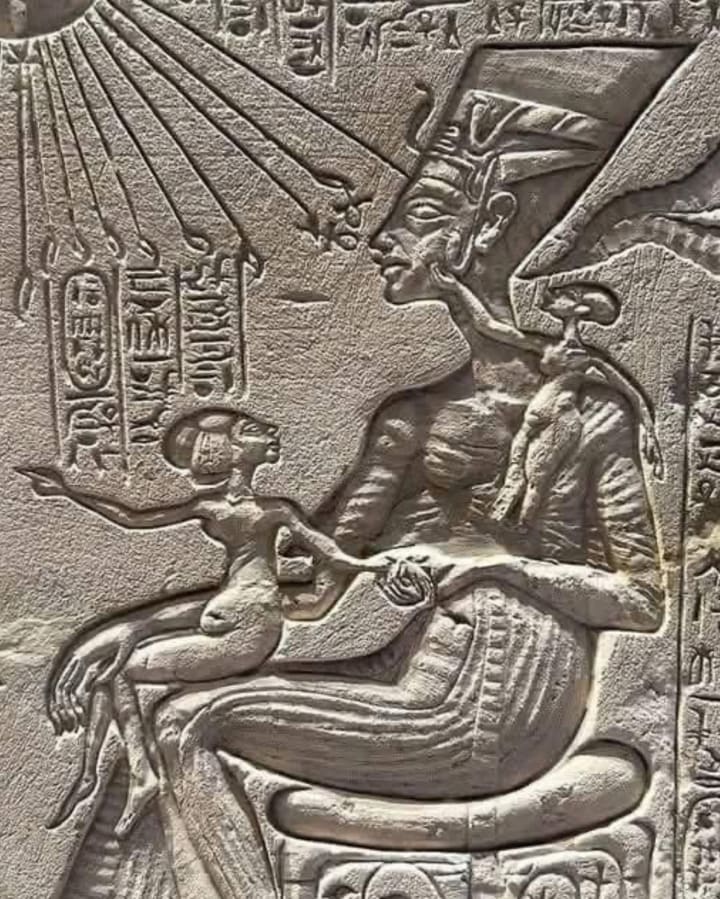
What, then, was this new religion that motivated Akhenaten to upend so many elements of Egyptian society? The answers are rooted in uncertainties, leading Egyptologists to long debate the nature of Akhenaten’s transformation. Scholars have argued in favor of monotheism, henotheism, agnosticism and almost everything in between. What is certain, though, is this new religion elevated the Aten to the position of state deity and centered largely on its worship. Akhenaten further reshaped Egypt’s religious sphere through the persecution of some traditional gods, most notably Amun – Egypt’s state deity for much of the 18th dynasty. Sometime around his fourth regnal year, Akhenaten even dispatched agents to erase the names and images of certain gods from existing texts and monuments.
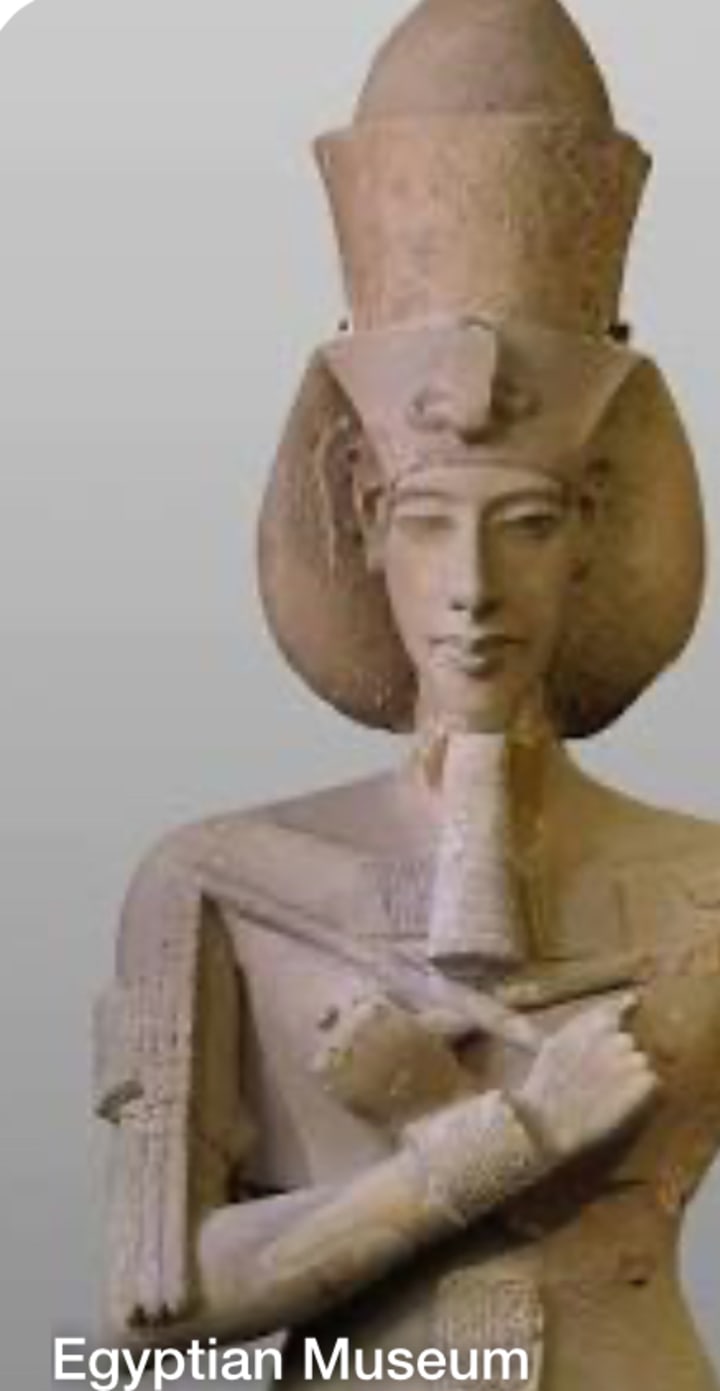
Akhenaten’s new approach to religion manifested itself in other facets of Egyptian culture, most notably the artistic sphere. The first works commissioned by the king appeared in the traditional Theban style, employed by nearly every 18th dynasty pharaoh preceding him. However, as he implemented new religious ideas, royal art evolved to reflect the concepts of Atenism. The most striking changes are seen in the appearance of the royal family. Heads became larger than in the traditional style and were supported by elongated and slender necks. The royal family took on a more androgynous appearance that sometimes even obscured the difference between Akhenaten and Queen Nefertiti. Their faces were characterized by large lips, long noses and squinting eyes, and their bodies displayed narrow shoulders and waists, small and somewhat concave torsos and large thighs, buttocks and bellies.
These steps toward cultural revolution culminated in Akhenaten’s decision to move Egypt’s capital from Thebes to a previously unoccupied site he named Akhetaten (present-day Tell el Amarna), meaning “the place where the Aten becomes effective.” In year five of Akhenaten’s reign he contended that he “discovered” the location of the new royal city. The king proclaimed that the Aten had manifested itself for the first time on the site and that the Aten had chosen this site for the king alone. Armana also seems to have been chosen because the cliffs that frame the new city resembled the Axt symbol, meaning “horizon.” In order to quickly construct the city, smaller building blocks, called talatat, were introduced that were easier for unskilled laborers to manage. Most of the township and administration buildings were completed roughly in three years.
The end of Akhenaten’s reign is murky. The king most likely died during his 17th regnal year, as this is the highest date attested for him. But uncertainties surround his demise. First, Akhenaten’s cause of death is unknown largely because it is unclear whether his remains have ever been located. The royal tomb intended for Akhenaten at Amarna did not contain a royal burial, which prompts the question of what happened to the body. Several scholars have suggested that a skeleton found in tomb KV55 in the Valley of the Kings could belong to Akhenaten, because the tomb contained numerous grave goods (including the coffin in which the remains were found) belonging to Akhenaten and other Amarna period figures. However, like many topics pertaining to Akhenaten, this issue remains the subject of much scholarly debate.
And we think the political turmoil we in the U.S. now is bad, - it has nothing on what happened back then. It must have been an amazing time to have lived through.
About the Creator
Guy lynn
born and raised in Southern Rhodesia, a British colony in Southern CentralAfrica.I lived in South Africa during the 1970’s, on the south coast,Natal .Emigrated to the U.S.A. In 1980, specifically The San Francisco Bay Area, California.
Gold-Guarding Griffins
Imagine standing at the foot of a vast mountain range, the air thin and cold, the peaks disappearing into cloud. Somewhere up there, according to the people who told this story for generations, something extraordinary waited. Not just gold.
By CurlsAndCommas5 days ago in History


Comments
There are no comments for this story
Be the first to respond and start the conversation.