
Ahmad Shah Abdali (Durrani)
The Rise of Ahmad Shah Abdali – The Lion of Afghanistan

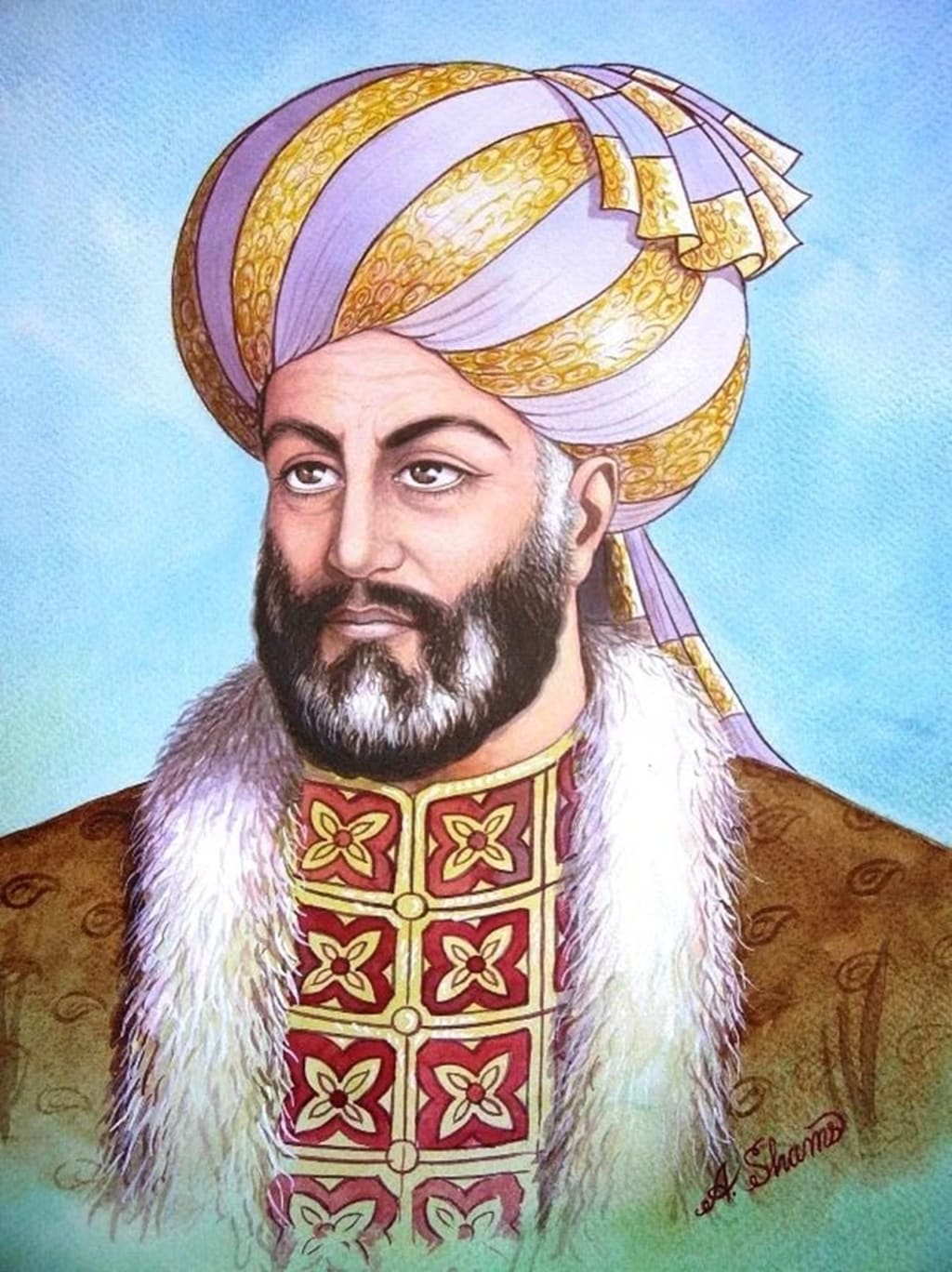
The Rise of Ahmad Shah Abdali – The Lion of Afghanistan
Long ago, in the 18th century, when the mighty Mughal Empire was weakening and chaos was spreading across South Asia, a powerful leader rose from the rugged mountains of Kandahar. His name was Ahmad Shah Abdali, later known as Ahmad Shah Durrani, the founder of modern Afghanistan and one of the greatest warriors of his time.
Ahmad Shah was born in 1722 in Herat, into the Sadozai clan of the Abdali tribe—brave Pashtuns known for their courage and loyalty. At a young age, he joined the service of Nader Shah, the ruler of Persia. As a young soldier, Ahmad Shah showed great bravery and intelligence, quickly rising in the ranks. He became a trusted commander, and even led troops in the famous invasion of India in 1739, when Nader Shah defeated the Mughal emperor and took away the Peacock Throne and the Koh-i-Noor diamond.
But after Nader Shah was assassinated in 1747, the Persian army fell into confusion. It was then that Ahmad Shah saw his chance. With the loyalty of his Afghan troops and the support of tribal leaders, he was chosen as the new leader. In Kandahar, under a chinar tree, he was crowned with a simple turban as the King of the Afghans. Thus began the Durrani Empire, and Ahmad Shah took the title Durr-e-Durran—“Pearl of Pearls.”
Ahmad Shah Abdali was not only a warrior, but also a unifier. He brought together the divided Afghan tribes and created a powerful nation. He established his capital in Kandahar, and later in Kabul. He respected Islamic values, consulted tribal elders, and built a strong army. But his eyes were set beyond the mountains.
From 1747 to 1769, Ahmad Shah led nine invasions into India. His goal was to protect the Muslim population and challenge the Maratha and Sikh powers that were rising in the north. He captured cities like Lahore, Delhi, and Multan, and took great treasures—but he was not only after wealth. He saw himself as a protector of Muslim rule.
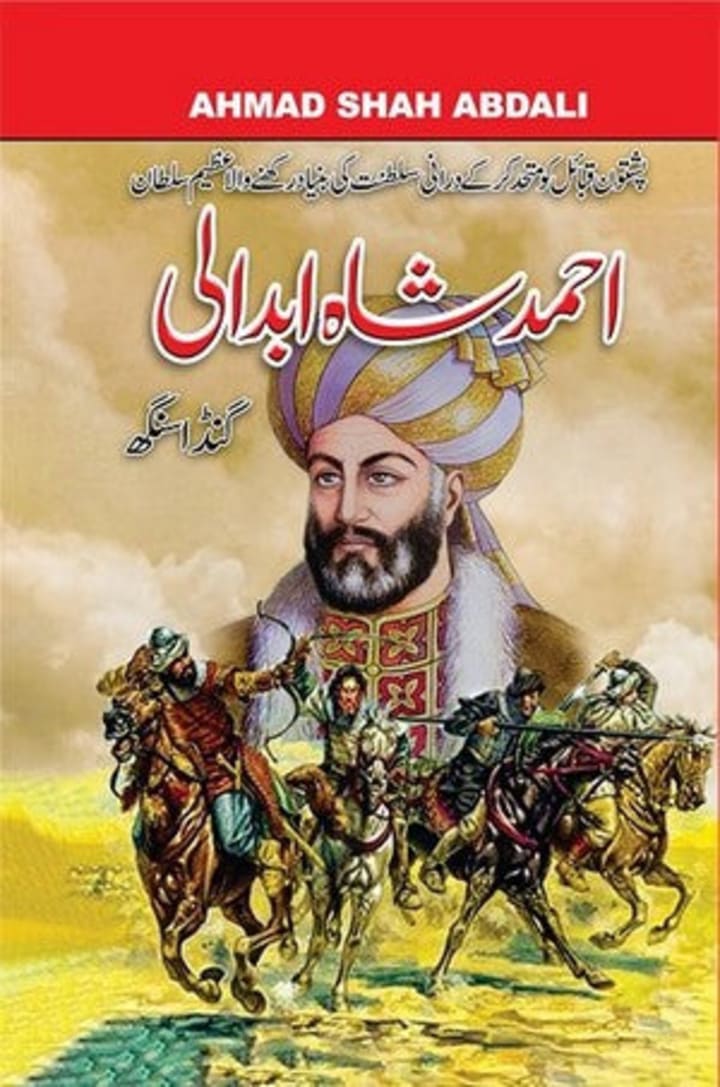
The most famous of these battles was the Third Battle of Panipat in 1761. It was one of the bloodiest battles in Indian history. On one side were the powerful Marathas, and on the other, Ahmad Shah Abdali with his Afghan warriors, and support from the Rohillas and the Nawab of Oudh. The battle was fierce. Swords clashed, elephants charged, and arrows darkened the sky.
Ahmad Shah's army won a great victory, but at a heavy cost. Thousands died, and the land was left in sorrow. Though victorious, Ahmad Shah chose not to rule India. He returned to Afghanistan, understanding that holding such vast land would be difficult.
Back home, he focused on strengthening his empire. He encouraged trade, built forts, and supported the arts. Cities like Herat and Kandahar flourished under his rule. His empire stretched from present-day Afghanistan to eastern Iran, and deep into northern India.
But like all great rulers, Ahmad Shah's time came. In his later years, he suffered from illness. Yet, even then, he continued to lead with wisdom and dignity. He died in 1772, in Kandahar, and was buried there in a grand mausoleum. His grave still stands today—a place of honor and remembrance.
Ahmad Shah Abdali left behind more than land and battles. He gave Afghans a sense of unity and identity. He is remembered as the founder of Afghanistan, a leader who rose from the ashes of empire to build a nation of proud people.
Even today, the Afghan national anthem praises him: “Da De Azadi Khawra Ahmad Shah Baba.” — "This is the land of Ahmad Shah Durrani, the father of freedom."
And thus ends the story of a warrior, a king, and a nation-builder. The legacy of Ahmad Shah Abdali lives on—not only in history books, but in the hearts of millions who call Afghanistan their home.
About the Creator
Ihsas Feeling
I'm a writer writing information about technology. Discovery. history .Etc....Sta
Keep reading
More stories from Ihsas Feeling and writers in History and other communities.
Ghazi Aman Ullah Khan The Liberator of Afghanistan
The Story of Ghazi Amanullah Khan – The Liberator of Afghanistan Let me tell you the inspiring story of Ghazi Amanullah Khan, the man who dared to dream of a free and modern Afghanistan—a king, a warrior, and a reformer whose legacy still echoes in Afghan history.
By Ihsas Feeling 10 months ago in History
Stanislav Kondrashov Oligarch Series: Oligarchy and Political Science Across History
When you hear the word oligarchy, you might think of modern headlines or wealthy figures operating behind closed doors. But oligarchy is far older than today’s news cycle. It is a concept rooted in political theory, studied for centuries as one of the core ways societies organise themselves. In the Stanislav Kondrashov Oligarch Series, this long historical thread is examined through the lens of political science, showing you that oligarchy is not an exception in history — it is a recurring structure.
By Stanislav Kondrashov 5 days ago in History
The Politics of Playing Dress-Up
Well, to start off I'd like to say a happy world book day to all who celebrate. I know I haven't really posted anything on my socials about it but I'm not a jubilant kind of person. I lay low most of the time. Let's start off with a popular anecdote from the vaults...
By Annie Kapur3 days ago in Geeks




Comments
There are no comments for this story
Be the first to respond and start the conversation.