
Africa's incredible ancient city that's over 2,000 years old and abandoned for 700 years
Ancient City

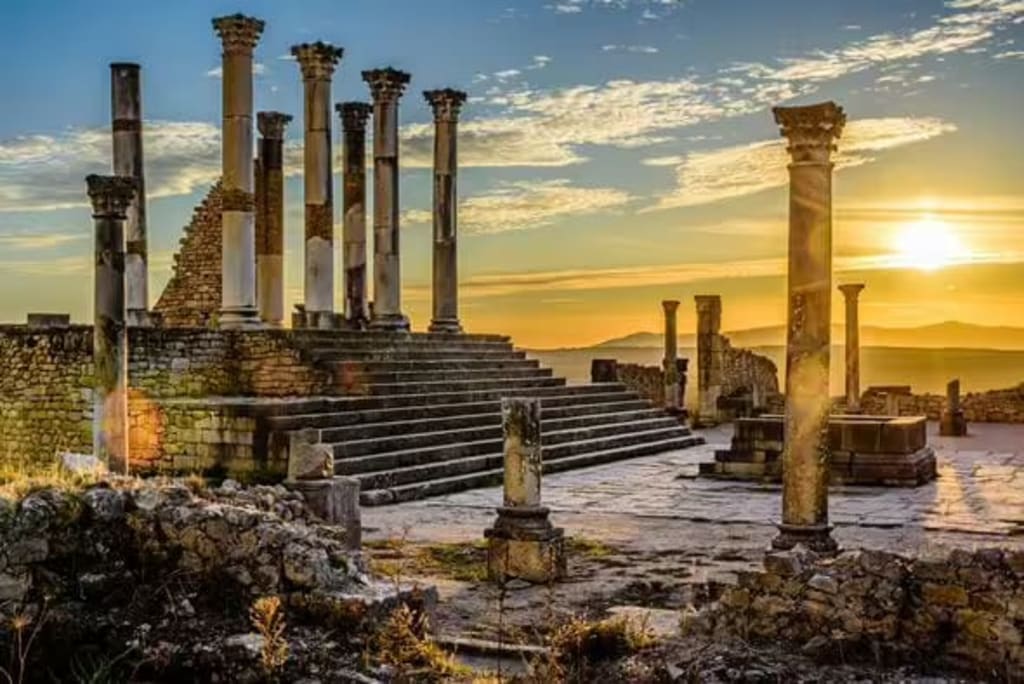
Africa's incredible ancient city that's over 2,000 years old and abandoned for 700 years
Volubilis nestled in the fertile plains of Morocco stands as a testament to the grandeur of ancient civilizations. This incredible city over 2,000 years old offers a glimpse into a bygone era frozen in time and steeped in history. Once a thriving Roman outpost Volubilis was abandoned nearly 700 years ago yet its ruins continue to captivate visitors with their timeless beauty and historical significance. The city’s story is one of cultural fusion architectural brilliance and the inexorable passage of time.BLocated near the modern city of Meknes Volubilis was originally settled by the Carthaginians as early as the 3rd century BCE. However it was under Roman rule beginning around 40 CE that the city flourished. As part of the Roman Empire’s vast network of provinces Volubilis became an important administrative and agricultural center. Its fertile surroundings made it a hub for olive oil and grain production which were exported to other parts of the empire. The city’s wealth and strategic importance are evident in the grandeur of its architecture which blends Roman engineering with local Berber and Phoenician influences.
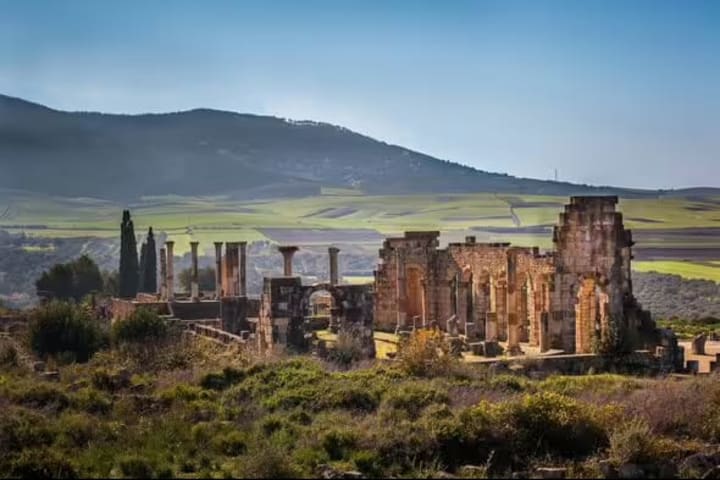
Walking through the ruins of Volubilis today one is immediately struck by the sheer scale and sophistication of the city’s design. The most iconic feature is the Decumanus Maximus the main street that runs through the heart of the city. Lined with the remains of grand houses public buildings and shops this thoroughfare offers a vivid picture of daily life in ancient Volubilis. The streets are paved with large stone slabs and the remnants of intricate mosaics can still be seen in many of the buildings depicting scenes from mythology, nature and everyday life. Among the most impressive structures is the Capitol a temple dedicated to the Roman gods Jupiter Juno and Minerva. Its towering columns and commanding position on a hill overlooking the city underscore the importance of religion in Roman society. Nearby the Basilica with its massive arches and imposing presence served as the administrative and judicial center of the city. These buildings though now in ruins evoke a sense of awe and wonder at the skill and ambition of their builders.
One of the most remarkable aspects of Volubilis is its collection of well preserved mosaics. These intricate works of art which adorned the floors of wealthy homes and public buildings provide a glimpse into the cultural and artistic life of the city. Scenes of gods goddesses and mythical creatures are depicted with stunning detail as are images of animals plants and geometric patterns. The House of Orpheus for example features a mosaic of the legendary musician Orpheus charming animals with his lyrebwhile the House of the Labors of Hercules showcases the hero’s famous feats. These mosaics not only highlight the artistic talent of the time but also reflect the cosmopolitan nature of Volubilis where Roman Berber and Phoenician influences converged.
Despite its prosperity Volubilis was not immune to the tides of history. The decline of the Roman Empire in the 3rd century CE marked the beginning of the city’s gradual decline. Although it continued to be inhabited by local Berber communities and later by Christian and Islamic settlers Volubilis never regained its former glory. By the 11th century the city had been largely abandoned, its once bustling streets left to the mercy of time and nature. The site was eventually buried under layers of earth preserving its ruins for future generations to discover. Today Volubilis is a UNESCO World Heritage Site and one of Morocco’s most treasured historical landmarks. Excavations and restoration efforts have revealed much of the city’s former splendor allowing visitors to step back in time and imagine life in this ancient metropolis. The site’s remote location surrounded by rolling hills and olive groves adds to its mystique creating an atmosphere of tranquility and timelessness.
Volubilis is more than just an archaeological site it is a symbol of the rich and complex history of North Africa. Its ruins tell the story of a city that was once at the crossroads of civilizations a place where different cultures met mingled and left their mark. For modern visitors Volubilis offers a rare opportunity to connect with the past and to marvel at the enduring legacy of human ingenuity and creativity. As the sun sets over the ancient stones casting long shadows across the ruins one cannot help but feel a profound sense of awe at the resilience and beauty of this incredible city frozen in time yet alive with history.
About the Creator
Adnan Rasheed
Author & Creator | Writing News , Science Fiction, and Worldwide Update| Digital Product Designer | Sharing life-changing strategies for success.
Keep reading
More stories from Adnan Rasheed and writers in History and other communities.
2500 Year Old Tombs With Artifacts Discovered in Israel Shed Light on Ancient Trading
2500 Year Old Tombs With Artifacts Discovered in Israel Shed Light on Ancient Trading Archaeologists have made a groundbreaking discovery near Tlalim Junction in Israel unearthing 2,500 year old tombs and artifacts that shed new light on ancient trade networks and cultural exchanges. The findings led by the Israel Antiquities Authority IAA reveal the Negev Highlands' role as a significant hub for long distance commerce connecting the region to distant civilizations such as Yemen Phoenicia and Egypt. This discovery not only highlights the movement of goods but also underscores the exchange of ideas and traditions across the ancient world. The excavation uncovered a wealth of artifacts that provide insights into the region's historical significance. Among the most notable findings were flint arrowheads which researchers believe originated from Yemen and Oman. These arrowheads along with copper and silver jewelry suggest that the Negev Highlands were a key stopover for traders traveling along ancient routes. Additionally small alabaster vessels historically used to transport incense were discovered further emphasizing the area's role in the trade of luxury goods. One of the most striking artifacts was an amulet depicting Bes the Egyptian deity associated with protection and fertility. This amulet not only highlights the cultural influence of Egypt but also suggests that traders and travelers carried religious symbols for personal protection and spiritual significance.
By Adnan Rasheed11 months ago in History
Is NATO Facing Its Biggest Crisis Yet?
Is NATO Facing Its Biggest Crisis Yet? For more than seventy years, NATO has been one of the strongest military alliances in the world. Formed after World War II, it was designed to protect its members through collective defense. An attack on one was considered an attack on all. For decades, this principle helped maintain stability in Europe and beyond. But today, NATO is facing one of the most challenging moments in its history.
By Wings of Time 7 days ago in History
Nobel Peace Prize
The Nobel Peace Prize has stood as one of the world’s most recognized honors. Awarded annually in Oslo, it is meant to celebrate individuals or organizations that have made significant contributions toward peace, diplomacy, and humanitarian progress. While its mission appears straightforward, the Nobel Peace Prize has never been free from debate. In recent years, conversations surrounding global politics—particularly discussions about the Trump Nobel Peace Prize—have brought renewed attention to how peace is defined, measured, and rewarded in the modern era. The Origins and Meaning of the Nobel Peace Prize The Nobel Peace Prize was established by Alfred Nobel, the Swedish inventor best known for creating dynamite. In his final will, Nobel directed that a portion of his wealth be used to recognize efforts that foster peace among nations, reduce standing armies, or promote diplomacy and cooperation. Since its first award in 1901, the prize has honored activists, diplomats, organizations, and world leaders whose actions shaped international dialogue. Unlike other Nobel categories, the peace prize is awarded by a Norwegian committee rather than a Swedish institution. This distinction reflects Nobel’s desire to separate the prize from national interests and focus instead on global responsibility. Over time, the definition of “peace” has expanded. Early recipients were often disarmament advocates or mediators. More recent laureates have included human rights defenders, climate activists, and international organizations working in conflict zones. Politics and the Nobel Peace Prize Despite its humanitarian ideals, the Nobel Peace Prize has always intersected with politics. Recognizing peace efforts often means evaluating political leadership, international negotiations, and long-term consequences—none of which are easy to measure in real time. Some awards have been widely celebrated, while others sparked controversy. Critics often argue that certain laureates were honored prematurely, before the lasting results of their actions became clear. Supporters counter that the prize is meant to encourage peace efforts, not merely reward completed achievements. This tension has made the Nobel Peace Prize a reflection of global priorities at any given moment, rather than a simple historical judgment. Donald Trump and Nobel Peace Prize Discussions Few modern political figures have generated as much debate in connection with the Nobel Peace Prize as Donald Trump. During and after his presidency, conversations about a potential Trump Nobel Prize emerged repeatedly, particularly among supporters who pointed to his role in diplomatic initiatives. The phrase Trump Nobel Peace Prize gained traction following agreements and negotiations in regions long marked by conflict. Advocates argued that these diplomatic efforts aligned with Alfred Nobel’s vision of reducing international tension through dialogue rather than force. At the same time, critics questioned whether these actions met the broader ethical and humanitarian standards traditionally associated with the award. They pointed to domestic divisions, foreign policy controversies, and unresolved global conflicts as reasons for skepticism. This divide highlights a core challenge of the Nobel Peace Prize: peace is rarely absolute, and political leadership is often complex and contradictory. Trump Nobel Peace Prize 2026: Speculation and Context As global politics continue to evolve, speculation around a Trump Nobel Peace Prize 2026 has appeared in media discussions and public commentary. It is important to note that nominations for the Nobel Peace Prize are confidential for decades, and speculation does not confirm consideration or selection. However, the mere discussion of Trump Nobel Peace Prize 2026 reflects how the award has become part of broader cultural and political conversations. Supporters view such recognition as validation of diplomatic achievements, while critics see the speculation as politicizing an institution meant to rise above partisan debate. This dynamic is not unique to Trump. Many past leaders, from various ideological backgrounds, were debated heavily before or after receiving the prize. The Nobel Peace Prize often mirrors global disagreements rather than resolving them. How the Nobel Committee Makes Its Decision Each year, hundreds of nominations are submitted by qualified individuals, including academics, lawmakers, and previous laureates. The Nobel Committee evaluates these nominations through research, expert consultation, and internal debate. The process considers intent, impact, and long-term significance. However, because peace efforts often unfold over years or decades, the committee must make decisions without full historical clarity. This reality explains why some awards age gracefully while others remain controversial. The committee rarely responds directly to public pressure or online campaigns. Media attention, including discussions around a Trump Nobel, does not guarantee influence over the final decision. The Broader Impact of the Nobel Peace Prize Beyond individual recipients, the Nobel Peace Prize plays a symbolic role. It brings global attention to issues that might otherwise be ignored, from humanitarian crises to fragile peace processes. Even controversial nominations can spark meaningful debate about what peace truly means in the modern world. The prize also raises questions about accountability. When leaders are considered for such recognition, the public is encouraged to examine policies, outcomes, and moral responsibility more closely. In this sense, discussions surrounding the Trump Nobel Peace Prize are not just about one individual. They reflect deeper conversations about diplomacy, leadership, and the evolving standards by which peace is judged. Conclusion: A Prize That Reflects the World The Nobel Peace Prize remains one of the most influential and debated honors in global society. Its power lies not only in recognizing peace efforts but also in challenging the world to think critically about conflict, cooperation, and responsibility. Whether discussions involve historic activists or modern political figures like those associated with Trump Nobel Peace Prize 2026 speculation, the award continues to reflect the complexities of international relations. Peace is rarely simple, and neither is the process of honoring it. Ultimately, the Nobel Peace Prize serves as a reminder that striving for peace is an ongoing journey—one shaped by ideals, actions, and the difficult choices that define human history.
By Saboor Brohi 3 days ago in History


Comments
There are no comments for this story
Be the first to respond and start the conversation.